Mention French Guiana and most people just shrug. Some may have heard the story of Henri Charrière, better known as Papillon. Others will reply along the lines of: "Something in South America, somewhere next to Suriname, right?" The reality, though, is far more colourful – and darker too. This overseas part of France is wild, untamed, full of contrasts and surprises.
And in March 2025 I set off there. In the dry season, which… never happened.
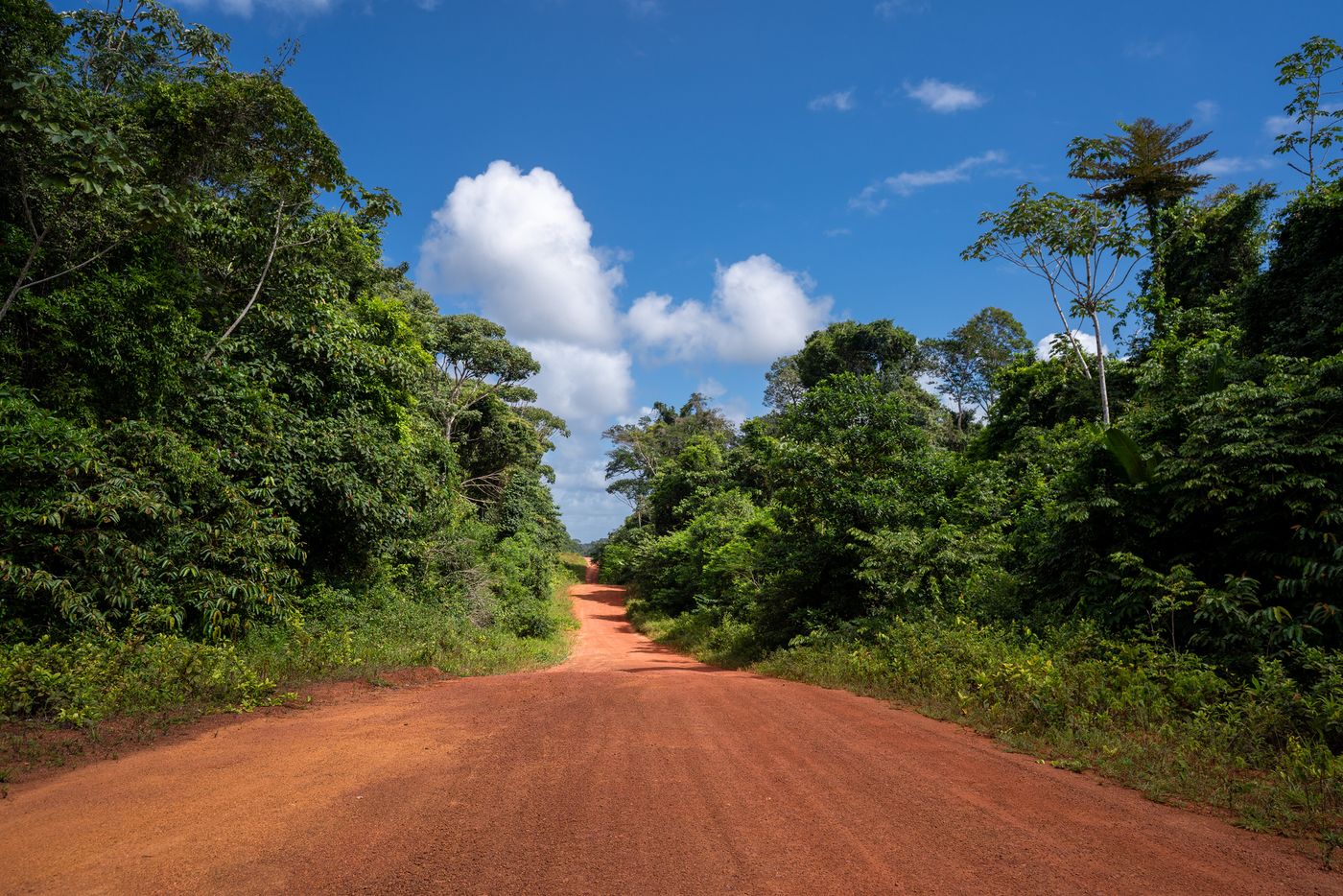
When we talk about the tropics, most people picture white beaches, crystal-clear sea and coconut palms. But what is French Guiana really like? Different – it's a rather different story. The coast is lined with endless mangroves and muddy shallows. The sea is a murky brownish-grey, because giant rivers such as the Maroni, the Oyapock and the Approuague wash tonnes of earth from the rainforest into it. There are hardly any beaches, and those there are certainly aren't for sunbathing. French Guiana simply isn't a destination for gorgeous beaches. But if, like me, you're after jungle, rawness and atmosphere, Guiana will win you over.
Further from the sea, in the interior, a different world begins. Endless rainforest, humidity that gets under your skin, and a silence that isn't silent – just full of other sounds. Life is everywhere here: in the treetops, underfoot, in the water.
And what about infrastructure and prices? What's it like here? Let's start with accommodation. Given the prices, it's not really about hotels or hostels. I spent most nights in so-called carbets – simple open shelters in the jungle or by the water, where I hung my hammock with a mosquito net and hoped the rain would stay outside.
And transport? Hitchhiking is practically impossible, and public transport? Not that either. To travel independently and really get where I want to go, I hire a car. Nothing else makes sense in French Guiana.
And a little more on prices. Although it looks like a remote periphery of France, prices are surprisingly high – easily 30 % higher than in mainland France. Then again, fruit and veg at the markets are fairly cheap, baguettes aren't expensive either, and there's authentic, cheap Hmong pho, nem and coconut cafe.
I had a plan. To travel up the Maroni River into the interior, sleep in a hammock in the middle of the jungle, and fly to the village of Saül deep in the rainforest. But the tropics wrote their own script – it rained, the Maroni burst its banks, the roads vanished. And the flight to Saül? Forget it. Tickets can't be bought online; you can only book through a local agency. But even that option fell through – the seats on the plane were reserved for Indigenous people who needed to get back to their communities. So I cooked up a new route from my plans. Improvised, but all the more powerful for it.
Cayenne – Dance and Rhythm to Begin
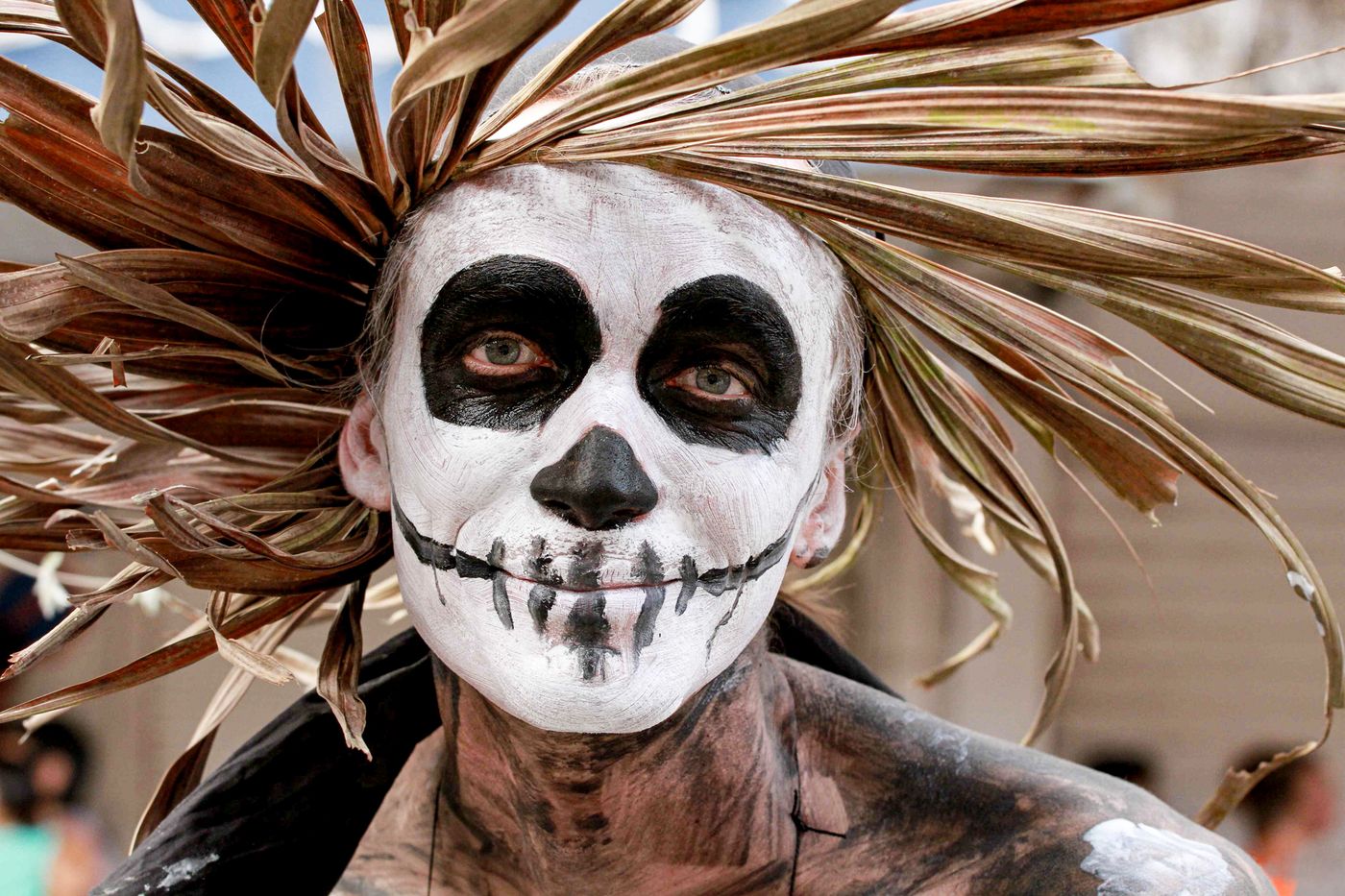
Landing in Cayenne threw me straight into the whirl of carnival. Masks, drums, colours, sweat, rhythm. The local carnival isn't a tourist attraction – it's life. The perfect warm-up before travelling on.
Saint-Laurent-du-Maroni – River, Rum and the Past
The next day I head further west, right up to the border with Suriname – to Saint-Laurent-du-Maroni. A town where time seems to have slowed down. The air is heavy, the Maroni lazy and the rainforest all around. On arrival I head to the local distillery, which smells of sugar cane and wood. The rum they make here is strong and raw. Just like the landscape, which takes no prisoners. I spend the night in a carbet by the river, in a hammock with a mosquito net.
In the morning I'm woken by birdsong and humidity, which here isn't the exception but the norm. I travel further along the river to Apatou – a village on the banks of the Maroni and yet in the middle of the jungle. Here the rainforest isn't beyond the town. It's in it.
We head back to Saint-Laurent. It's not just a sleepy border town by the water – it carries the shadows of history too. It used to be the main point of entry for the convicts France sent to Guiana. Everyone destined for the penal colony passed through the Camp de la Transportation. Concrete cells, iron doors, stifling tropical heat. A place that still sends a shiver down your spine today. And in the evening? In the evening the town wakes up again – it's carnival. But different from Cayenne's. Rawer, more genuine. Crowds in the streets, music that never ends, masks that aren't pretty but powerful. People dance. Perhaps to forget. Perhaps as forgiveness. And me? I try to take it all in. A town you can't just visit. You have to let it get under your skin.
Petit-Saut – The Flooded Rainforest
Petit-Saut wasn't in the plan. It only came up when the floods cancelled my trip along the Maroni and my flight to Saül. But it's often days like these that bring the most. A dam from the 1990s flooded hundreds of kilometres of Amazon rainforest, creating a dark lake full of dead trees. A landscape as if after a quiet apocalypse – no explosion, just a long silence.
The kayak glides between grey tree stumps; the water is calm, quiet, deep. I'm alone here – just me and sounds not entirely of this world. Now and then a bird, now and then a splash, now and then just stillness. Beneath the surface sleeps a rainforest that hasn't disappeared, only changed form. When I return to the carbet in the evening, I'm sunburnt and worn out, but mentally rested. It wasn't adrenaline. It was an experience of silence, nature and a place I wasn't looking for at all – and found anyway. In the evening I have a local rum and Coke and feel good.
Cacao – Rain, Jungle and Vietnamese Soup
After days spent in the west, I head back east – to a village called Cacao. An inconspicuous spot on the map, but as soon as you arrive, you realise this is exactly where you were meant to come. The village of the Hmong, resettled from Laos and Vietnam, is full of greenery, life and aromas. On the first day I set out on the trek to the Sentier de la Savane-Roche Virginie viewpoint – sultry heat, sweat, slippery rocks. But the reward is a view over an endless ocean of rainforest. I stand alone, in silence, with just the wind and sweat in my eyes.
The second day is a different calibre altogether: the Sentier Molokoï – the longest waymarked trek in all of Guiana. And once again it's confirmed that I know how to pick my weather – it rains from start to finish. Eighteen kilometres through rainforest, in mud, over roots, past fallen trees. Up, down, wading through rising streams. I walk slowly, soaked through. It's not a feat to be measured. It's an encounter with something bigger that reshapes you. When I climb back onto the road after eight hours, I'm shattered. But completely calm at the same time. The jungle took something from me – and left something behind.
The third day brings the reward. The Sunday market. The village comes alive – a stream of colours, flavours, aromas. Rambutans, papayas, mangosteens, okra… and amid it all Vietnamese pho, fried noodles, strong coffee with condensed milk. People sit around plastic tables, laughing, cooking, in no hurry at all. Cacao isn't a place you go to "see" something. It's a place where you simply are. And that's quite enough.
Kourou and the Salvation Islands – Rockets, Penal Colonies and Turquoise Silence
From Cacao I move on to Kourou – a town with two faces. The first points to the sky: European Ariane, Soyuz and Vega rockets launch from the local spaceport. Everything here is precise, technical, futuristic. If you're lucky, you can watch a launch. I had it in my plans, unplanned. But fate intervened and the launch was cancelled 30 minutes before lift-off. Still, I came for Kourou's other face – the one that looks back.
From the harbour I set off by catamaran to the Îles du Salut – the Salvation Islands. The name sounds like a tropical paradise, but the reality is different. Three islands – Île Royale, Île Saint-Joseph and Devil's Island – formed the heart of the penal colony. At first glance they look idyllic: palms, sea, the rustle of the wind. But in between – remains of prisons, rusty bars, walls overgrown with lianas. Île Royale feels almost peaceful, but as soon as I step into the old cells, the atmosphere changes. And on Île Saint-Joseph, where the solitary confinement block stood? There the silence vibrates. A small cell without light, without sound. Just the wind and the sea. I look inside and feel uneasy.
The darkest, though, is Île du Diable, Devil's Island. Inaccessible, surrounded by strong currents, visible only from afar. This is where Captain Dreyfus was imprisoned. And perhaps that's why a look is enough – I don't need to set foot there to feel what the island means. When I return to Kourou in the evening, children are jumping into the water and tourists are having a beer. But it's all still spinning in my head. The Salvation Islands aren't beautiful. They're powerful. And they don't forgive quick visits.
Cayenne – Market, Wind and the Final Stop?…Who Knows.
From the islands I head back to where it all began – Cayenne. This time without carnival, without masks, just an ordinary town. I feel I see it differently now. As if everything I'd experienced had given Cayenne a new outline. It's no longer the gateway. It's the last page.
I make it to the Wednesday market. Bigger, noisier and more chaotic than the one in Cacao. All of Guiana's cultures live side by side here – Creole spices, Chinese noodles, Vietnamese vegetables, fishermen with their catch and music blaring from speakers. It's a buzz without order, yet it makes sense. For a while I just stand and watch. And even though everything around me is moving, I feel calm inside.
And Finally…
French Guiana is a tough country to travel in. Not because of danger, but because of the unexpected – the weather, the distances, the infrastructure, a pace it sets for itself. You can't rush through it. You can't just "tick it off". You have to take it as it is – humid, overgrown, a bit moody and utterly unpredictable. But if you do, it pays you back in its own way. Maybe not straight away, but all the more powerfully.
And what did I bring home? Bottles of local rum and tropical fruit. My classic. And plenty of memories that can't be packed or photographed. Only carried inside you. Slowly. The Guianese way. And that won't let you sleep until you go back again.