I returned to Namibia after twenty years. And yet I recognised most of the places.
Of course, many will object that the country has changed. And they're right. Towns have grown, and new roads, lodges and tourist services have sprung up. Some places look completely different today from how they did on my first visit. Even so, compared with many other parts of the world, I feel Namibia has changed surprisingly little.
It is still a land of vast distances, empty roads and landscapes in which a person is just a tiny speck. A country where you can stare ahead for hours on end without passing a single house, person or car. And that, to my mind, is one of its greatest charms.
OUR NAMIBIA: DUST, STARS AND THOUSANDS OF KILOMETRES OF NO MAN'S LAND
This time it was a rather different kind of travel from what I'm used to. We hired a Toyota Fortuner 4×4, slept in a tent or in simple lodges and every evening grilled superb yet surprisingly cheap meat. By day we baked in the heat; at night, photographing the Milky Way, we froze at −3 °C.
We carried fifteen litres of water in the car, drove roads for which Europe doesn't even have a classification, and got only one puncture on the entire trip.
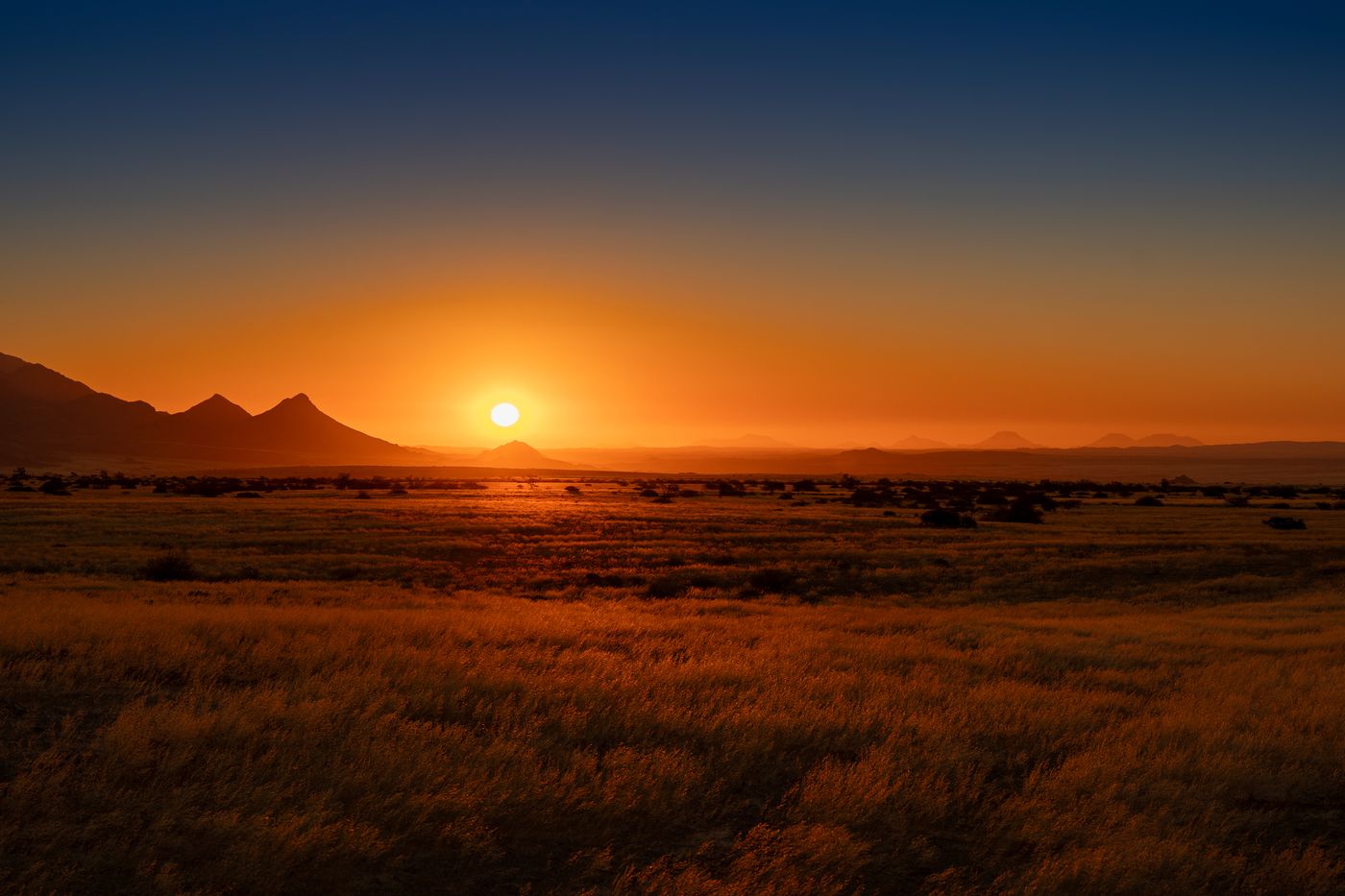
Every day we ate biltong, drank local beer and swallowed clouds of dust. We experienced rain in the desert, clouds reaching down to the ground, frost on the tent and landscapes cracked by drought. We were woken by the tide, the smacking of hippos and the trumpeting of elephants. We saw an enormous number of animals, from elephants and cheetahs to hippos and elegant oryx. We stood on dunes that plunge straight into the Atlantic Ocean, walked through former diamond fields, drove through the endless wilderness of Damaraland and Kaokoland, admired the Epupa Falls on the border with Angola and every evening watched the sun set over a landscape where there was often nothing but silence.
In short, Namibia isn't just a list of places you have to visit. It's above all about the journey itself.
Just bear in mind that the distances are enormous. Most roads are gravel, some stretches are rocky or sandy, and the average speed tends to be much lower than the map suggests. Outside towns the mobile signal often disappears, and around you there may be nothing but desert, mountains or dry riverbeds for dozens of kilometres.
Yet despite this, or perhaps because of it, Namibia is perfect for travellers. On a single trip you can climb some of the highest sand dunes in the world, drive through landscapes teeming with elephants, watch hippos on the Okavango River, stand by waterfalls on the Angolan border and, a few days later, watch the giant dunes of the Namib tumble straight into the cold Atlantic.
Overview
WHEN TO GO
The best time for a road trip is May to October, when it's dry, the animals gather at waterholes and most roads are easily passable. Be aware, though, that night-time temperatures in the desert can drop below freezing, especially in June and July.
HOW LONG?
For a first visit I recommend at least 10–14 days, ideally three weeks if you want to see Damaraland or Kaokoland as well as the main sights. The less you rush, the more you'll enjoy the journey itself.
DAILY BUDGET
The biggest expenses tend to be car hire, accommodation and fuel, while food from supermarkets or at campsites is surprisingly affordable. If you combine camping with simpler lodges, you can travel far more cheaply than staying only in safari lodges.
VISAS
Czech citizens need a visa to enter Namibia, which can be obtained through the Visa on Arrival system or arranged online in advance. Always check the current requirements on the official websites of the Namibian authorities before you travel.
GETTING TO NAMIBIA
Most people fly into Windhoek, either direct from Germany or Switzerland or with one change at an African hub. If you arrive in the evening, I recommend spending the first night in Windhoek and setting off the next day.
GETTING AROUND NAMIBIA
Namibia is an ideal road-trip destination, and without your own car you won't reach most of the best places. An SUV is fine for the classic loop, but for Kaokoland or the remoter parts of Damaraland I recommend a 4×4.
SAFETY
Namibia is one of the safest countries in southern Africa, and if you follow basic rules you'll feel very safe here. The biggest risk isn't wild animals but driving too fast on gravel, long distances and fatigue behind the wheel.
ACCOMMODATION AND FOOD
From forgotten corners of the bush and simple campsites to luxury safari lodges, there are plenty of places to stay. If you're planning to visit Etosha or Sossusvlei, though, book accommodation several months ahead.
And the food? Well, meat lovers are in for a treat. Quality meat and evening braais are almost as much a part of travelling in Namibia as endless gravel roads and sand.
Our Journey Across Namibia
Our loop began in Windhoek and first headed south via Keetmanshoop, Aus and Lüderitz. From there we continued along the legendary D707 to the dunes of Sossusvlei, on to the coast at Walvis Bay and Swakopmund, and then north via Spitzkoppe, Damaraland, Kaokoland and the Epupa Falls.
Then came Etosha, the Hoba meteorite, the Kavango region and a national park. After several thousand kilometres we returned through central Namibia to Windhoek.
Some of these places are among the best known in all of Africa. Others lie off the main tourist routes. And it was often those that thrilled us most.
My Personal Top 6 in Namibia
01
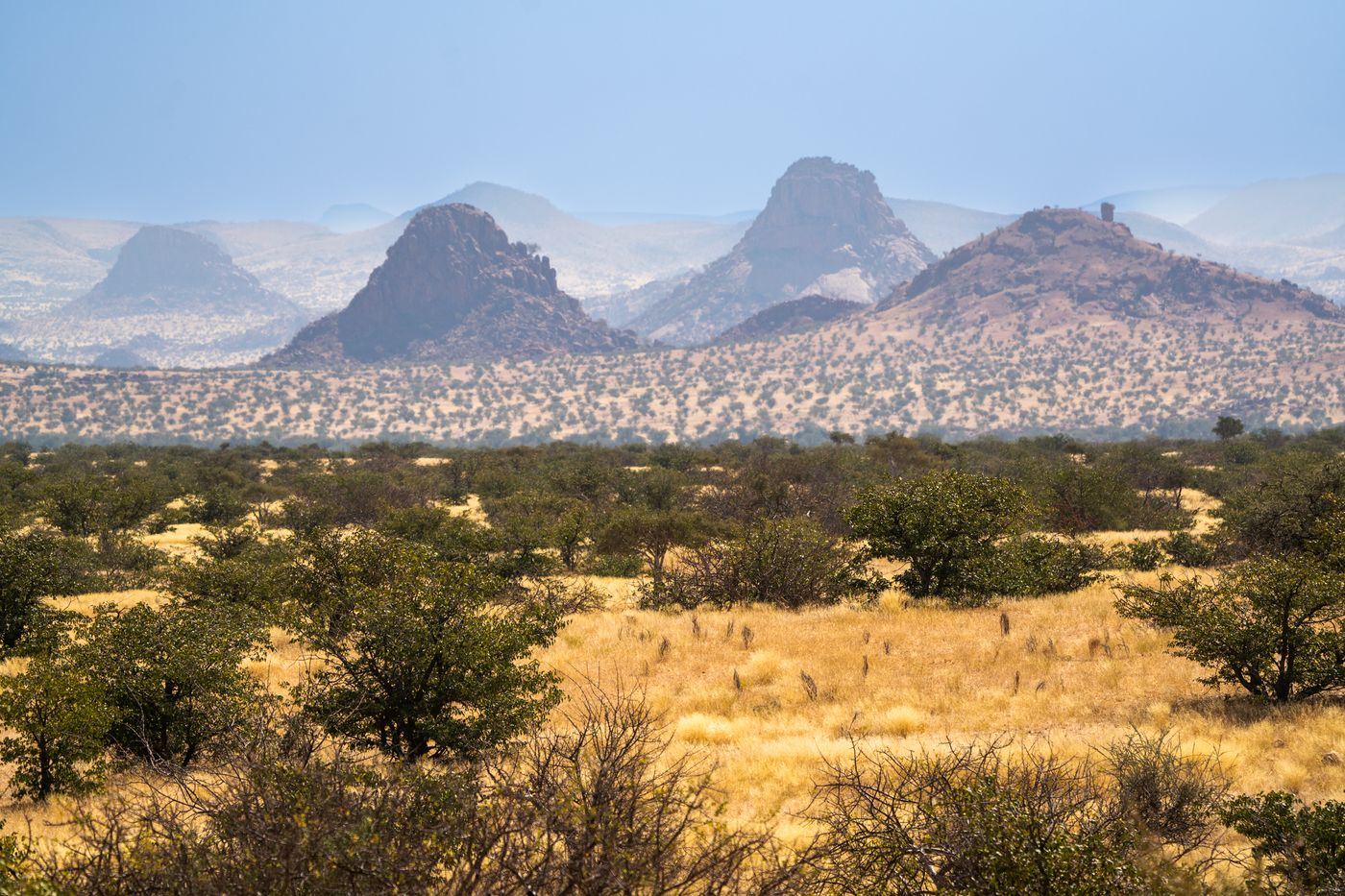
Kaokoland
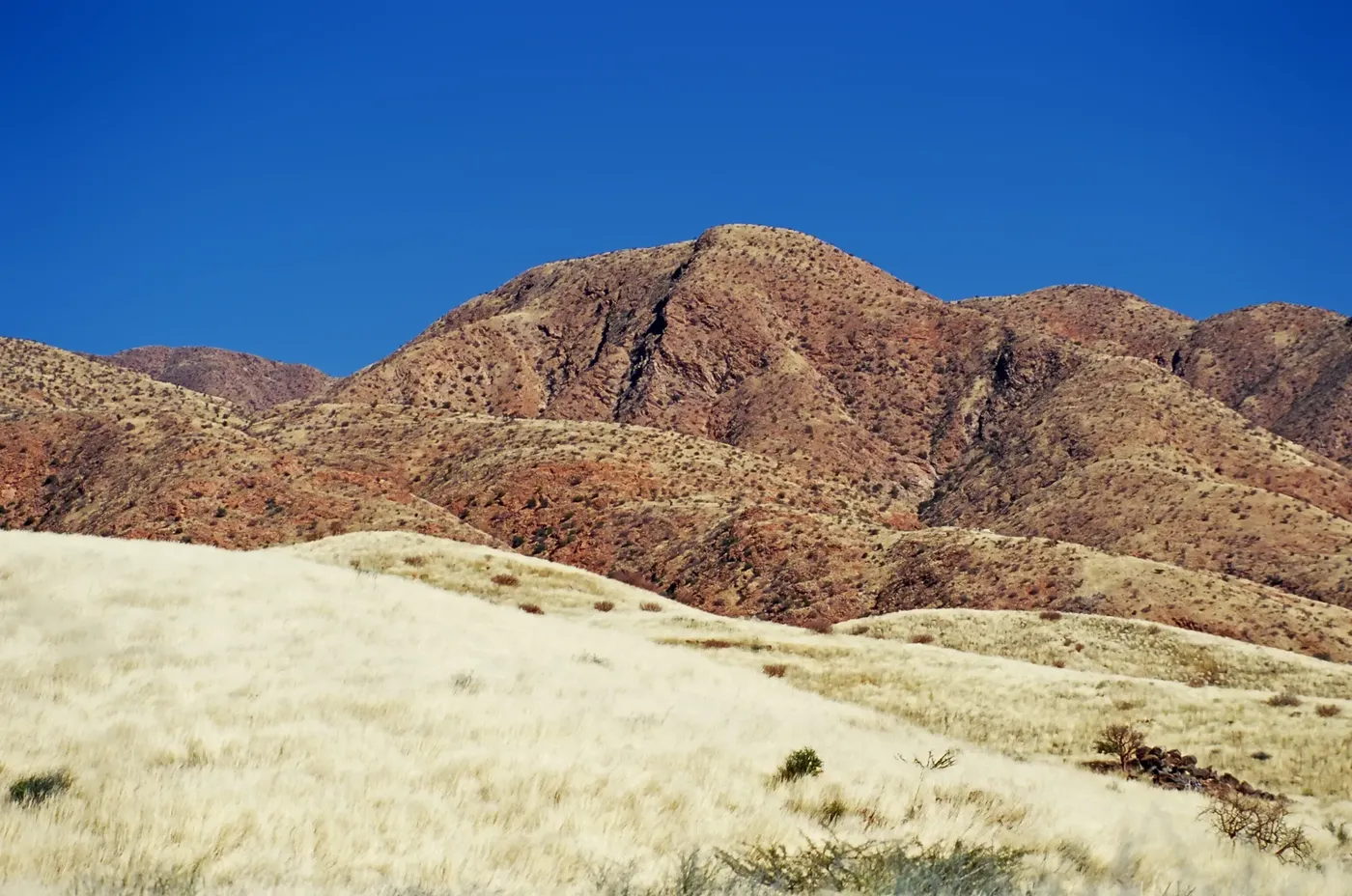
For its remoteness, wonderful gravel roads, the Kunene River and the feeling that you've reached the end of the world.
02
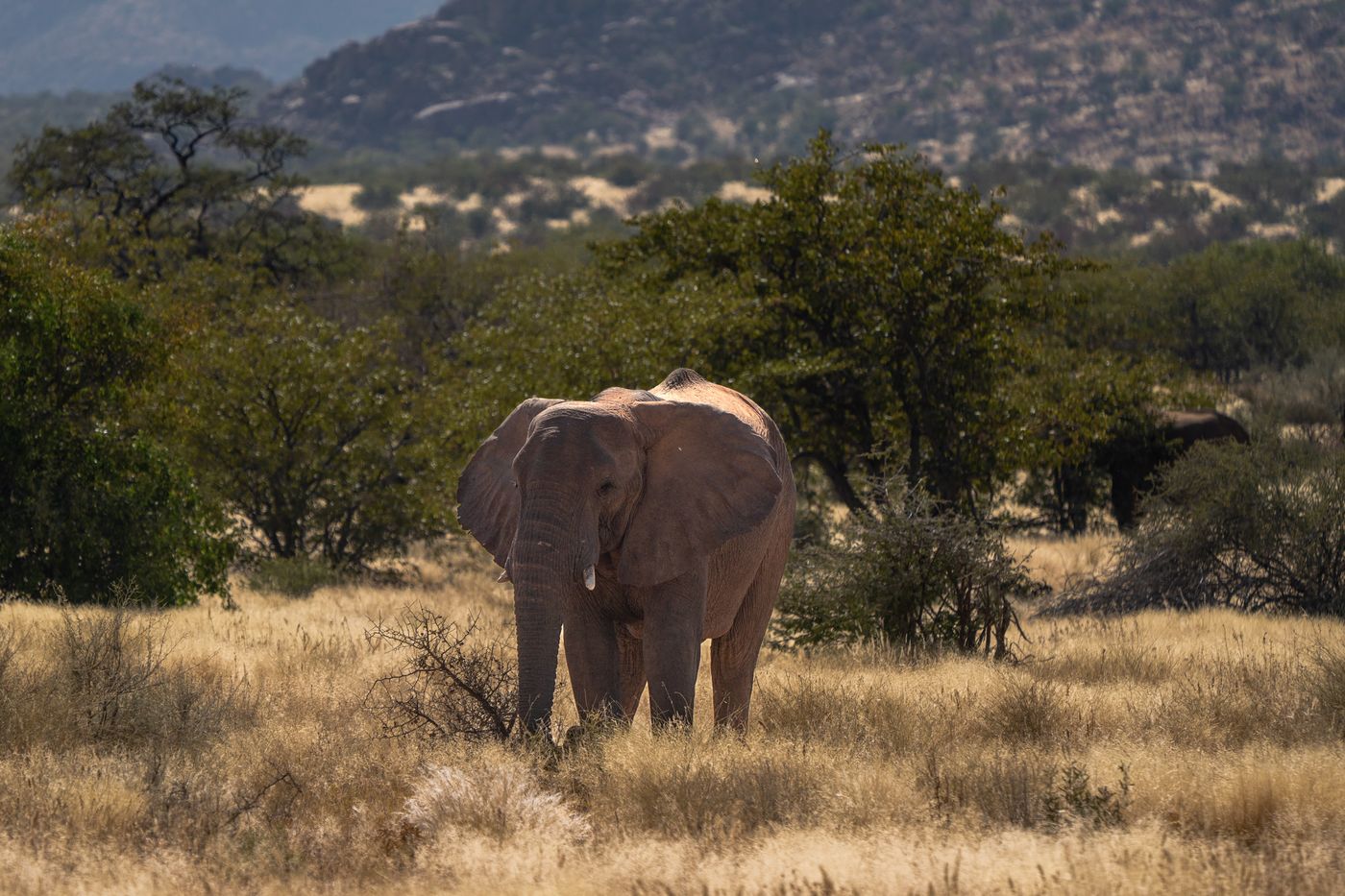
Damaraland
For its space, rocky plains, desert elephants and landscapes that feel almost untouched.
03
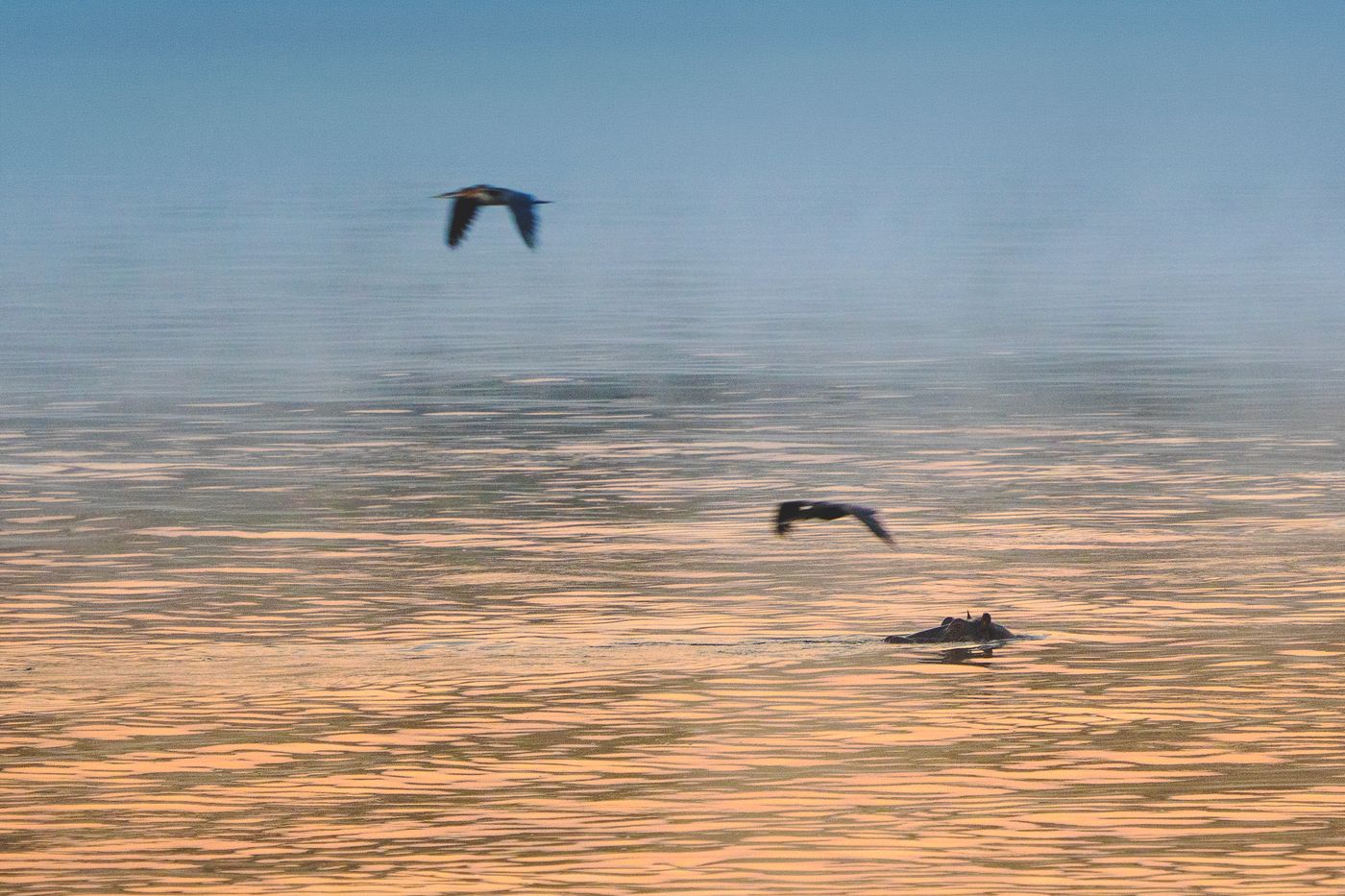
Bwabwata and the Okavango River
For a completely different face of Namibia. Water, hippos, elephants and evenings by the river.
04
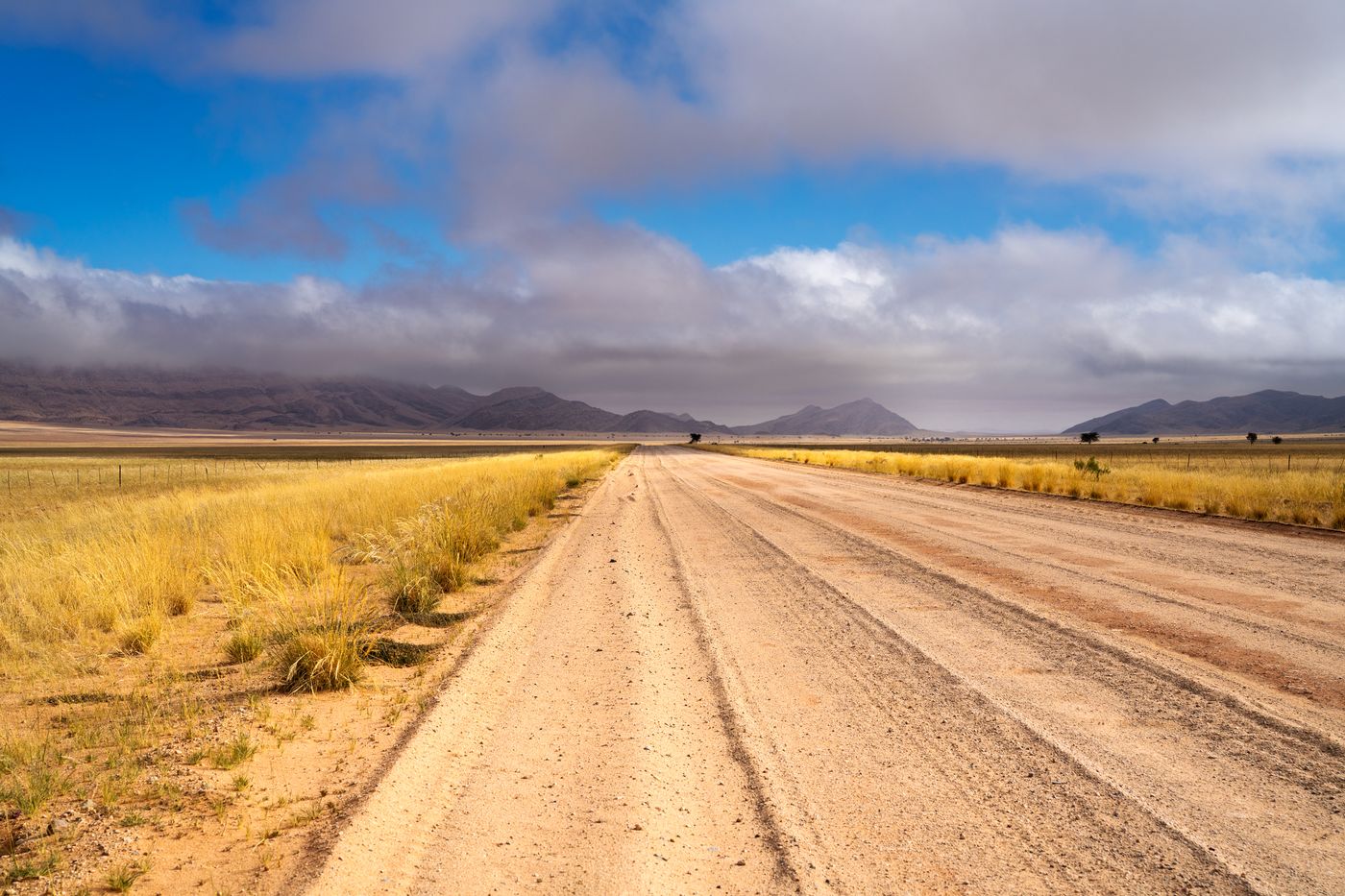
The C43 and D3700
Because here the journey itself is a greater experience than the destination. Endless views, remoteness and a sense of total freedom.
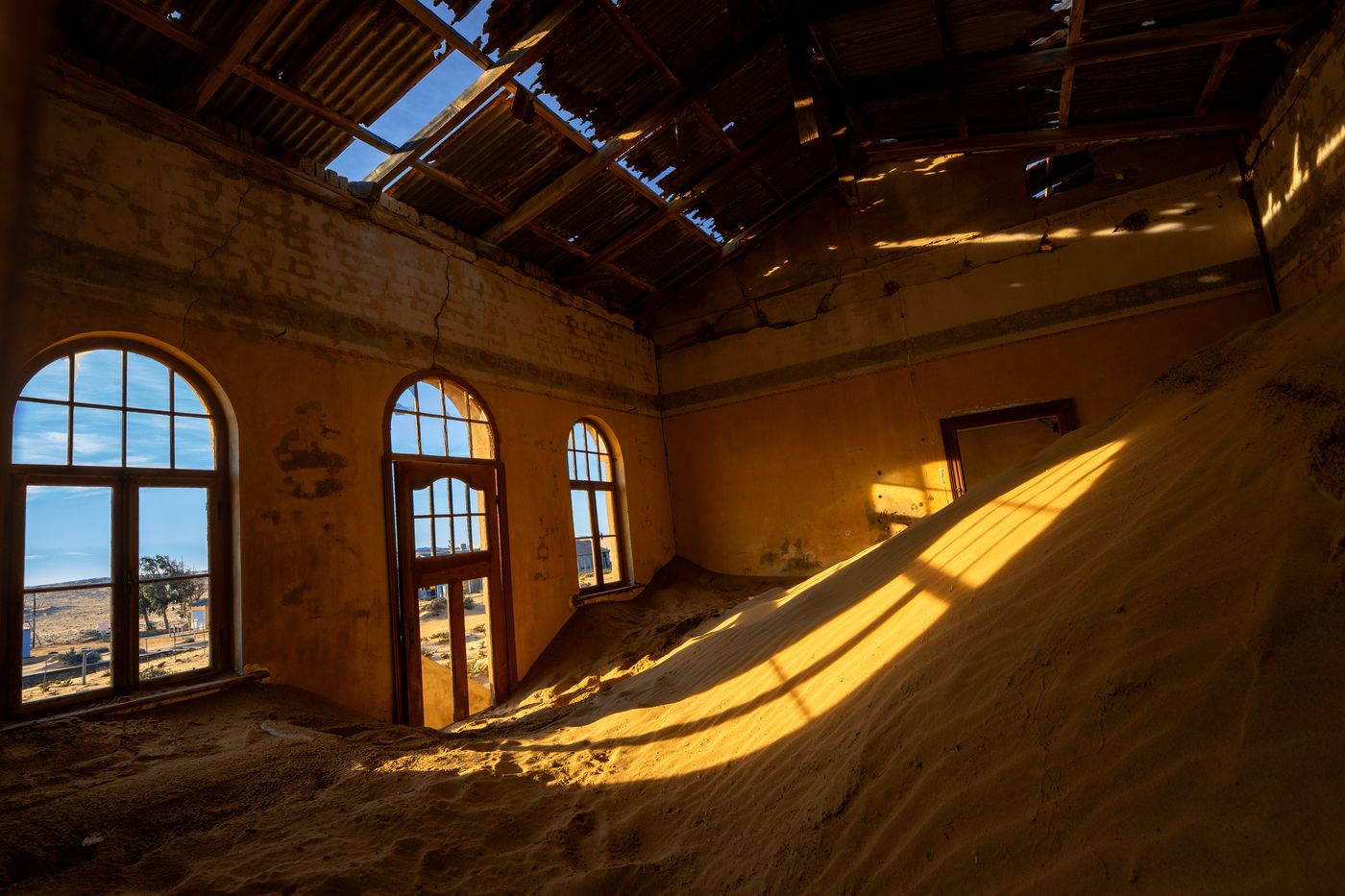
05
Kolmanskop
For its history, its light and a town slowly being reclaimed by the desert.
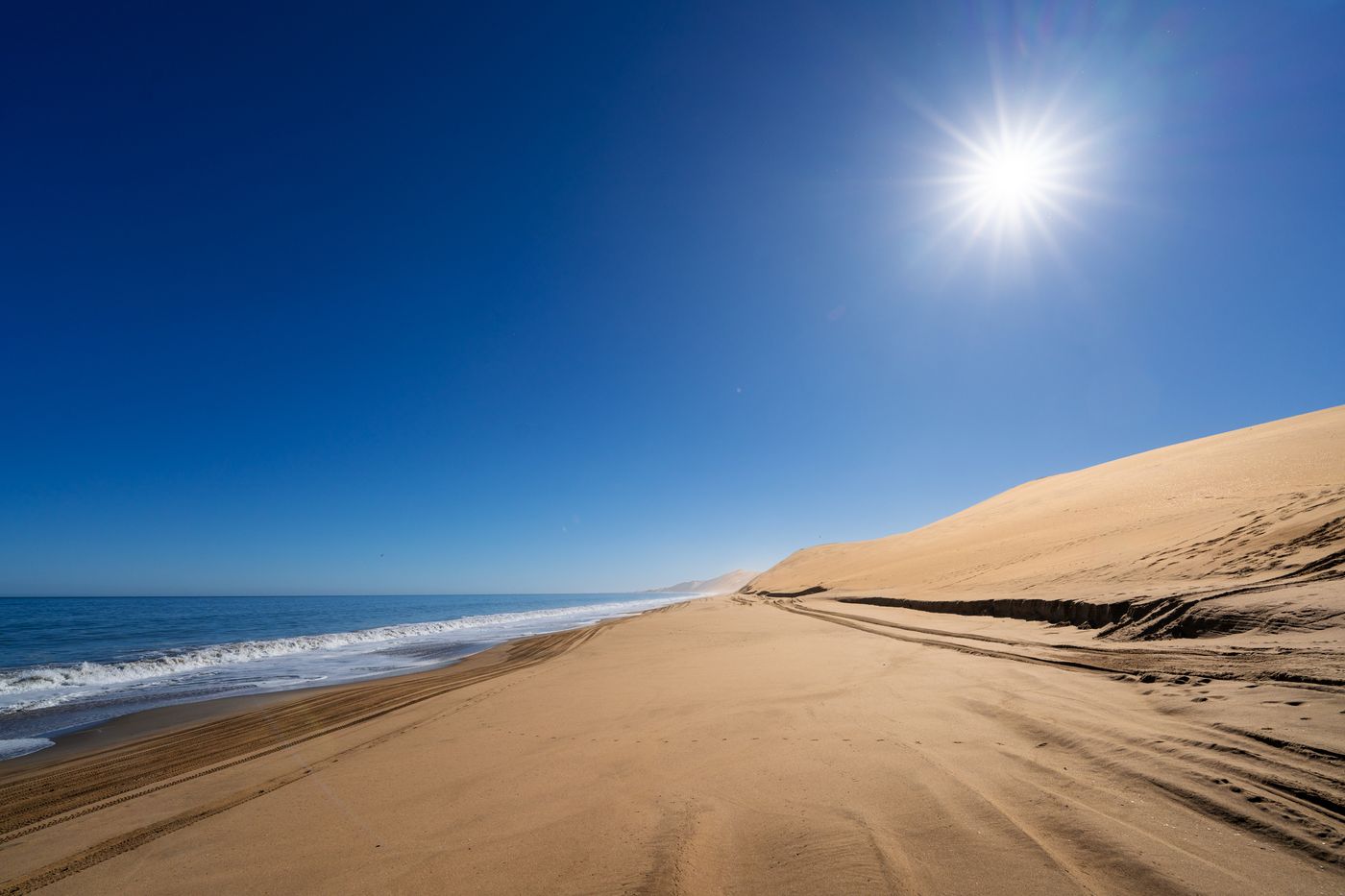
06
Sandwich Harbour
Because there are few places in the world where you'll see huge dunes falling straight into the Atlantic Ocean.
Quiver Tree Forest: Trees That Aren't Trees
We began our journey in the south of Namibia. One of our first stops was the Quiver Tree Forest near Keetmanshoop. A place where quiver trees grow.
Although they're called quiver trees, they are in fact tree aloes. Their pale trunks and twisted branches create an almost surreal scene in the parched landscape.
The most powerful experience, though, comes after sunset. Within a few hours, ground scorched during the day turns into a place where the temperature drops below freezing. All night we had one of the most beautiful night skies of the whole trip above our heads. And frost on the tent in the morning.
I'd originally wanted to photograph the Milky Way right here. But the full moon had other plans. In the end I only managed it in the north of Namibia.
Lüderitz and Kolmanskop: The Town Swallowed by the Desert
The road towards Lüderitz runs through one of the most desolate parts of southern Namibia. The first stop is Garub. It's almost unbelievable that a herd of wild horses lives right here. No one knows exactly how their ancestors got here, but they have coped with the harsh desert conditions for many generations. We were lucky and saw several of them. For me, wild horses are a symbol of freedom. No halters, no fences, wind in their manes and space stretching to the horizon.
From Aus the road slowly descends towards the ocean. The desert begins to change colour, there's more and more sand, and with every kilometre you can sense the Atlantic drawing closer. Lüderitz itself is a curious study in contrasts. German colonial architecture, the cold Atlantic, strong winds and desert starting right at the edge of town.
Just a few kilometres further lies Kolmanskop, a former diamond town gradually swallowed by sand after it was abandoned.
Today the dunes pour through the doors and windows of former houses, the hospital and school buildings. Every room looks different, and the light keeps changing throughout the morning. That's exactly why it's one of the best photographic locations in all of Namibia.
In the surrounding area we also drove through the landscape of former diamond fields, where mining shaped the whole region for decades. To this day it's a place where history, desert and raw nature blend in an exceptional way.
D707: The Journey Is the Destination
If I had to pick a single road that would make me want to return to Namibia, it might well be the D707.
On one side stretch the red dunes of the Namib, on the other rise mountain ridges. Between them runs a narrow gravel road where most of the time you won't meet a single car.
There's no famous viewpoint or tourist attraction on the D707. The main experience is the drive itself. Shifting light, endless views and a landscape that looks as if it has barely changed in the last hundred years.
Sossusvlei and Dead Vlei: Icons of the Namib Desert
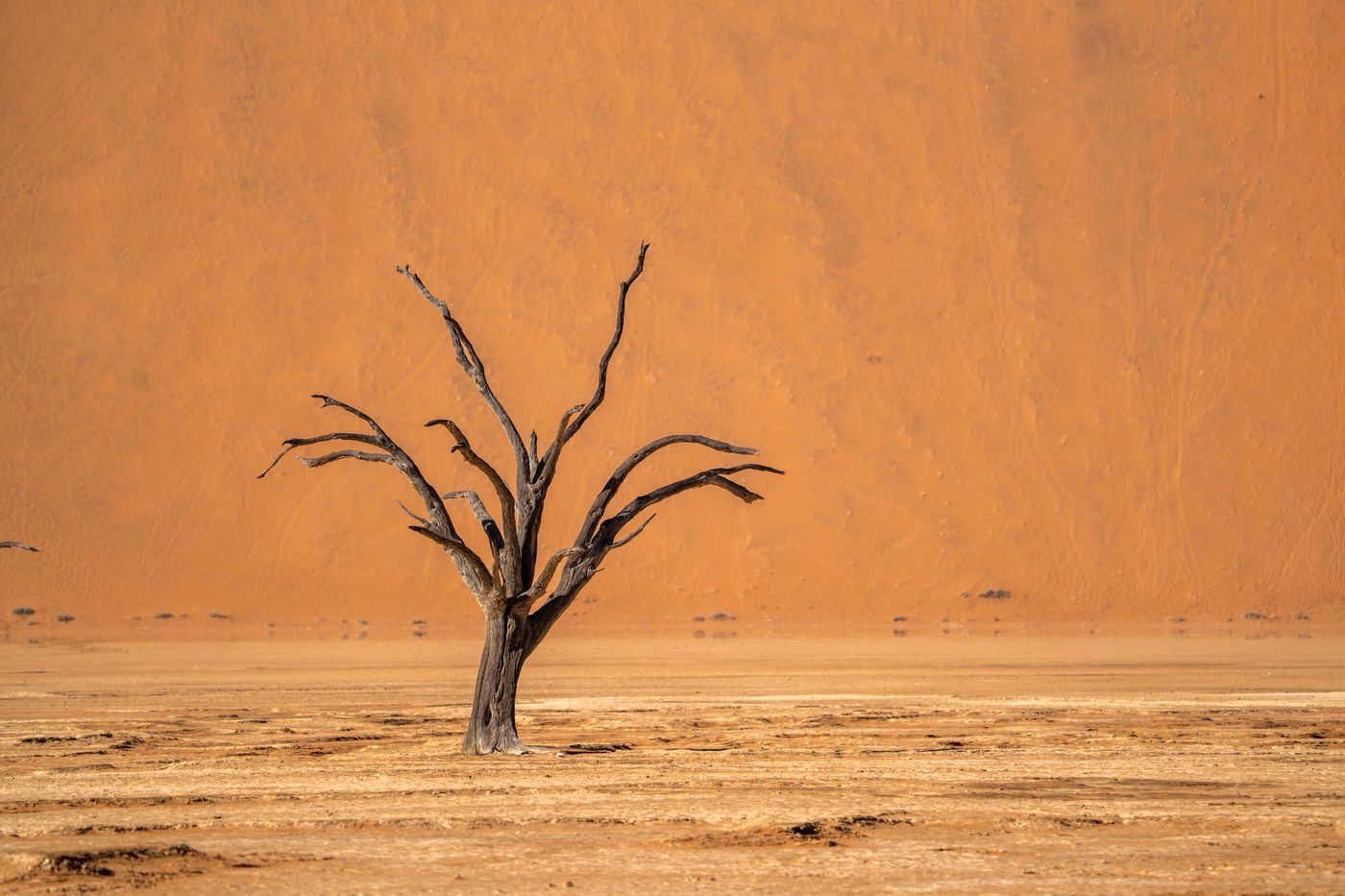
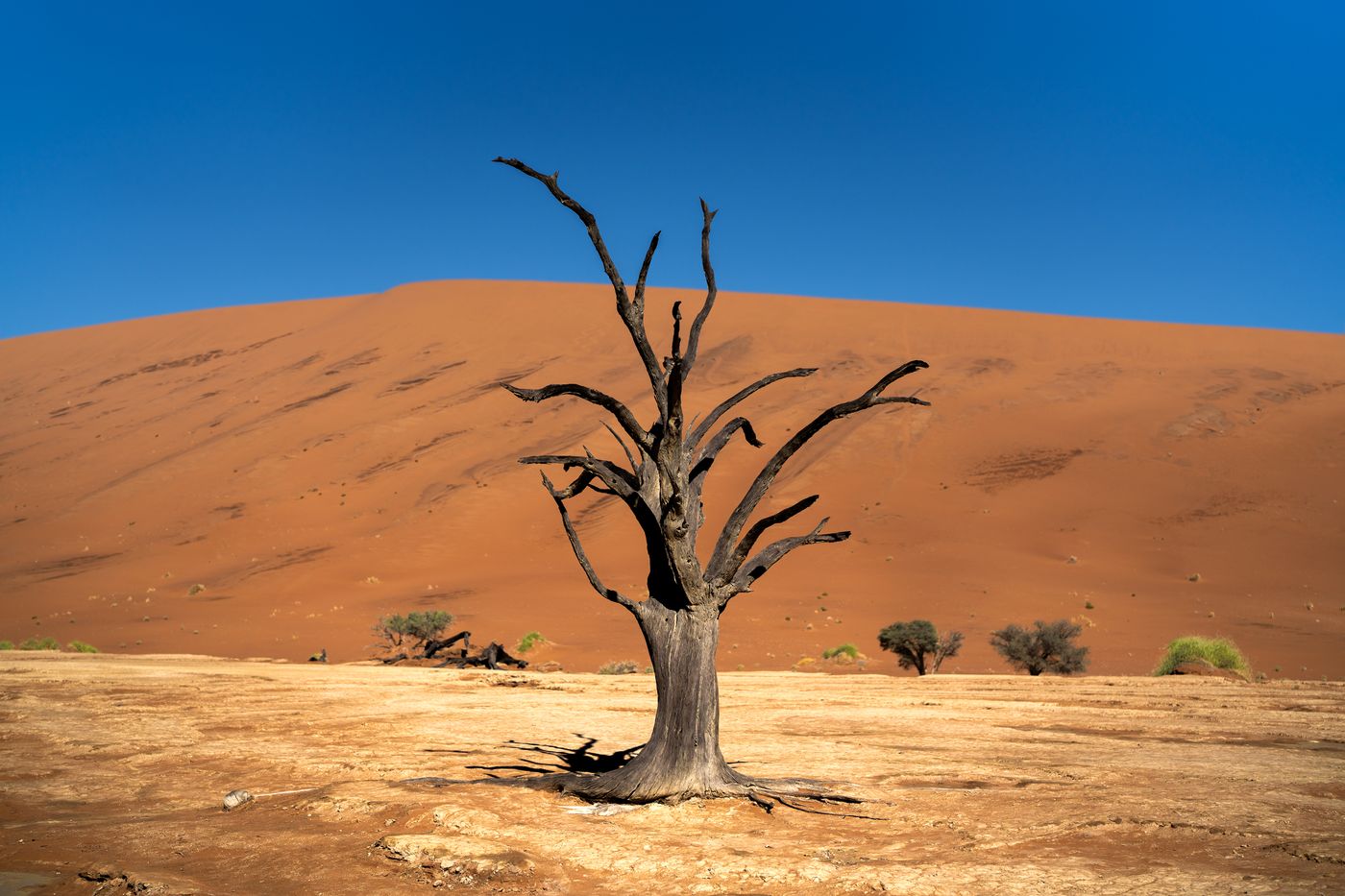
Sossusvlei is one of the best-known places in Namibia, and in reality it's even more impressive than in photographs. Throughout the day the huge dunes change colour from deep red to glowing orange, and the light on their slopes creates an ever-changing play of shadows. The greatest icon is Dead Vlei, a dry white pan from which the skeletons of acacias several hundred years old rise. The contrast of pale clay, dark trees, blue sky and red dunes creates one of the most photographed scenes in all of Africa. It's definitely worth climbing one of the dunes, even though the deep sand and fast-rising temperature make it much harder work than it looks. The best time to visit is right after sunrise, when the light is at its most beautiful, temperatures are pleasant and visitors are still few.
From the Desert to the Cold Atlantic
The dry air of the interior gradually gives way to cool fog rolling in from the Atlantic. Within a few dozen kilometres the landscape becomes almost unrecognisable. The scorching desert is replaced by cold, damp and strong coastal winds.
Walvis Bay is known for its flamingo lagoon, but the biggest draw is Sandwich Harbour.
This is where the huge dunes of the Namib Desert meet the Atlantic Ocean head-on. At low tide, the route follows a narrow strip of beach that the sea uncovers for a few hours. On one side you have the ocean, on the other the steep slopes of the dunes, and between them just a band of wet sand that off-road vehicles can drive along.
From here you drive up to the top of the dunes, where one of the most beautiful views in all of Namibia opens up. Endless dunes literally plunge into the cold Atlantic.
Photographs never quite capture this place. The real experience came only when I stood at the top, felt the strong wind and heard the ocean surf far below me.
Spitzkoppe and the Granite Landscape of Erongo
Spitzkoppe rises from the surrounding plains like a huge granite island. Its rounded rocks, natural arches and solitary peaks are among the most photogenic places in Namibia, especially at sunrise and sunset. But the Erongo region offers much more than Spitzkoppe alone. Granite massifs, dry plains and isolated rock formations create a landscape that feels raw, empty and almost unreal.
Damaraland: Endless Wilderness
This is home to desert elephants, which move along dry riverbeds and can cover dozens of kilometres in search of food and water. It's fascinating to see how they have adapted to an environment that at first glance seems almost uninhabitable.
We also visited Twyfelfontein, an area known for its extensive collection of rock engravings. They're a reminder that this seemingly empty landscape was for thousands of years home to people who understood it far better than we do today.
Epupa Falls: Water in the Middle of a Dry Land
After days spent in the desert, the Epupa Falls seem almost unbelievable.
Here the Kunene River creates a ribbon of green full of palms and mighty trees that contrasts sharply with the dry surrounding landscape. The water tumbles over dozens of rocky steps, forming a series of smaller falls spread along the border with Angola.
They aren't the highest or the mightiest falls in Africa. Their magic lies mainly in the atmosphere. In the evening you sit on the riverbank, hyraxes scurry around, drums sound from Angola and the sunset turns the surface of the Kunene golden.
Etosha: Safari Around the White Pan
Etosha is undoubtedly Namibia's most famous national park and one of the best places in Africa for wildlife viewing. Unlike many other parks, most of the animals gather around waterholes. That means you often don't need to spend long hours driving around. You just have to wait patiently.
In a single day you can see elephants, giraffes, zebras, several species of antelope, jackals, hyenas and lions. With a bit of luck you'll also come across a leopard or cheetah, although sightings of these are much rarer.
One of the most powerful experiences is an evening at the waterholes by some of the camps. After dark, animals arrive that you would struggle to find during the day. You sit in silence, elephants or rhinos drinking just a few metres away, and all around is utter calm.
Every visit to Etosha is different. You never know what awaits you round the next bend or at the next waterhole. That is exactly why people keep coming back.
Hoba: sixty tonnes of iron from outer space
At first glance it doesn't look like anything special. Just a big lump of metal in the middle of a garden. Yet it is the largest known meteorite to have struck the Earth and stayed where it landed. It weighs roughly sixty tonnes and is estimated to have arrived some 80,000 years ago.
Unlike most similar finds, it was never moved to a museum. To this day it lies exactly where it fell.
It isn't a place worth crossing half of Namibia for. But if you're passing nearby, it's worth a quick stop. It's not often you get to touch something that came to our planet from the unknown.
Kavango and the Caprivi Strip: a completely different Namibia
Mention Namibia and most people picture red dunes, desert and endless plains. Yet in the north-east of the country a completely different world awaits. The Kavango and Caprivi regions are full of rivers, greenery and life. Bwabwata National Park, the Okavango River and the wetlands are more reminiscent of Botswana than of the landscapes we usually associate with Namibia.
Bwabwata National Park is exceptional in that local communities live there alongside the wildlife. It was here that we encountered herds of elephants, hippos and an atmosphere entirely unlike the parched Namibia of the country's south and west.
In the evenings we sat by the Okavango River while the smacking of hippos drifted out of the darkness. Other times we were woken by trumpeting elephants. These are sounds you take in not just with your ears but with your whole body, because you never know exactly how far away their source really is.
What to see in Namibia, or what can you fit into two to three weeks?
As I wrote above, Namibia really is big. It is a huge country and the distances between places are far greater than they look on the map. This tends to be the most common mistake when planning.
In two weeks you can comfortably cover the route Windhoek – Sossusvlei – Walvis Bay and Swakopmund – Spitzkoppe – Etosha – Windhoek. It's the most popular itinerary for a first visit and offers the best of Namibia without you having to spend most of your holiday behind the wheel.
If you have three weeks, you can travel at a much more relaxed pace and add Lüderitz with the ghost town of Kolmanskop, the deeper reaches of Damaraland or wild Kaokoland. Further still to the north-east lie the Kavango region, Bwabwata National Park and Epupa Falls, which are among the most beautiful parts of the country but, given the great distances, deserve at least another week.
The exact itinerary always depends on the season, the type of car, your travel style, the kind of accommodation and how much time you want to spend driving.
What I'd advise not to underestimate (before) your trip
- Booking accommodation: If you're travelling in high season, book your accommodation well in advance. This applies especially to campsites and lodges in the national parks.
- Driving on gravel: Most of the main tourist routes run on good-quality gravel roads. Even so, you need to adjust your speed to their condition. The biggest risk isn't potholes, but driving too fast.
- Fuel: There can be hundreds of kilometres between filling stations. It pays to fill up sooner than you think you need to.
- Tyres: A puncture isn't a matter of bad luck so much as statistics. Learn how to change a wheel and, when picking up the car, check the spare and the necessary tools.
- Weather: During the day it can be over 30 °C, while in the morning the temperature drops to near zero. On a single trip you'll need both shorts and a warm jacket.
In closing: Namibia isn't just Sossusvlei and Etosha
Many people come to Namibia mainly for the dunes of Sossusvlei and safari in Etosha. Both places are certainly worth a visit.
Yet our strongest experiences often had nothing to do with the best-known attractions. It was frost on the tent. Clouds lying on the ground. An empty road winding between mountains. A herd of elephants emerging from a cloud of dust. The sound of hippos coming from the river at night. A cold beer after a long day. A simple barbecue under the stars. And the feeling that the nearest civilisation is very far away.
Namibia isn't a country you remember just for individual places.
What you remember above all is the space. The silence. The light. The dust. And the roads that vanish somewhere beyond the horizon.