How Much Time for Namibia
Allow 18 days for the classic loop. With three weeks you can add Lüderitz and Kolmanskop, while Kaokoland or the Caprivi each need roughly another week.
In 18 days you can comfortably drive the classic loop from Windhoek: quiver trees, Sossusvlei, the coast around Walvis Bay, Spitzkoppe and Damaraland, and Etosha, with time left over to enjoy the journey itself. With three weeks you can add Lüderitz and Kolmanskop. Wild Kaokoland or green Caprivi each need roughly another week. To do it all at once, you need more than a month.
The most common planning mistake is trusting the map. On gravel you drive slower than the satnav suggests, and anyone who plans a long drive every day will see Namibia mostly through the windscreen.
Language
English, with Afrikaans and German also widely spoken
Capital
Windhoek
Currency
Namibian dollar (NAD), pegged 1:1 to the South African rand, which is accepted everywhere
Payments
cards in towns and lodges; cash comes in handy at campsites and farms
Visas
required for Czechs, at the border (Visa on Arrival) or online in advance
Climate
dry, best from May to October; below freezing at night in winter
Plugs
types D and M (as in South Africa), 220 V
Driving
on the left, most roads gravel
Mobile
MTC, often no signal outside towns
The Classic Loop
Quiver trees, Sossusvlei, the coast around Walvis Bay, Spitzkoppe and Damaraland, and Etosha. 15 days on the road, plus 2 days in Windhoek and 1 day in reserve.
The regions follow one another in the order you can drive them from Windhoek: first south, then to the dunes, on to the ocean and back via the north. That's 15 days on the road. Add a day at the start and end in Windhoek, plus one spare day for a long transfer or a puncture, and you've got 18 days.
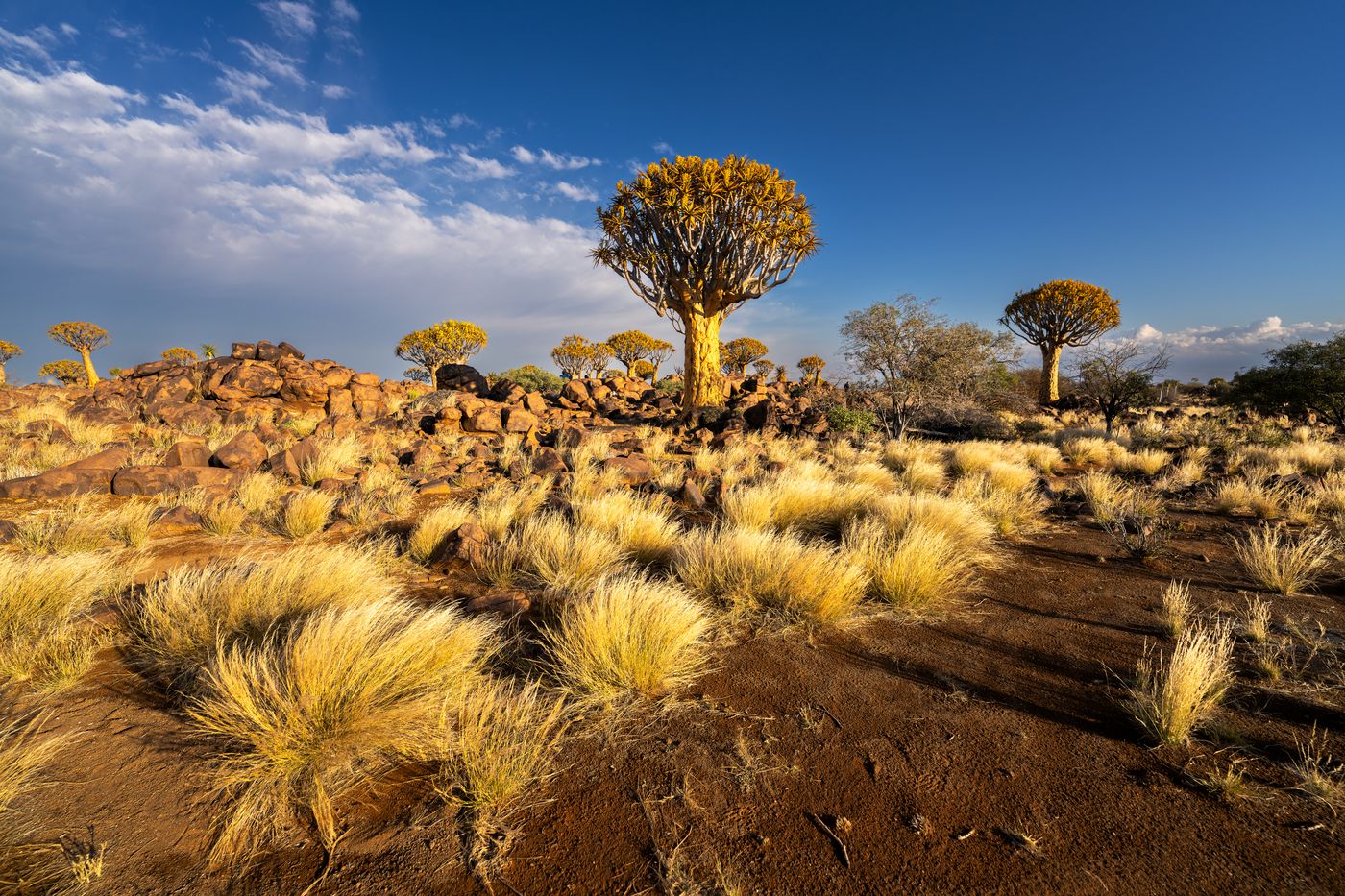
1. Keetmanshoop and the Quiver Trees
2 daysA forest of "trees that aren't trees": quiver trees are actually tree aloes, and their pale trunks look almost unreal in the parched landscape. It's most powerful after dark, when one of the most beautiful night skies of the whole trip shines above them. And in the morning there's frost on the tent.
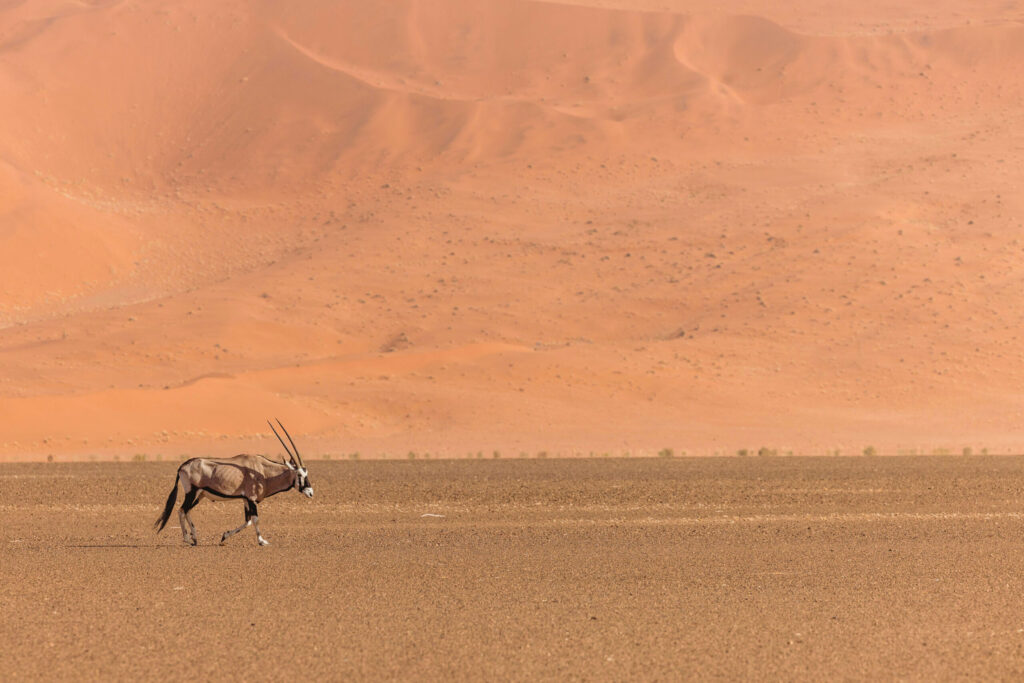
2. The D707 and Sossusvlei
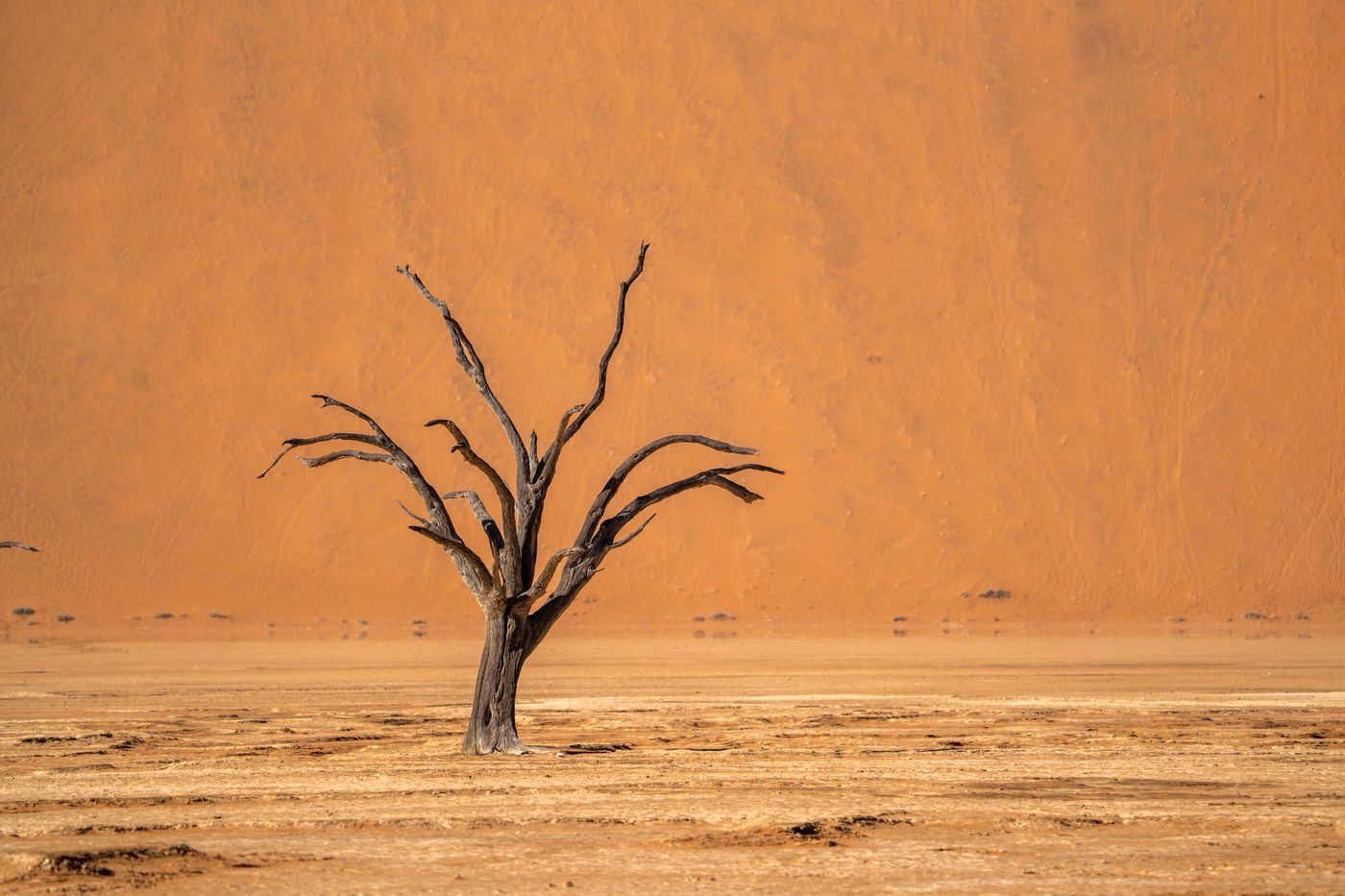
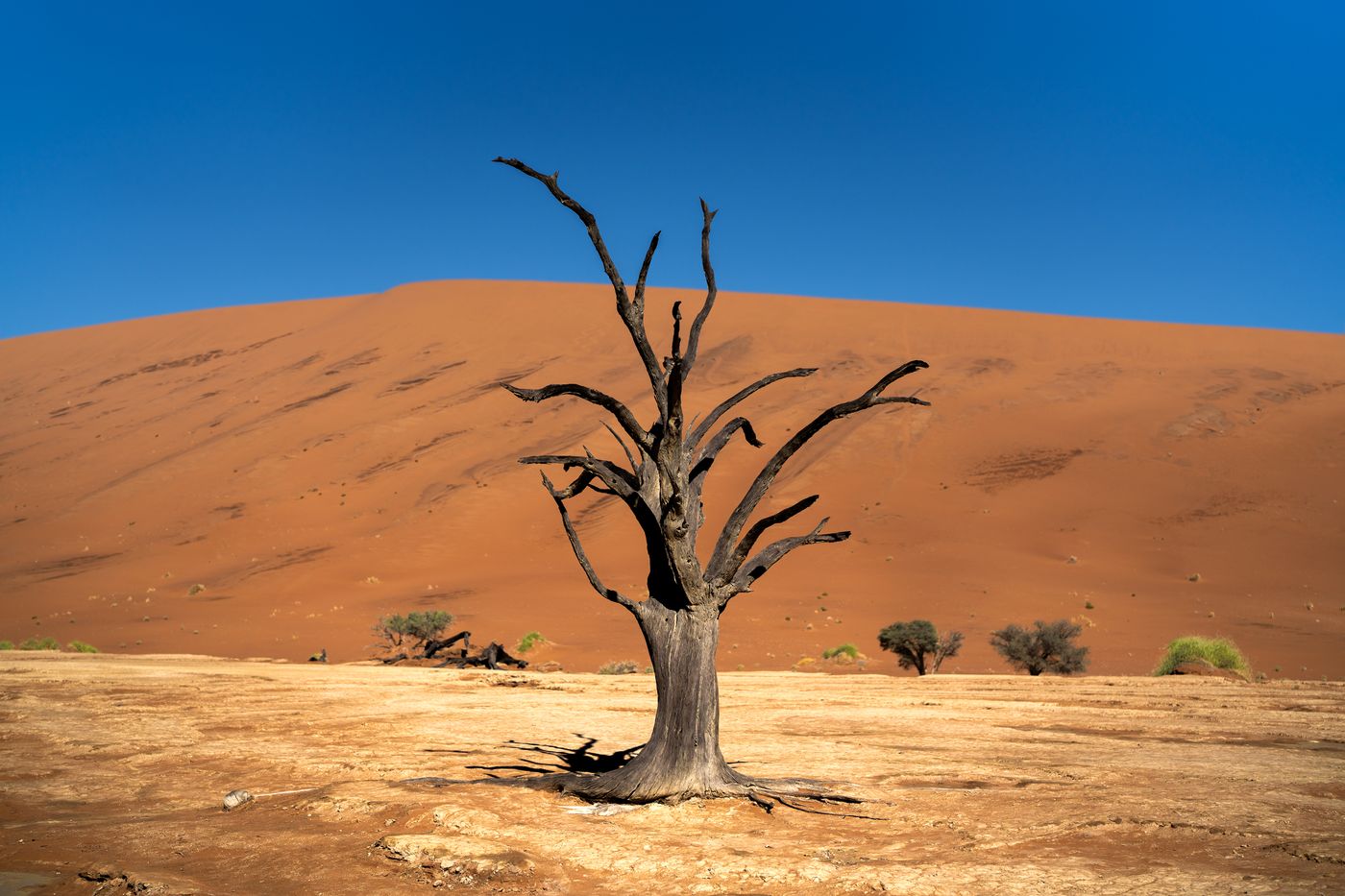
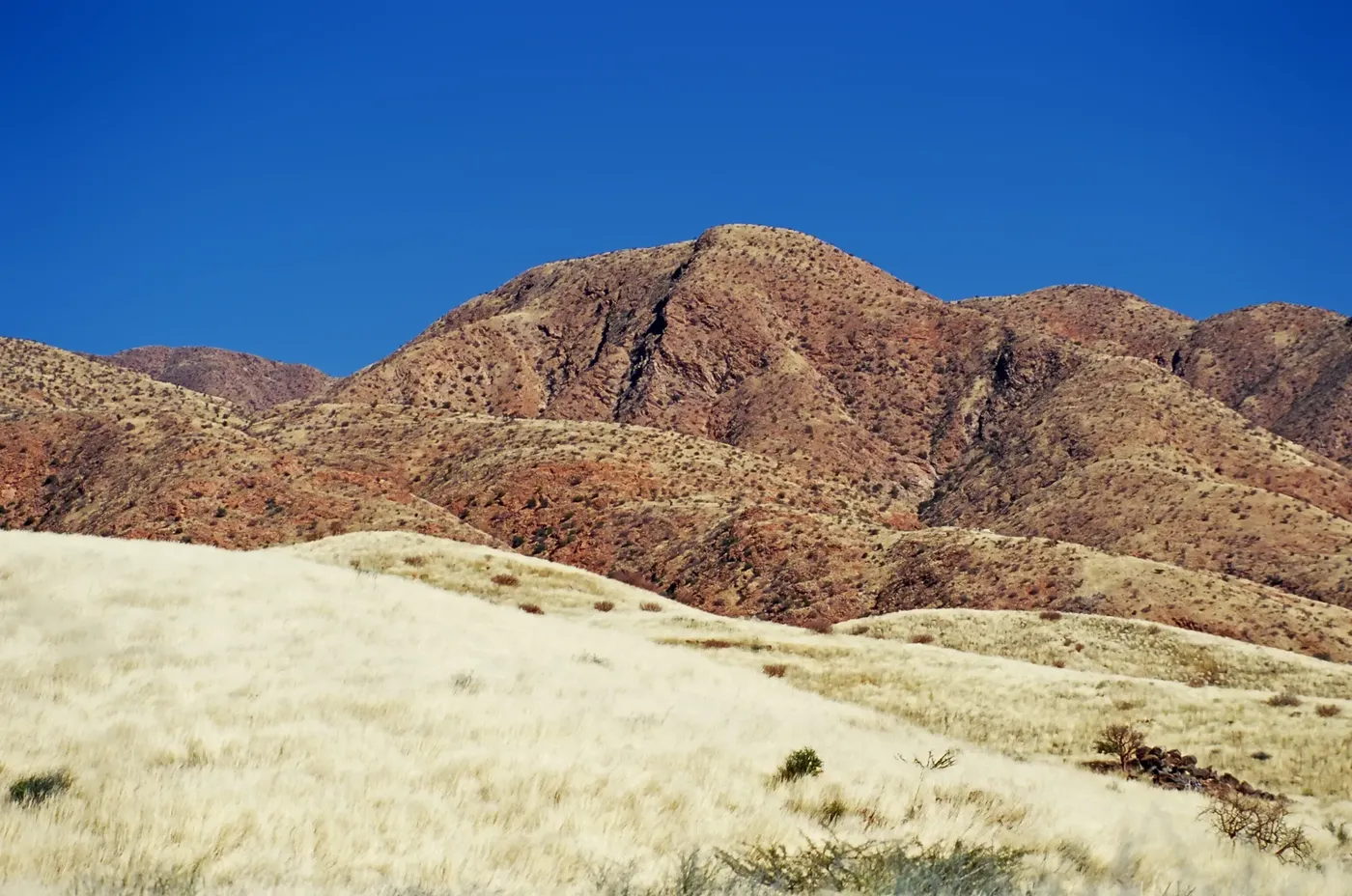
3 daysThe road to the dunes follows the D707: the red dunes of the Namib on one side, mountain ridges on the other, and hardly a car all day. Then Sossusvlei and Dead Vlei, a white pan with centuries-old acacia skeletons beneath the highest dunes in the world. Climb a dune right after sunrise, when the light is at its best and it's still possible to breathe.
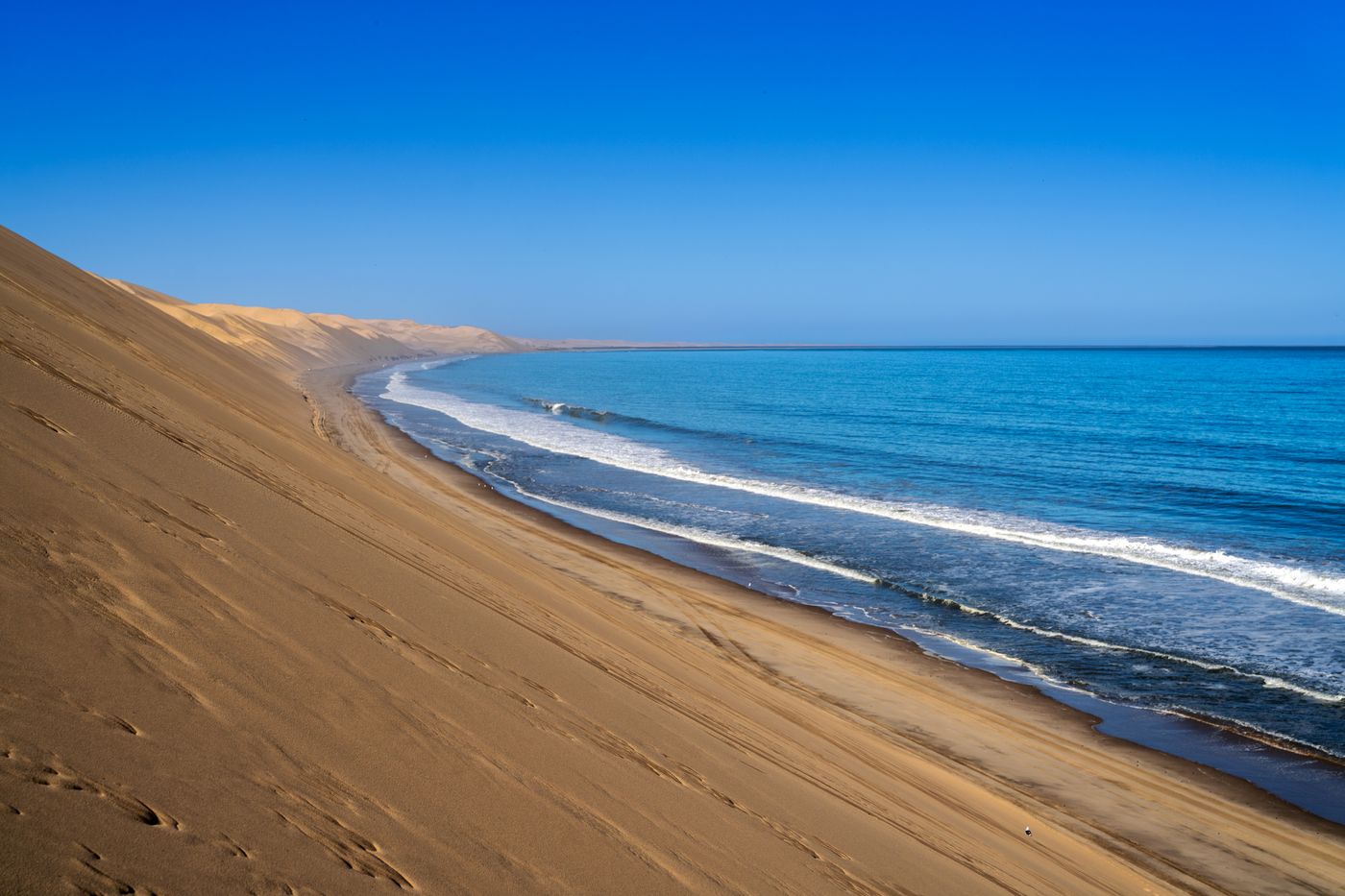
3. Walvis Bay, Swakopmund and Sandwich Harbour
3 daysBeyond the Kuiseb Pass, the scorching desert gives way to cold Atlantic fog. Around Walvis Bay there are lagoons full of flamingos, but the highlight is Sandwich Harbour, where giant dunes plunge straight into the ocean. You drive there at low tide along a narrow strip of beach between the surf and the dune slopes.
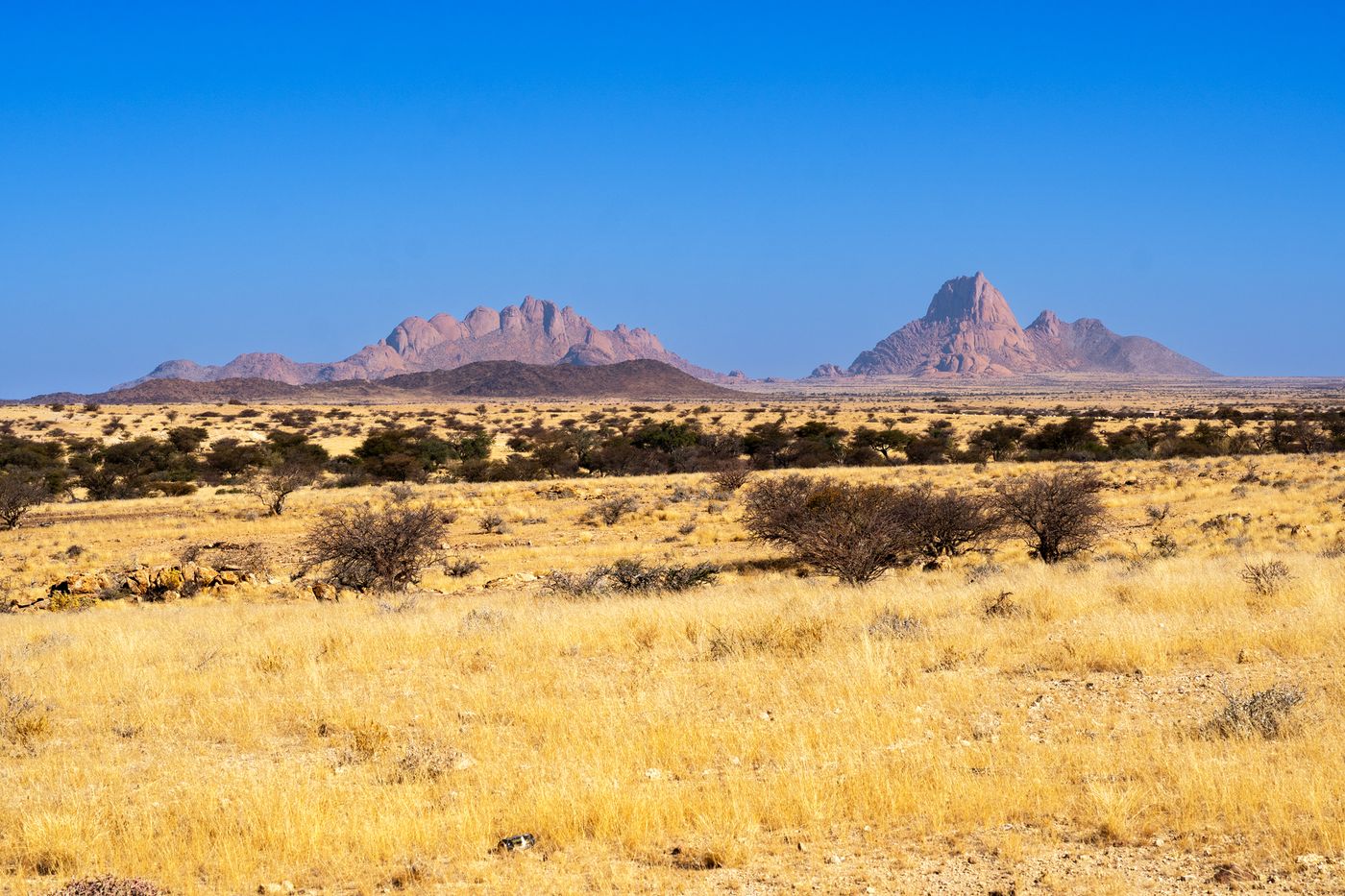
4. Spitzkoppe and Damaraland
3 daysA granite massif rising from the plain like an island, with natural arches and solitary peaks. It's at its best at sunrise and sunset. From here, carry on north into Damaraland: dry riverbeds, table mountains, desert elephants and rock engravings thousands of years old at Twyfelfontein.
5. Etosha
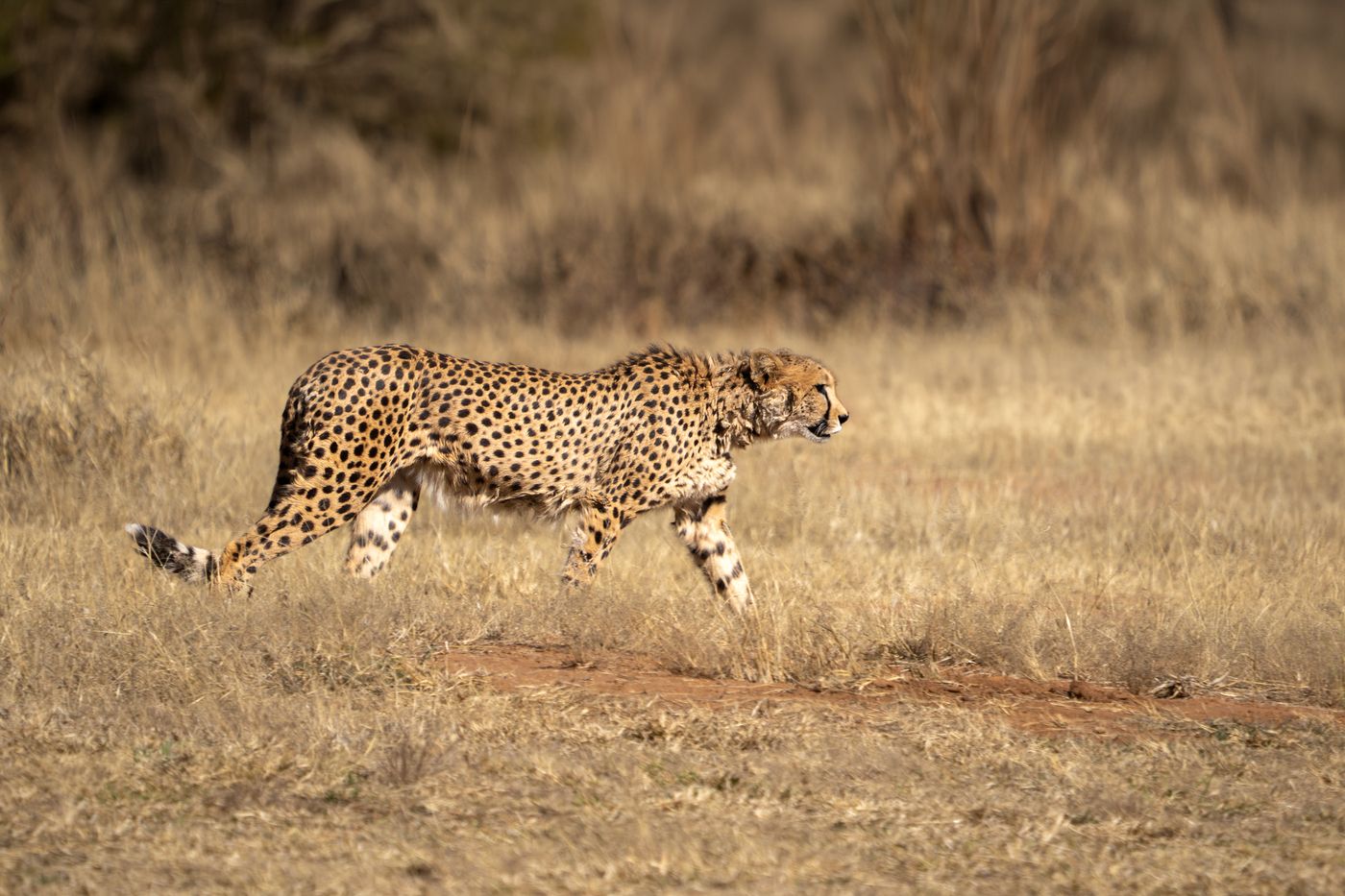
4 daysNamibia's most famous park and one of the best places in Africa for wildlife. The animals gather at waterholes, so often all you need to do is wait: elephants, giraffes, zebras, antelopes and, with a bit of luck, lions. The most memorable moments are evenings at the camp waterhole, when rhinos arrive after dark.
Extensions (If You Have More Time)
The easiest addition is Lüderitz with Kolmanskop (2 days). Kaokoland with the Epupa Falls and the Caprivi Strip each need 5–6 days.
Lüderitz and the Diamond Towns
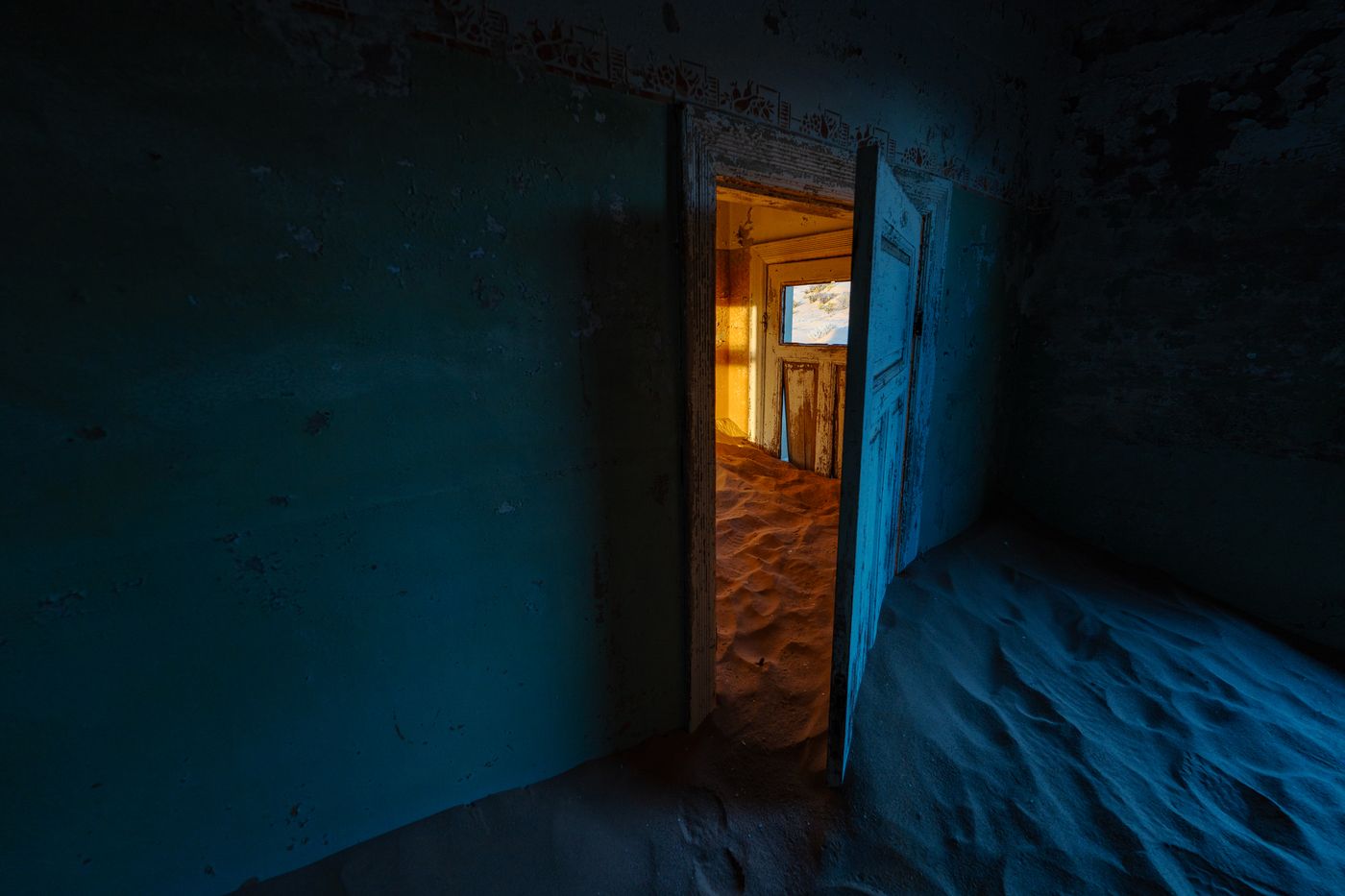
2 daysIt lies almost on the way from the south to the dunes, so it's the easiest to add. Past Aus, the wild horses of Garub, then Lüderitz with its German architecture and cold Atlantic. Just outside town is Kolmanskop, a diamond town where sand pours into the houses through doors and windows. One of the best photographic spots in Namibia.
Kaokoland and Epupa Falls
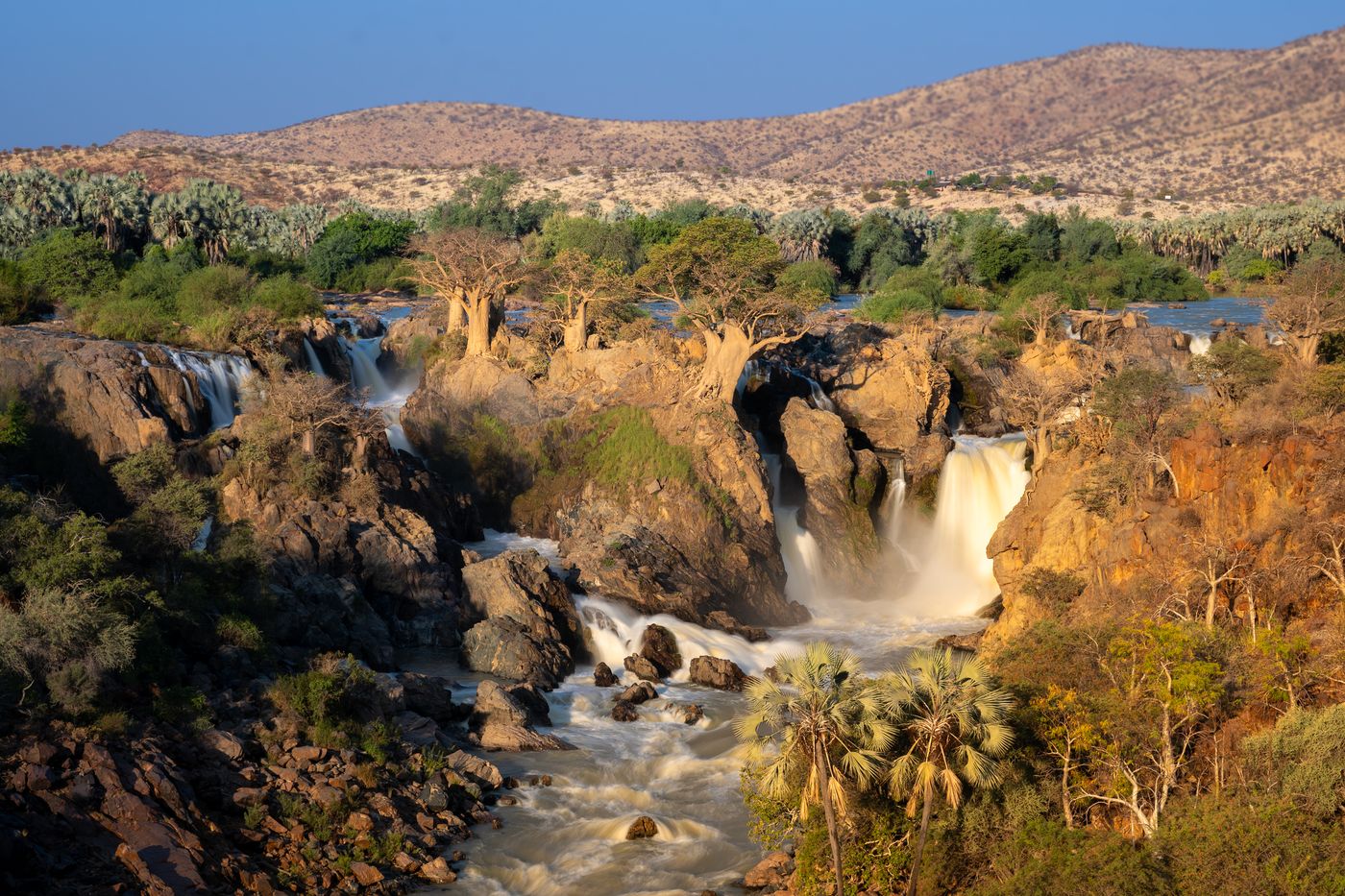
5–6 daysThe remotest corner of the country: empty gravel roads, mountains, dry riverbeds and the Himba, who live in the traditional way. At the end, Epupa Falls on the Kunene River on the border with Angola, a ribbon of palms in the middle of a dry land. It's impossible without a 4×4, and the days here pass more slowly than you'd expect.
Kavango and the Caprivi Strip
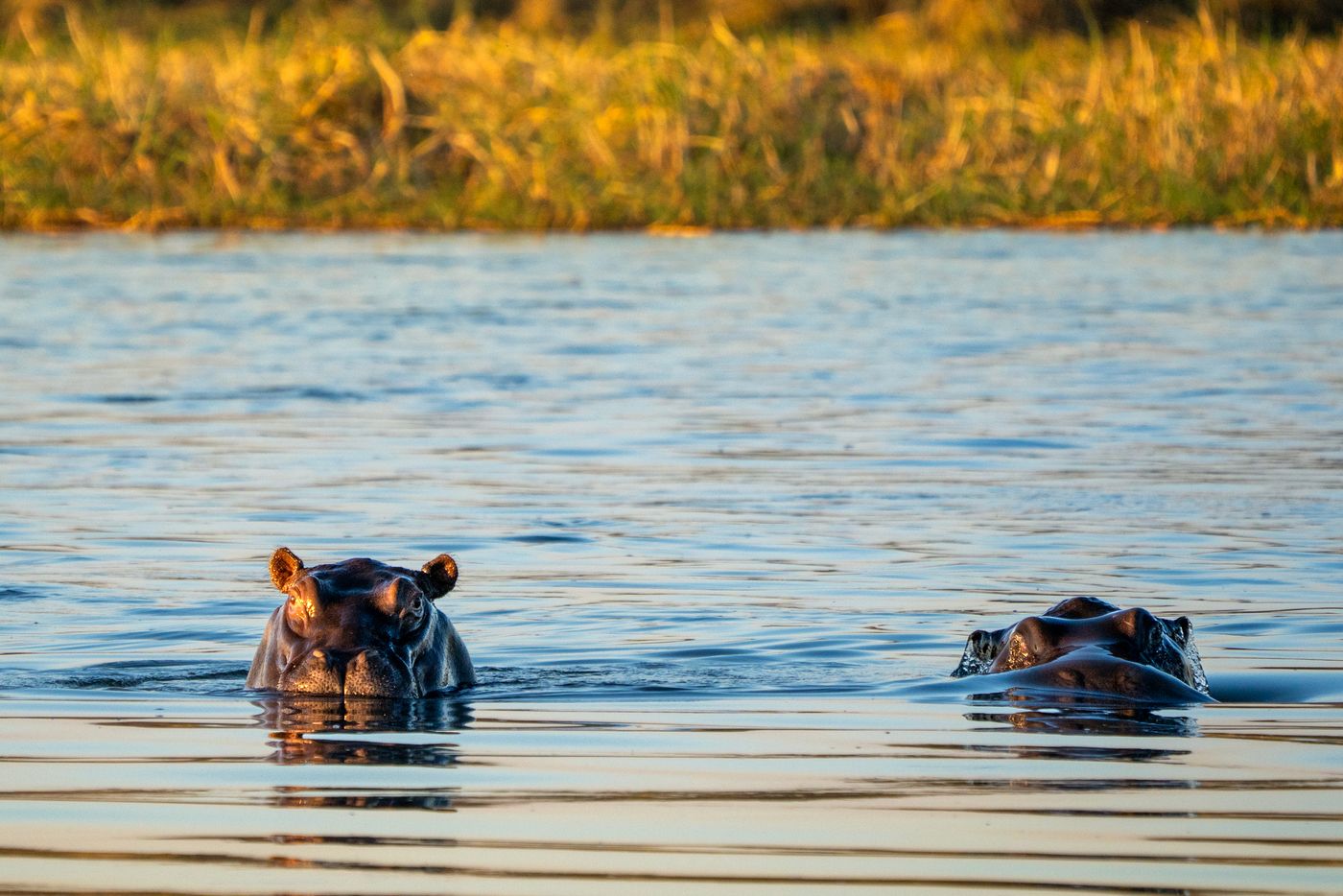
5–6 daysA completely different Namibia: the Okavango River, wetlands and Bwabwata National Park, where local communities live alongside the wildlife. Elephants, buffalo, crocodiles and hippos whose munching wakes you at night. On the way from the north you can stop at the Hoba meteorite, the largest ever found on Earth.
How to Put the Route Together
A loop from Windhoek: south first, then to the dunes and the ocean, and back via Damaraland and Etosha. Ideally in a 4×4, with daily drives you can genuinely manage on gravel.
The loop starts and ends in Windhoek, usually reached by direct flight from Germany or with one change. If you land in the evening, spend the first night in Windhoek. Lüderitz fits into the route between the south and the dunes, Kaokoland follows on from Damaraland and Caprivi from Etosha.
- Car: I recommend a 4×4. An SUV with higher clearance can manage the classic loop, but a 4×4 gives you confidence on sand and rocks, and for Kaokoland it's essential. In Damaraland it depends on the route: you'll manage the main roads without one, but not the sandy dry riverbeds.
- Fuel: fill up sooner than you think you need to.
- Spare tyre: a puncture isn't bad luck, it's statistics. When picking up the car, check the spare and the tools.
When to Go
In the dry season, from May to October. July to October is best for safari in Etosha, but bear in mind that nights in the desert drop below freezing.
Best in the dry season from May to October. The roads are passable and the animals gather at the waterholes. In June and July, though, expect freezing nights in the desert, so pack both shorts and a warm jacket. From November to March it's hot and storms roll in.
What Would Have Helped Me
Booking earlier. Sossusvlei and Etosha up to six months ahead. The same goes for the car (I recommend a 4×4) and for the campsites inside Etosha. Park entry fees are paid at the gate.
Leaving more time for the north. Kaokoland, Epupa and the Okavango were my most powerful places. Endless plains giving way to monumental waterfalls, and finally the Okavango and its wetlands.
Being ready for frost. Over 30 °C by day, −3 °C at night and frost on the tent by the quiver trees in the morning.
FAQs
How many days do I need for Namibia?
For the classic loop (quiver trees, Sossusvlei, the coast, Spitzkoppe with Damaraland and Etosha), allow 18 days: 15 on the road, 2 for arrival and departure and 1 spare. With three weeks you can add Lüderitz; Kaokoland or Caprivi each need an extra week. For everything, you're looking at over a month.
Is an ordinary car enough, or do I need a 4×4?
I recommend a 4×4. An SUV with higher clearance can handle the main gravel roads of the classic loop, but a 4×4 is a safe bet on sand and rocks, and you won't get into Kaokoland without one. In Damaraland it depends on the specific route. Without a car you won't see most places.
Is Namibia safe?
It's one of the safest countries in southern Africa. The biggest risk isn't crime or animals but driving fast on gravel, long distances and fatigue behind the wheel.
Do I need a visa?
Yes. Czech citizens need a visa for Namibia. A tourist visa can be obtained on arrival at Windhoek airport, or applied for in advance online or through the honorary consulate in Prague. Conditions may change; you'll find the current ones on the Ministry of Foreign Affairs website (checked in November 2026).
When is the best time for safari in Etosha?
In the dry season, especially from July to October. Water is found only at the waterholes, so that's where the animals gather.