How much time for Morocco
In 7 days you'll cover the essentials: Marrakech, the mountains below Toubkal and over the Atlas to the kasbahs of Ait Ben Haddou and the oasis of Fint. With 14 days you add a second week in one of two variants. Both cross the Sahara and return to Marrakech along the coast: A via Merzouga and the Middle Atlas, B via Zagora, the Anti-Atlas and Essaouira.
The desert is deliberately left for the second week. It lies beyond the Atlas, and a there-and-back trip from Marrakech mostly means two days in the car. The itinerary is a rough guide with no slack built in; if you can, add a day or two.
Language
Arabic and Berber; French will get you by; English has improved a lot over the past fifteen years but isn't enough for easy conversation; German often helps, as many Moroccans live in Germany
Capital
Rabat
Currency
Moroccan dirham (MAD)
Payments
a cash country; ATMs give out at most 2,000 MAD per withdrawal, mostly in 100s, which people often can't change
Visas
not required for Czechs for stays up to 90 days
Plugs
same as in Czechia (types C and E), 230 V, no adapter needed
Mobile
Maroc Telecom, inwi and Orange; SIM cards right at the airport, cash only; Orange has good coverage only near the coast
Driving
on the right; a Czech licence is enough
Climate
best in spring and autumn; over 40 °C in the desert in summer, snow in the mountains and frosty desert nights in winter
Main route: the 7-day core
The core starts in Marrakech, heads into the mountains below Toubkal and then over the Atlas south to the kasbahs. Three areas, five days on the ground, plus arrival and a day to get back. I describe the places themselves in detail in Top 10 places in Morocco; here it's about how to fit them together.
1. Marrakech
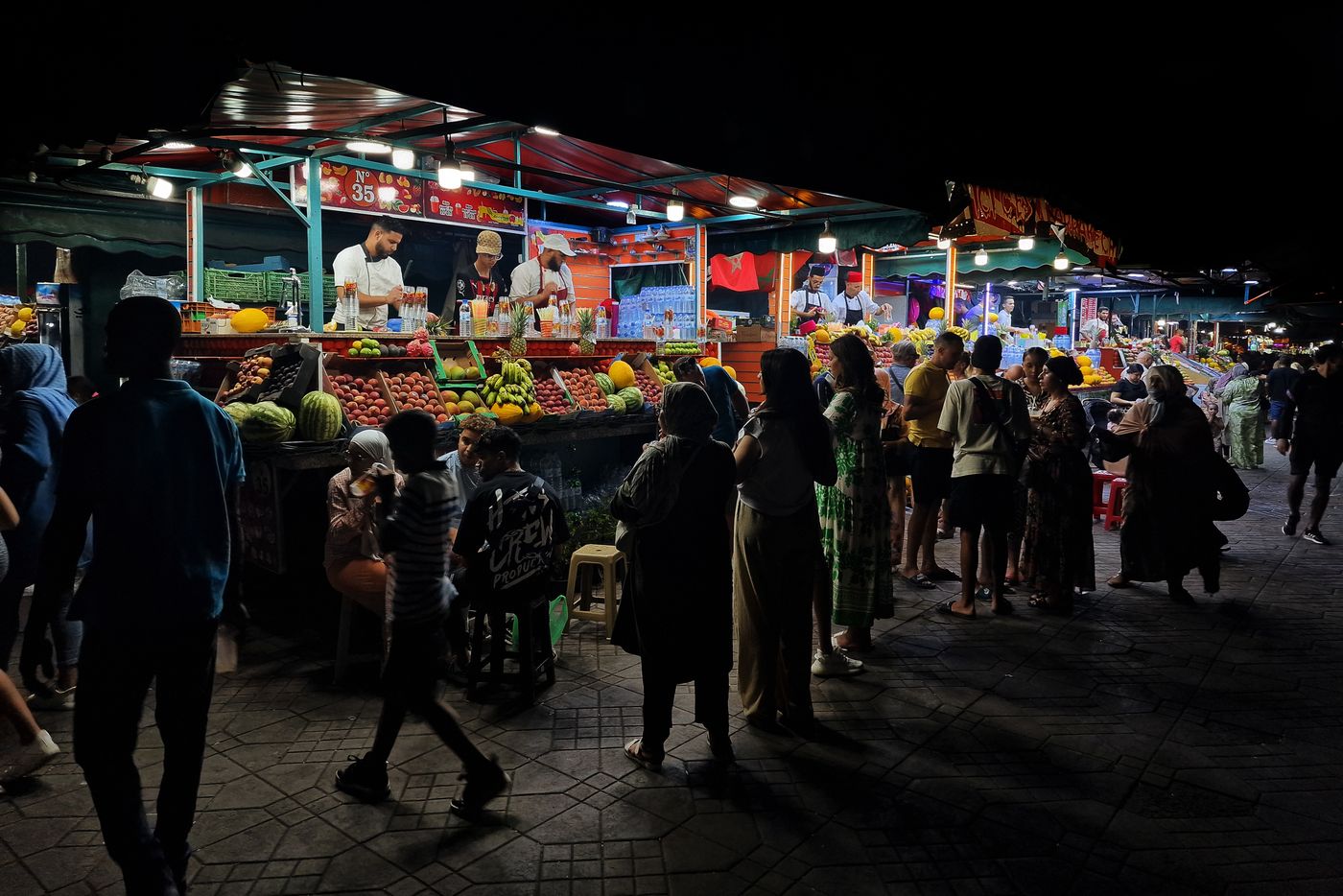
1 dayNoisy, colourful and exhausting. It didn't win me over even the second time, but you can't understand Morocco without it. One day is enough: Jemaa el-Fna square in the evening, and during the day an escape from the souks into quiet palaces and gardens. Then straight off to the mountains.
2. High Atlas: Imlil and Aroumd
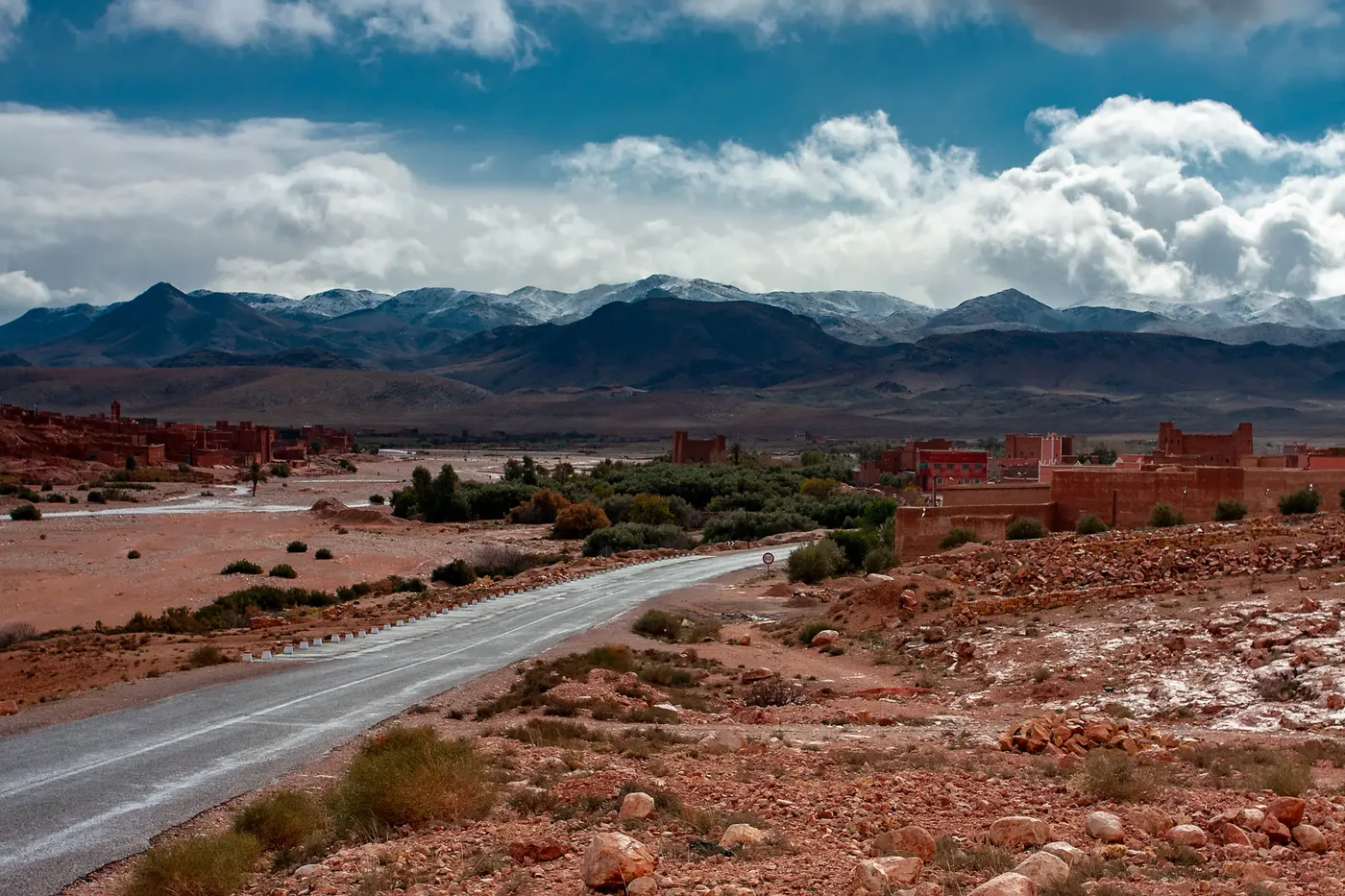
2 daysJust a short way from Marrakech and a completely different world: a green valley, walnut and cherry trees and mud-brick villages below the highest mountain in North Africa. If you want to summit Toubkal, add two days. A local guide is compulsory on Toubkal, and it's enforced. In summer this is the best place to hide from the worst of the heat. That's exactly how it worked out for me in August 2023. We missed the September 2023 earthquake by a few days. Today everything has been rebuilt and trekking carries on.
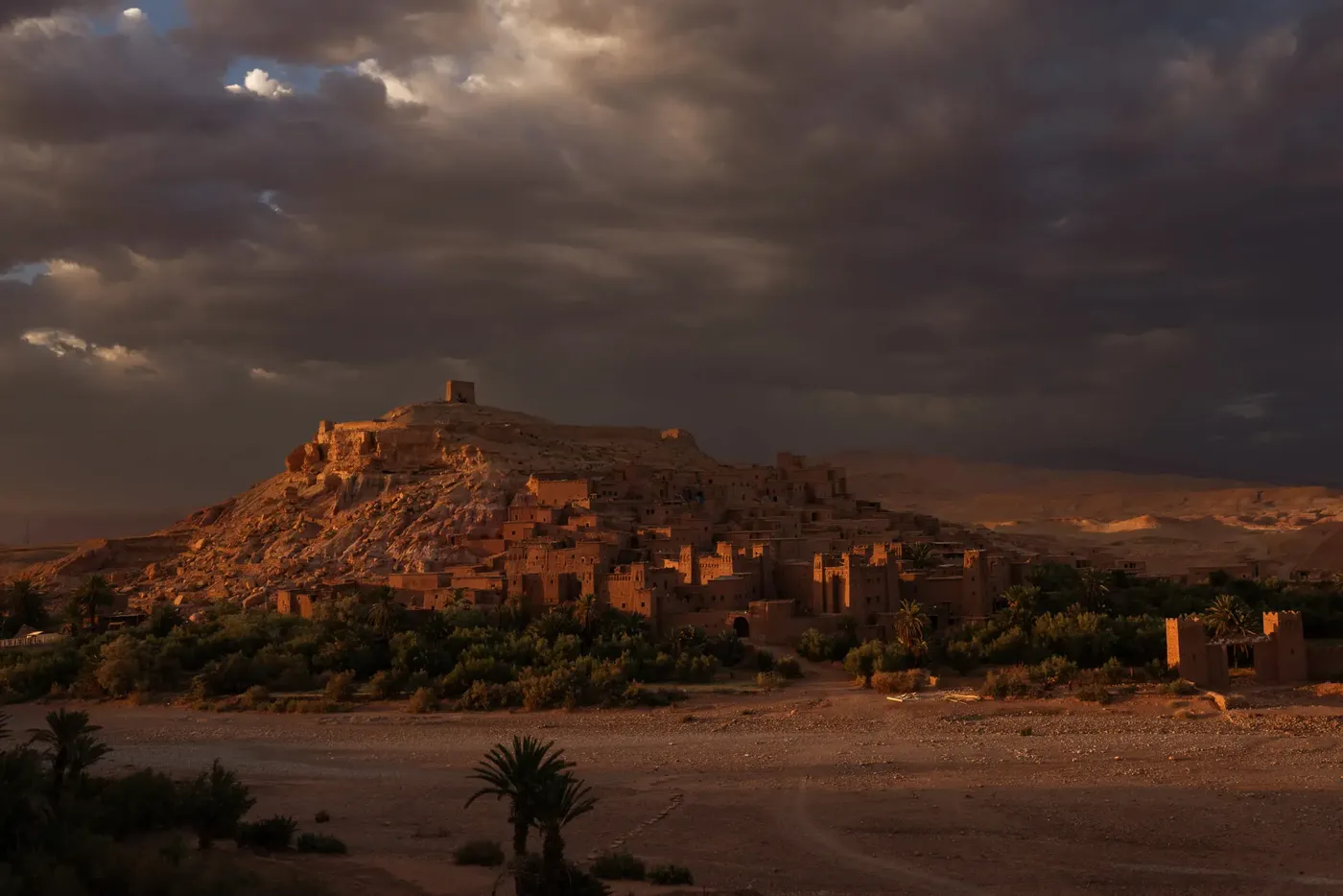
3. Over the Tizi n’Tichka: the Ounila Valley, Ait Ben Haddou and the Fint oasis
2 daysSouth over the highest pass on Morocco's roads. The main road runs straight to Ouarzazate; I recommend turning off after the pass into the Ounila Valley, following the old caravan route past Telouet all the way to Ait Ben Haddou. It's one of the loveliest stretches in all of Morocco. Ait Ben Haddou calls for early morning or evening, as tour groups come through during the day. And the Fint oasis beyond Ouarzazate is worth an overnight stay. This is where the core ends: with only a week, head back over the Atlas to Marrakech; with two, carry on from here to the Sahara.
Route map
The route
Extension: the second week, pick one variant
Both variants set off from the Fint oasis for the Sahara, each to different dunes, and both return to Marrakech via the Atlantic coast. If you add a second week, you don't go back from Fint to Marrakech, so the core route's return day moves to the end of the trip.
Variant A: Merzouga, the Middle Atlas and the coast – 7 days
A big loop east and north. To the Sahara and the country's best-known dunes, back through mountains few tourists visit, and finally to the ocean. It's packed, with no room left for Fez.
Todra Gorge – 1 day
East from Ouarzazate along the southern flank of the Atlas. Here the river has cut a narrow gorge through the rock and the road runs right along its floor. It's a natural stop on the way to Merzouga. I was here in January: snow-capped Atlas peaks all around, grey skies, but the towns and villages had a wonderful atmosphere.
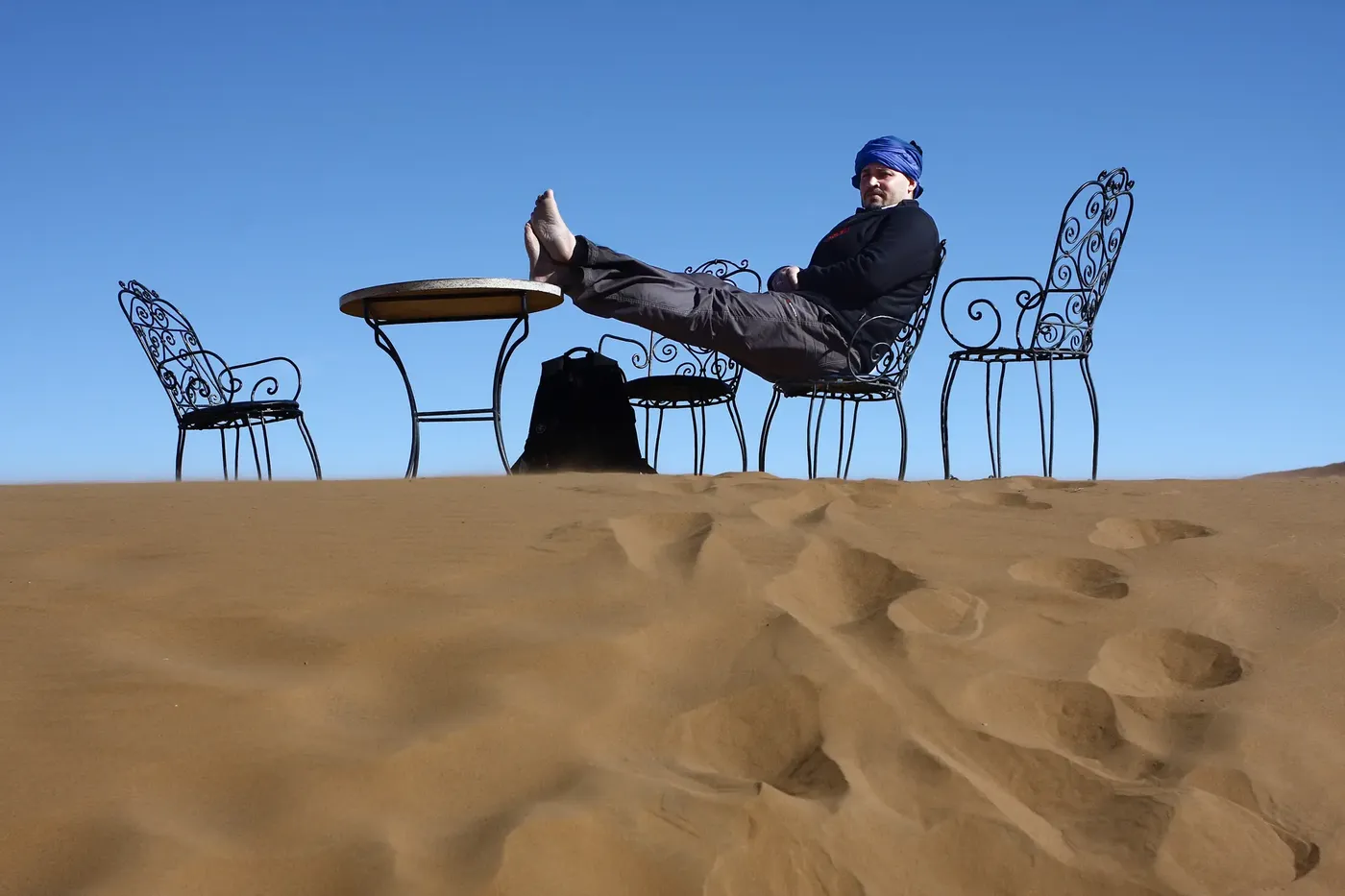
Merzouga and the Erg Chebbi dunes
2 daysMorocco's best-known slice of the Sahara, and the most touristy. The Erg Chebbi dunes are tall, orange and easy to reach. I was here in January and it snowed on us. Even so, Merzouga is magical, the dunes huge and breathtaking. It's worth sleeping out by the dunes and seeing them at sunset and sunrise.
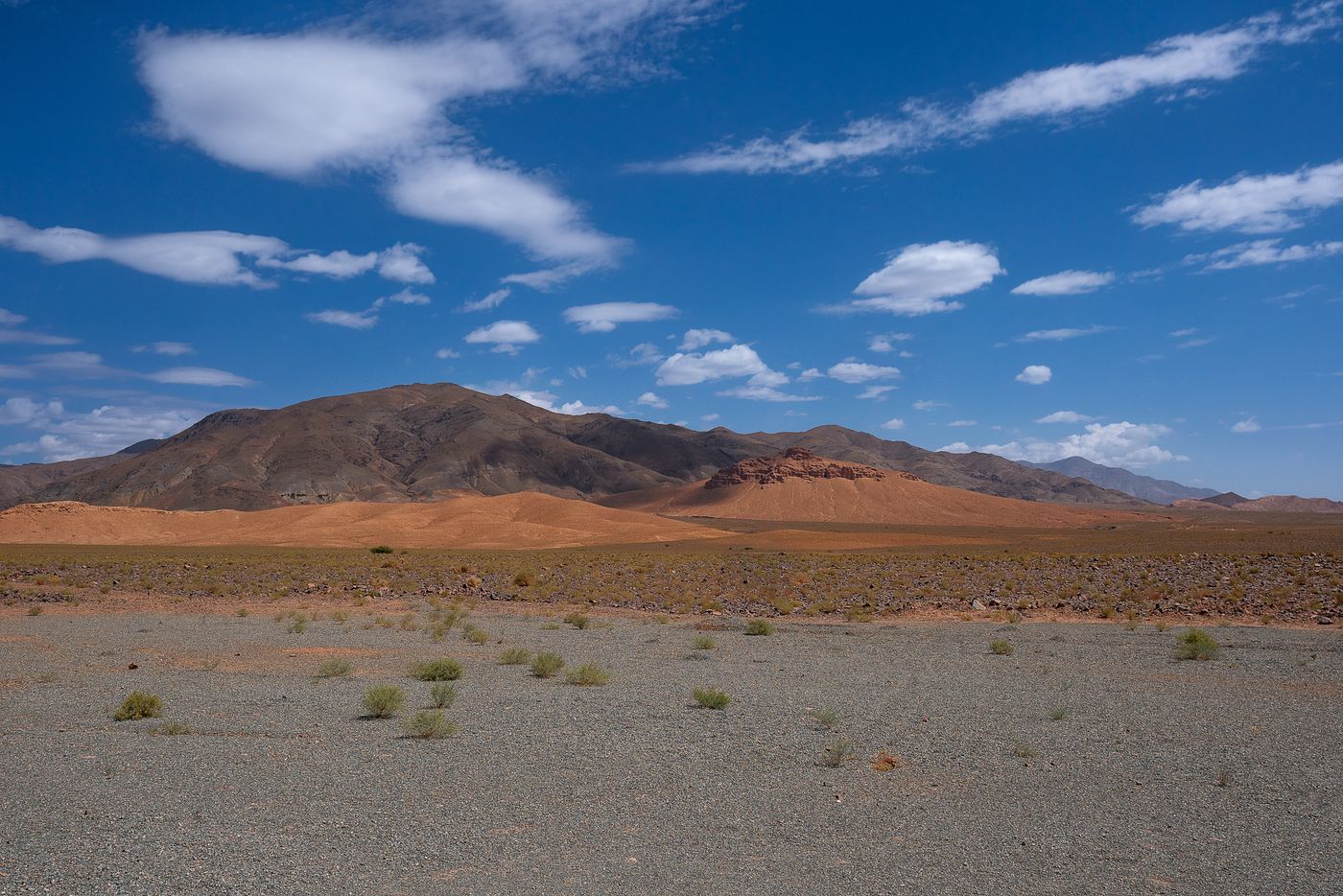
Ziz Gorge and the Middle Atlas
2 daysNorth from the desert along the Ziz River: palm groves around Erfoud and Errachidia, then a deep canyon where the river slices through the Atlas. Beyond it lies the Middle Atlas, and instead of the motorway, roads like the P3533 through Khénifra province. High plateaus, cedar forests, empty roads and villages where a foreigner is a rare sight. Fill up whenever you get the chance.
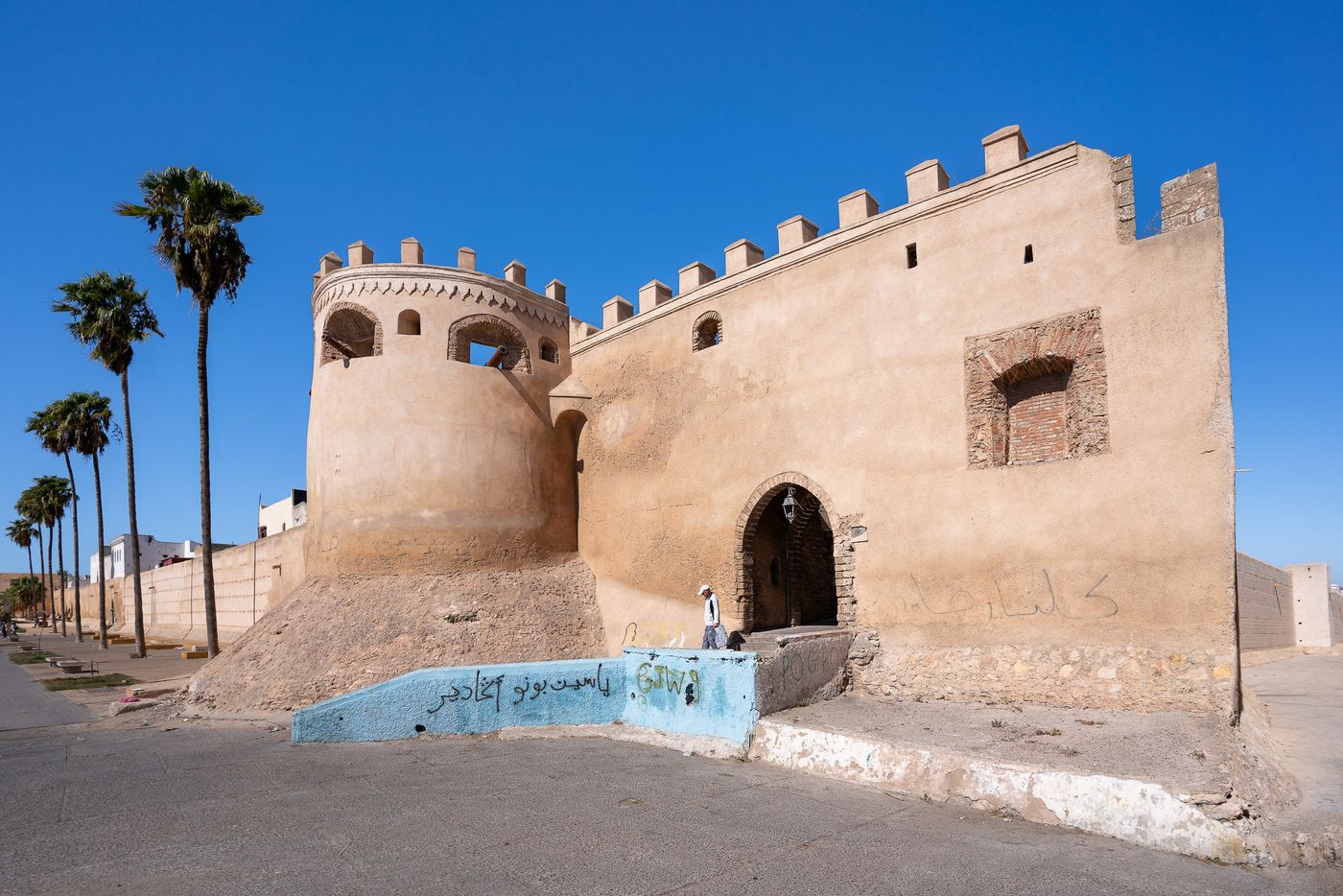
The Atlantic coast: Azemmour and El Jadida
2 daysDown from the Middle Atlas to the ocean. A refreshing change after mountains and desert: wind, salt, Portuguese ramparts and white houses. Azemmour is quiet and almost tourist-free, while El Jadida has an underground cistern straight out of a film. From here it's not far to Marrakech.
With more time: Fez
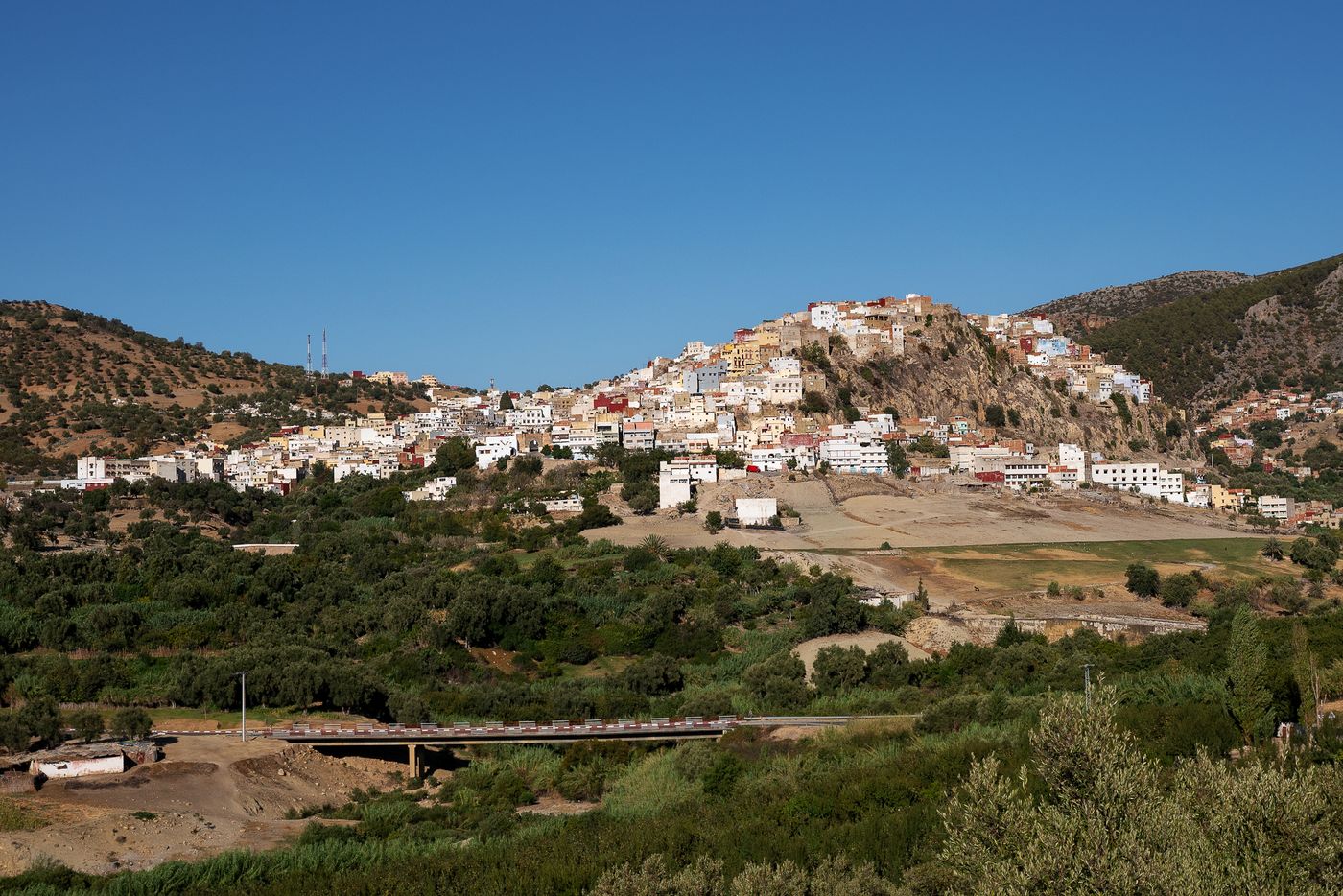
+1 dayIt won't fit into seven days, even though it's only a short detour. If you want it, add a day and head north from the Middle Atlas. Fez needs a full day; half a day isn't enough for its medina and tanneries. Without the extra day you can swap it for the coast, but then the drive back to Marrakech is very long.
With more time: Moulay Idriss and Volubilis
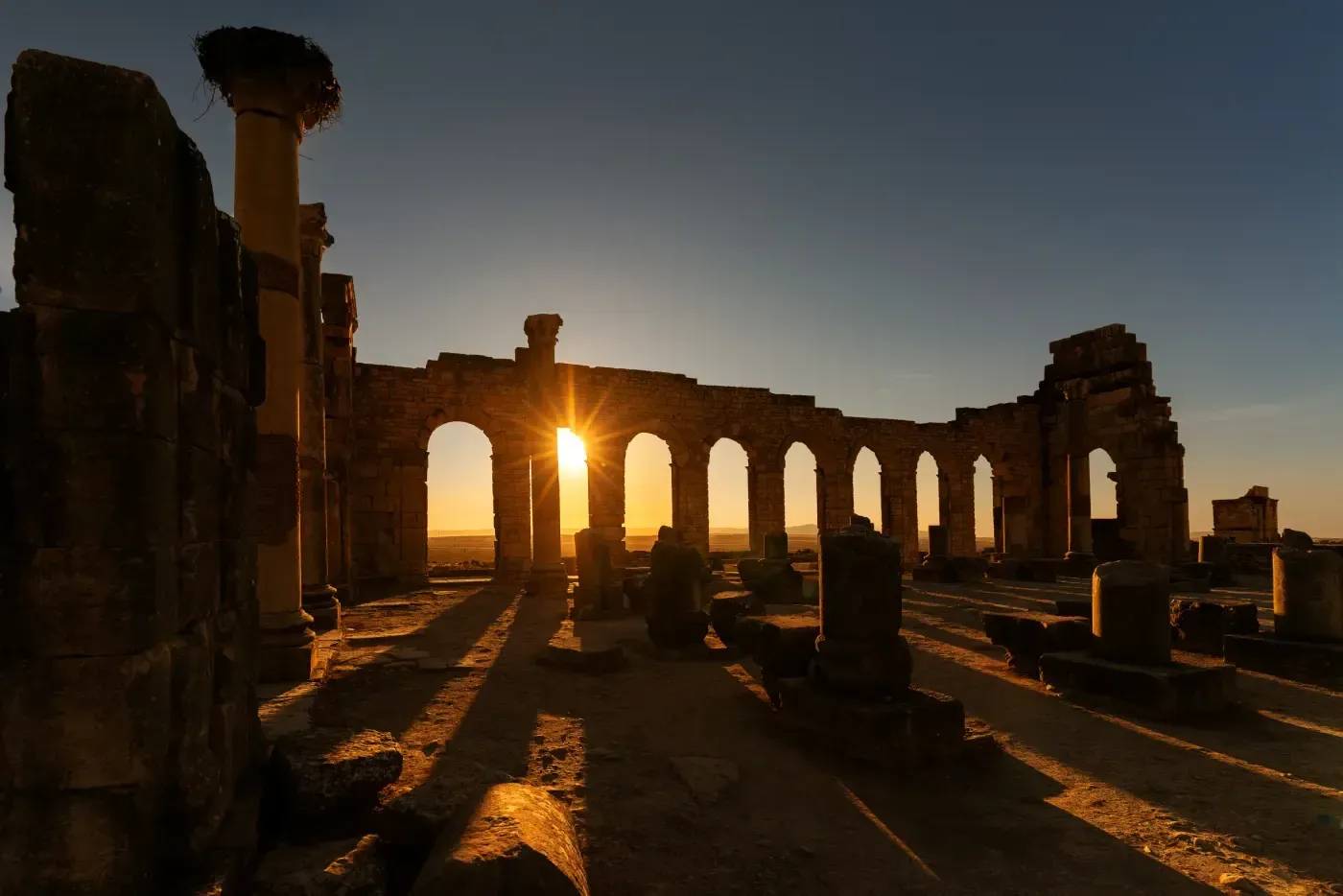
+1 dayNot far from Fez lies the holy town of Moulay Idriss, with Roman Volubilis below it. After Marrakech and Fez, Moulay Idriss is pleasantly calm, so do stay the night. Also worth considering is Meknes, another of the imperial cities right next door.
Variant B: Zagora, the Anti-Atlas and Essaouira – 7 days
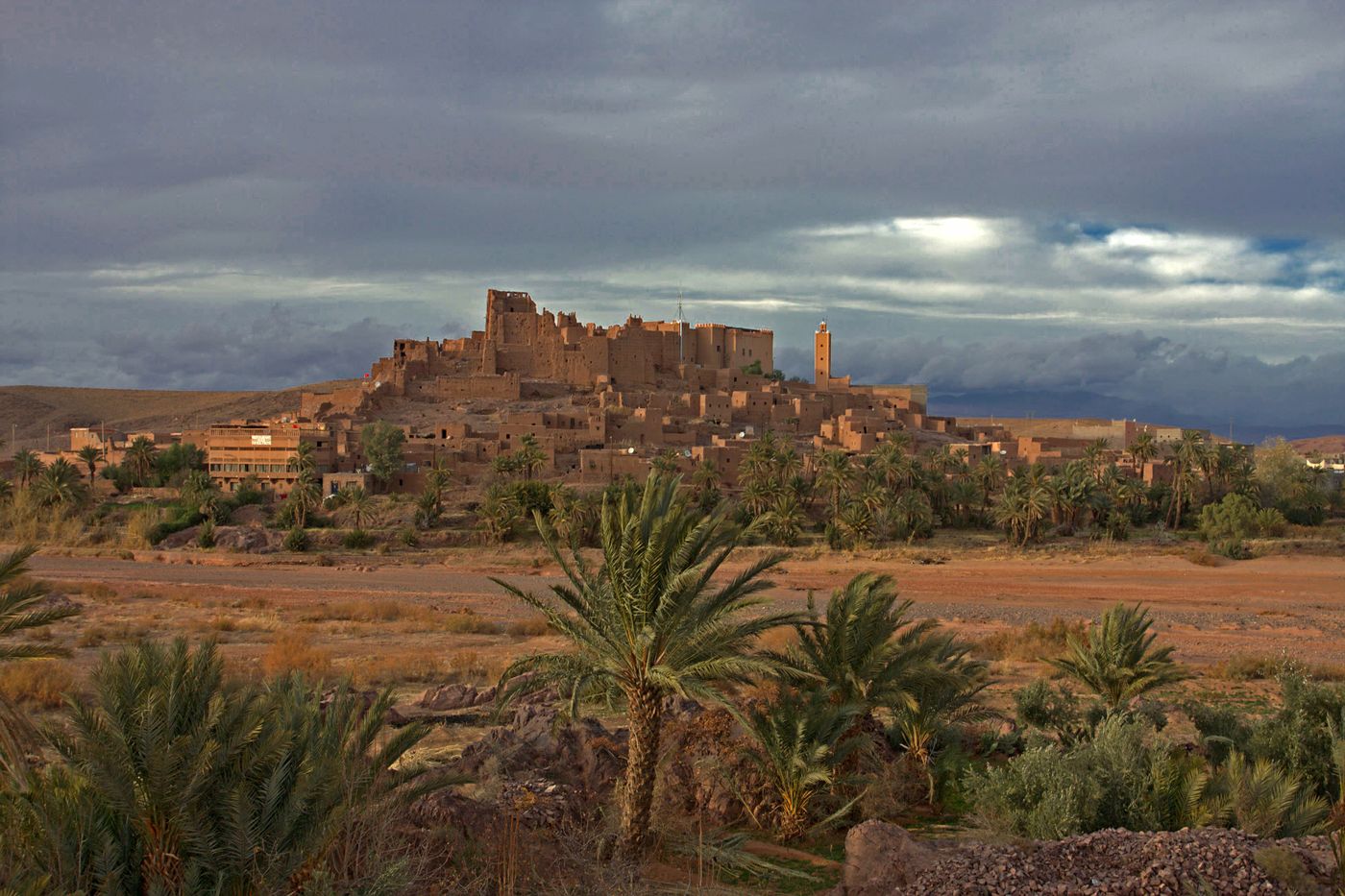
A loop to the south. Wilder desert at the end of the Drâa Valley, then a landscape of argan trees, granite boulders and mud-brick villages, and finally the ocean. I know the south from my first trip, and the desert near M'Hamid from my second.
The Drâa Valley, Zagora and M'Hamid
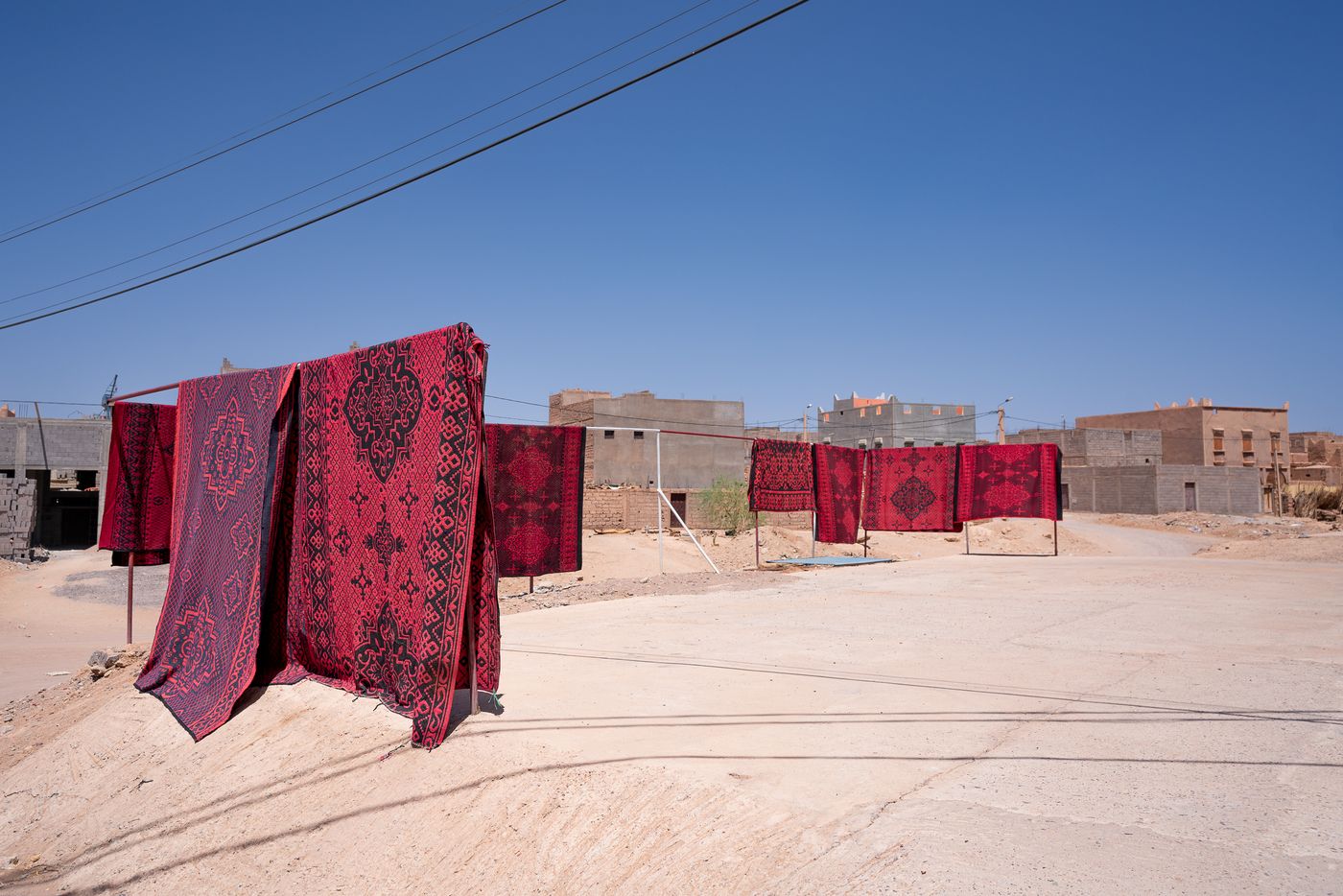
2 daysSouth from Ouarzazate along the Drâa River: palm groves, kasbahs and ksars, another mud-brick village round every bend. The valley needs a full day and a slow drive with stops. At the end of the road is M'Hamid, the last oasis before the sand, and beyond it the Erg Chigaga dunes, wilder and emptier than Merzouga. You reach the dunes with locals in a 4×4. Two days are enough, and you can stay in Zagora, which has gorgeous hotels in the palm grove.
The Anti-Atlas around Tafraoute
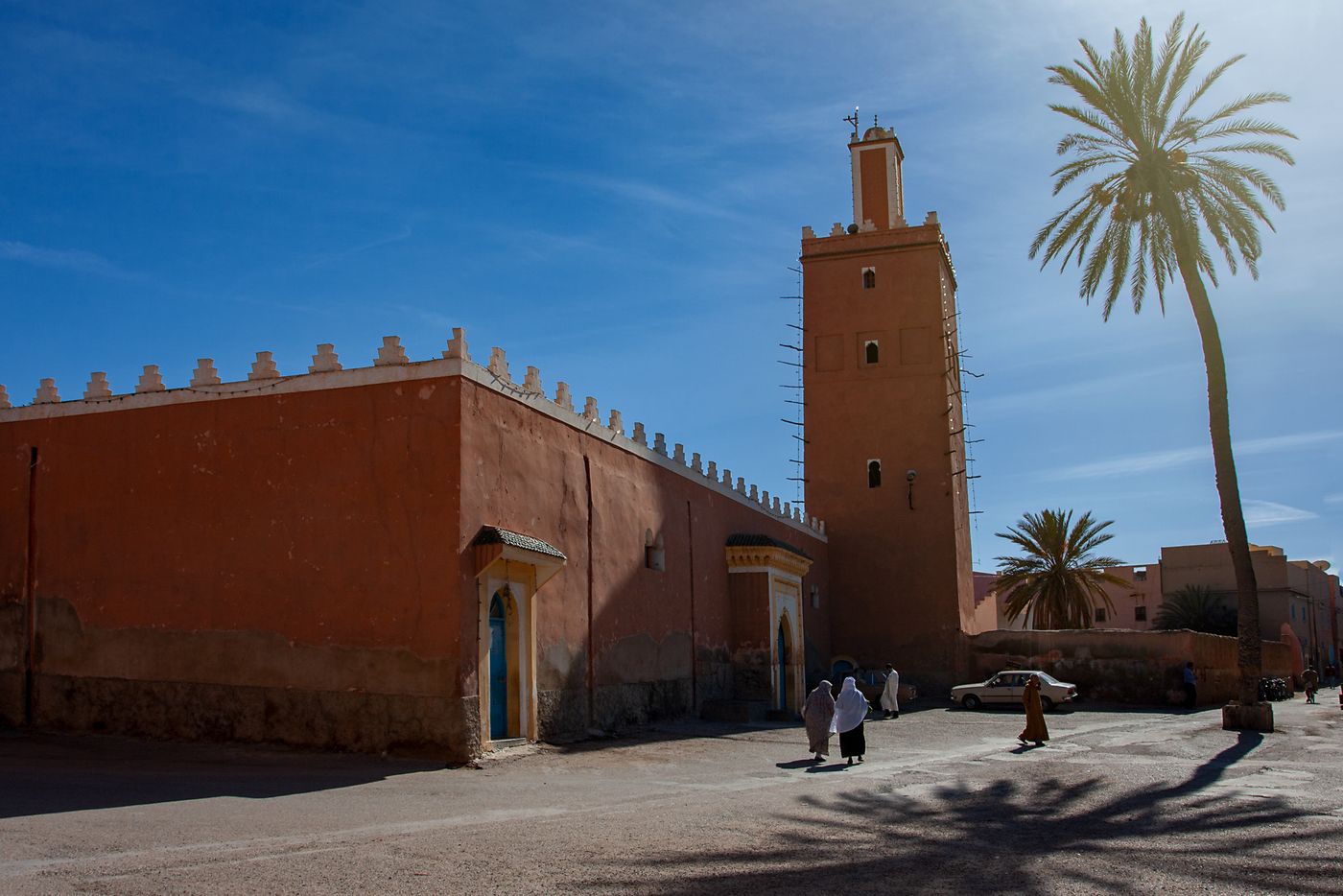
2 daysFrom the desert to the Anti-Atlas you can drive straight across via Foum Zguid and Tata, or back via Ouarzazate and Taliouine. Both are doable, just expect a long day behind the wheel. The reward is the mountains around Tafraoute, with pink villages leaning against giant boulders. Off the tourist trail, beautiful scenery, tiny villages and the smell of tagine everywhere.
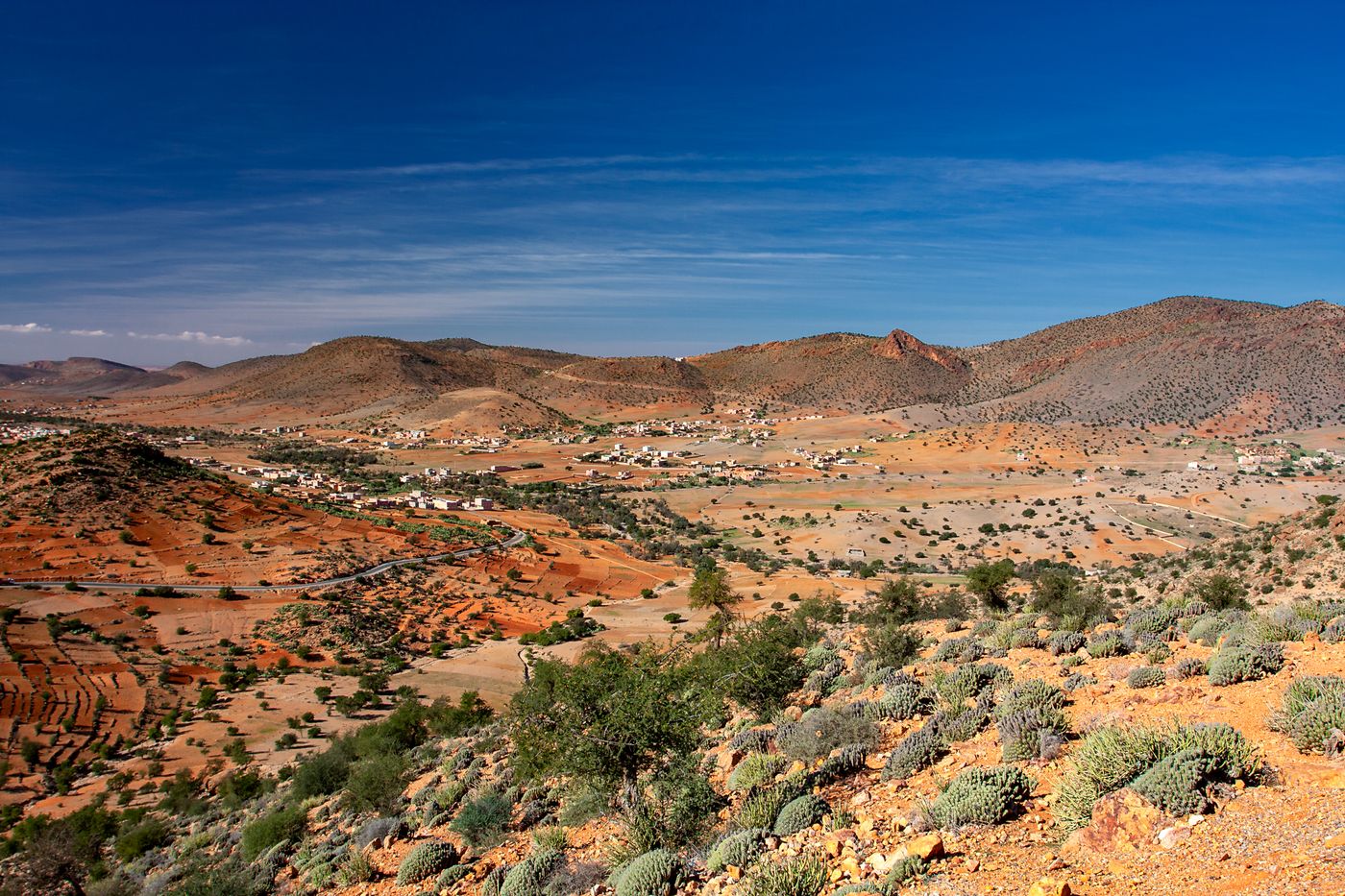
Taroudant
1 dayA little Marrakech ringed by mud walls, just without the crowds and touts. Best of all is driving along the walls in the early evening light, when the whole town turns red.
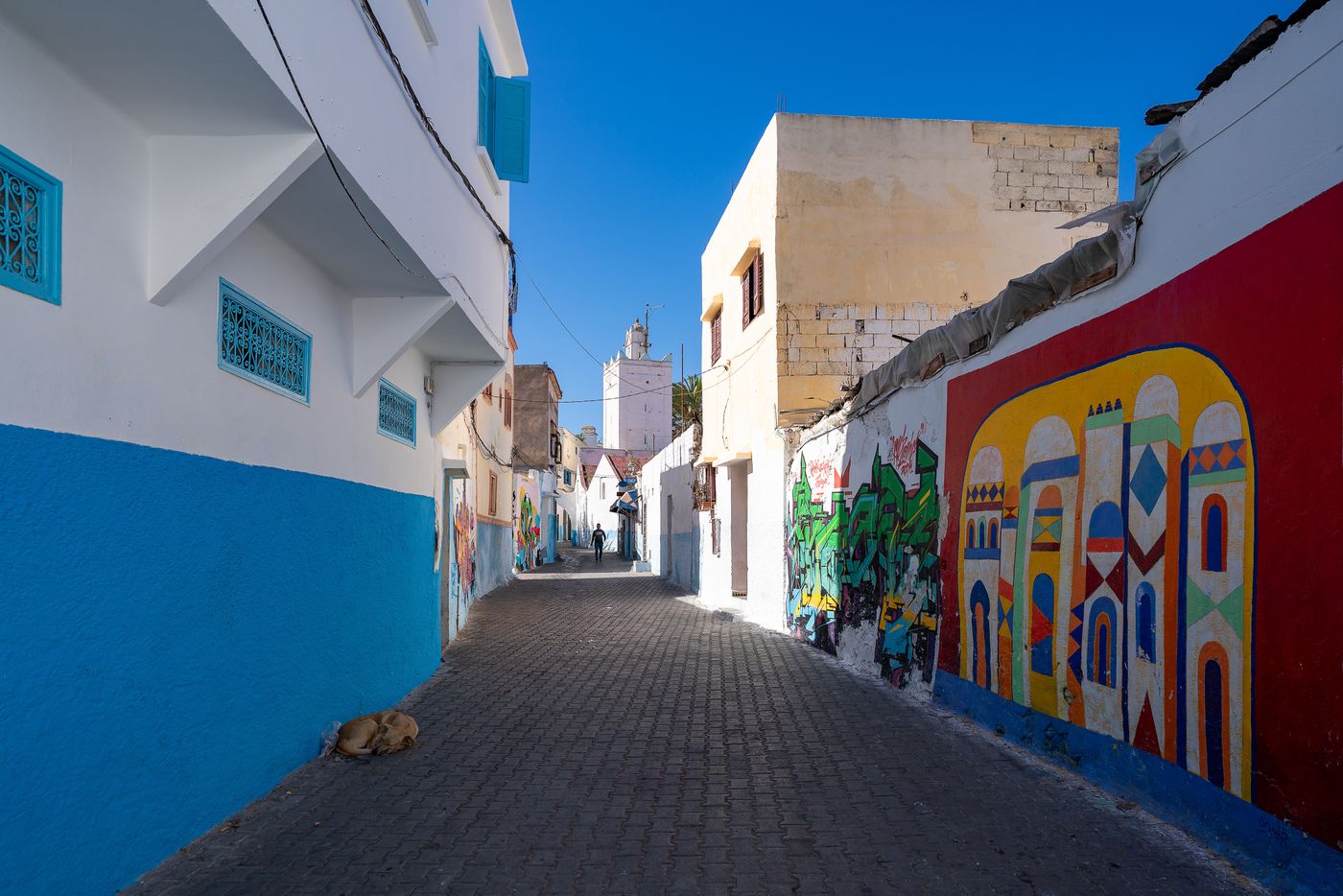
Essaouira
1 dayThe old port of Mogador, blue boats, gulls and ramparts above the ocean. It's one of Morocco's main tourist magnets, so don't expect peace and quiet. But I really liked it, and for anyone who's seen Game of Thrones it's a must.
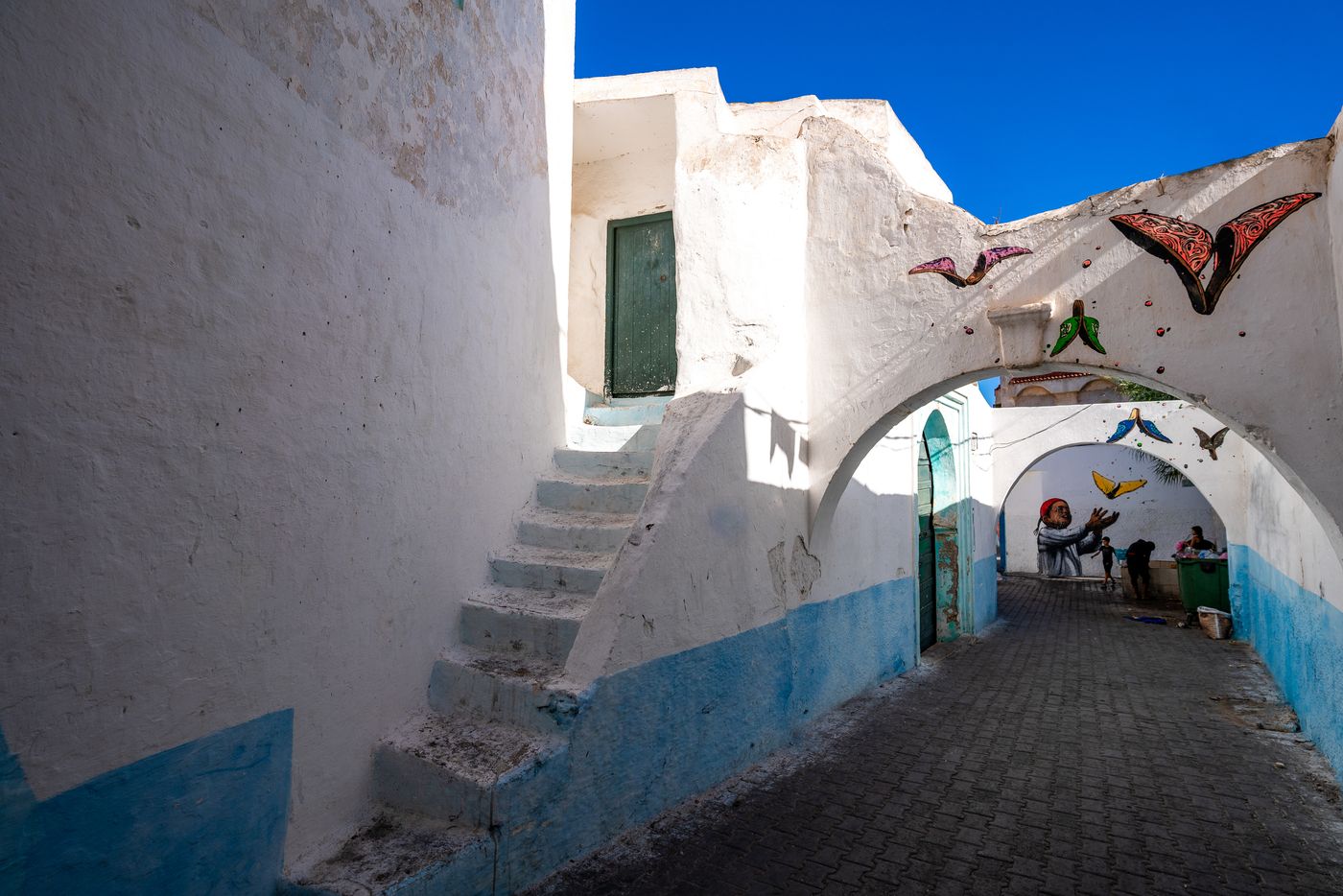
El Jadida and the Portuguese cistern
1 dayThe day we saved in the desert goes to the coast. North from Essaouira along the ocean to El Jadida, the former Portuguese Mazagan. Ramparts above the sea and, above all, the old underground cistern where the ceiling is mirrored in the water like in a film. From here it's a short hop to Marrakech.
Worth considering on either variant: Ouzoud Falls – +1 day
Morocco's highest waterfalls, a few hours north of Marrakech. It's genuinely lovely, I was just unlucky with the crowds. It's mainly locals on day trips, so if you can, arrive early in the morning or on a weekday. It fits better with variant A, on the way from the Middle Atlas; for variant B it's a detour.
How to put the route together
The whole trip starts and ends in Marrakech, which is easy to fly to, and you return the car where you hired it. If you only have a week, you can save the mountains for the end: from Fint back over the Tizi n’Tichka straight to the foot of Toubkal, from where it's a short way to the airport. Departure day is then more relaxed.
Variant A means more time at the wheel, but you'll cross almost the whole country: desert, mountains and ocean. If you want Fez too, allow 16 days. Variant B is more relaxed and further off the tourist trail.
There are direct flights from Prague to Marrakech: easyJet (from October 2026, Wednesdays and Sundays) and Eurowings (mainly Saturdays); the flight takes just over four hours.
- Car: the best and most reliable way to get around. An ordinary small car is fine; you go to the dunes with locals in a 4×4. Book ahead, as prices rise in summer.
- Car hire: choose a reliable company and photograph the car thoroughly when you pick it up. Some firms hold on to the deposit for a long time or invent damage.
- Police: checks are frequent and speed is monitored. A row of stop signs side by side means a checkpoint, so slow to walking pace.
- Without a car: trains and long-distance buses run between the big cities in the north, but going south to the mountains and desert is slow and often doesn't go where you want. The route would take much longer and wouldn't be any cheaper.
When to go
Spring and autumn are ideal. But I went in January and August, and both had something going for them. January was great: hardly anyone around, just properly cold, with snow in the Atlas and it even snowed on us in the desert. In August the desert was brutal, over 43 °C in the shade, but the Atlas was lovely. If you go in summer, give the mountains as much time as you can and keep the desert stretch short.
Ramadan: in 2027 it falls roughly from 8 February to 9 March (the exact dates depend on the moon). You can still travel, but away from tourist spots restaurants and cafés are often closed during the day and the streets move to a different rhythm.
What would have helped me
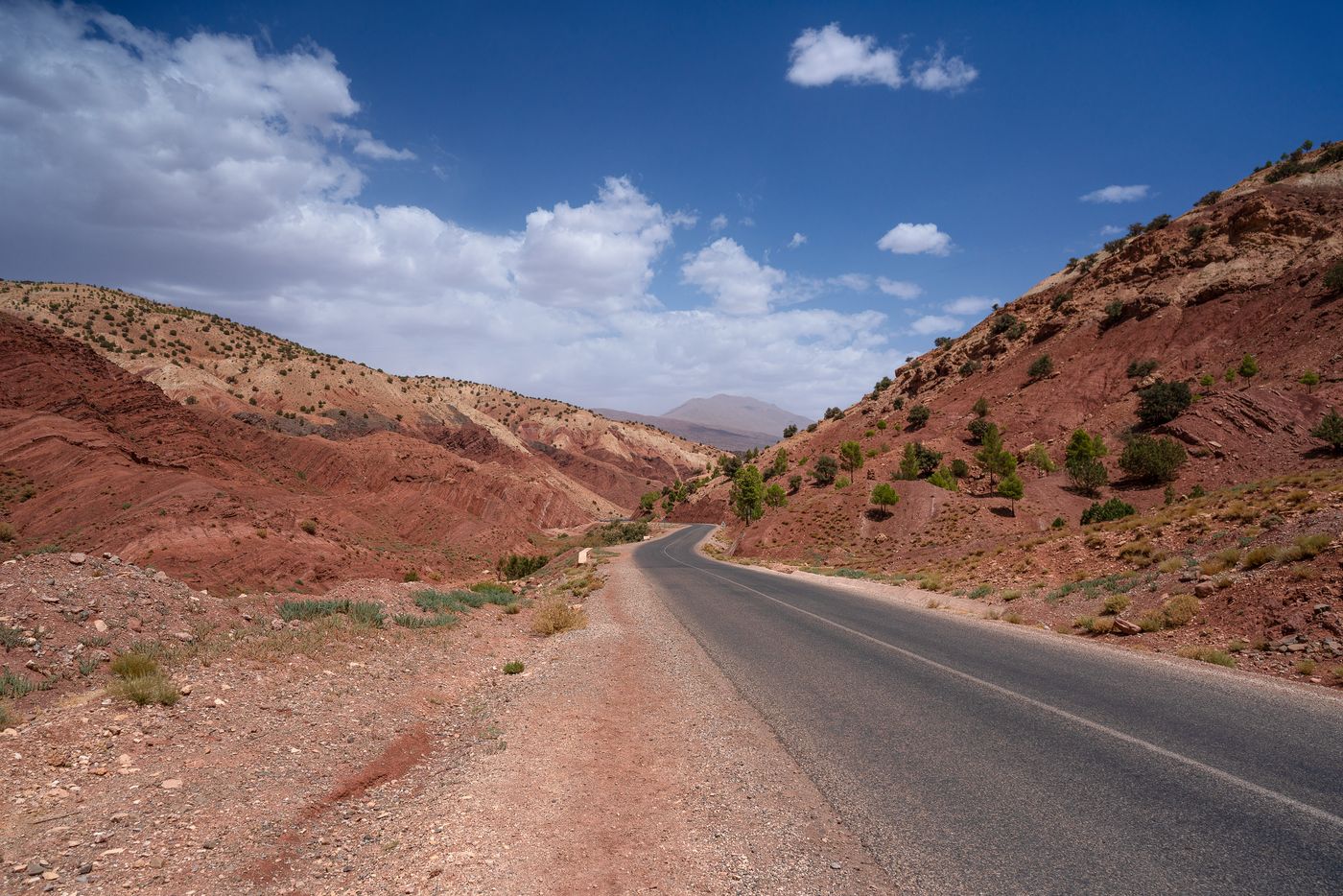
Allowing for longer drives than the map suggests. The roads over the Atlas are narrow, tarmac alternates with gravel and potholes, and there's room for about a car and a half. It's one of the great experiences of Morocco, just not a fast one. And getting back north from the desert means several long days at the wheel.
Having cash and small change. Morocco is a cash country. Withdraw money as soon as you land, but an ATM gives you at most 2,000 MAD at a time, mostly in 100s. Even shops often can't change those.
Packing warm clothes. We did our first trip in January and were properly cold. In the mountains and the desert it freezes at night even when Marrakech is pleasant during the day.
Leaving more time for places off the tourist trail. On my second trip I skipped almost all the famous sights, and it was a great idea. The Fint oasis, the Ounila Valley and the road through the Middle Atlas gave me more than Marrakech.
FAQ
How many days do I need for Morocco?
A week is enough for the essentials: Marrakech, the mountains below Toubkal, Ait Ben Haddou and the Fint oasis. With the Sahara and the coast, allow two weeks. If you want Fez as well, add another two days.
Variant A or B?
A is for those who want to see as much as possible: the best-known dunes at Merzouga, two gorges, the empty roads of the Middle Atlas and the quiet coast around Azemmour. But it means more time at the wheel. B is for those after wilder desert and peace: the Drâa Valley with Zagora and M'Hamid, the Anti-Atlas mountains, crowd-free Taroudant and finally the ocean at Essaouira and El Jadida. Both start and end in Marrakech.
Can you do the Sahara as a trip from Marrakech?
You can, but you'll spend most of the trip in the car. The desert lies beyond the Atlas, and getting there and back takes two long days. That's why it isn't in my one-week core route. It's better to fit it into the second week and carry on from the desert.
Is it better to get around Morocco by car or by public transport?
By car. It's the best and most reliable way to travel, and all you need is a Czech driving licence and an ordinary small car. Buses and trains mainly run between the big cities; to the mountains and the desert they're slow and often don't go where you want. Just don't drive after dark, and photograph the car thoroughly when you pick it up.
Merzouga or M’Hamid?
Merzouga, with the Erg Chebbi dunes, is better known and more touristy, but it's easy to reach and lies in the east, from where you carry on north. M’Hamid and the Erg Chigaga dunes are wilder and emptier, reached via the Drâa Valley. That's why Merzouga is in option A and M'Hamid in option B. There's no need to fit both into one trip.
When is the best weather in Morocco?
Ideally in spring and autumn. Winter brings the fewest people, but expect snow in the Atlas and frost in the desert. In summer the desert tops 40 °C, though the mountains are pleasant. In 2027 Ramadan falls roughly in February and early March.
Do I need a visa?
No. Czech citizens can visit Morocco for short stays of up to 90 days without a visa. Your passport must be undamaged and valid for at least 3 months from entry, though I'd rather have a bigger margin. According to the Czech Ministry of Foreign Affairs, the authorities may ask for a return ticket or proof of accommodation. (checked in November 2026)
More: Czech Ministry of Foreign Affairs – Morocco: visas and entry requirements
What to skip in Morocco?
I wouldn't stay in Marrakech for more than a day – it's noisy and exhausting, and you'll find the same souks without the crowds in Taroudant. The Ouzoud Falls are lovely, but expect crowds, especially at weekends.