Marrakech
Marrakech is loud, colourful and exhausting. It never quite won my heart, but you can't understand Morocco without it. In the evening, Jemaa el-Fna square turns into a giant open-air kitchen where smoke from the grills mingles with music, hawkers and snake charmers. By day, it's worth escaping the din of the souks for the quiet palaces and gardens, where you can suddenly hear your own footsteps.
High Atlas: Imlil and Aroumd
Just an hour and a half from Marrakech, mountains rise that seem not to belong to Morocco at all. The Imlil Valley is green and full of walnut, apple and cherry trees, and at its head lies the Berber village of Aroumd, overlooked by Jebel Toubkal, the highest mountain in North Africa. You reach the villages on foot or by mule, and in the evening it's so quiet you can hear the stream down in the valley.
Telouet, the Ounila Valley and Ait Ben Haddou
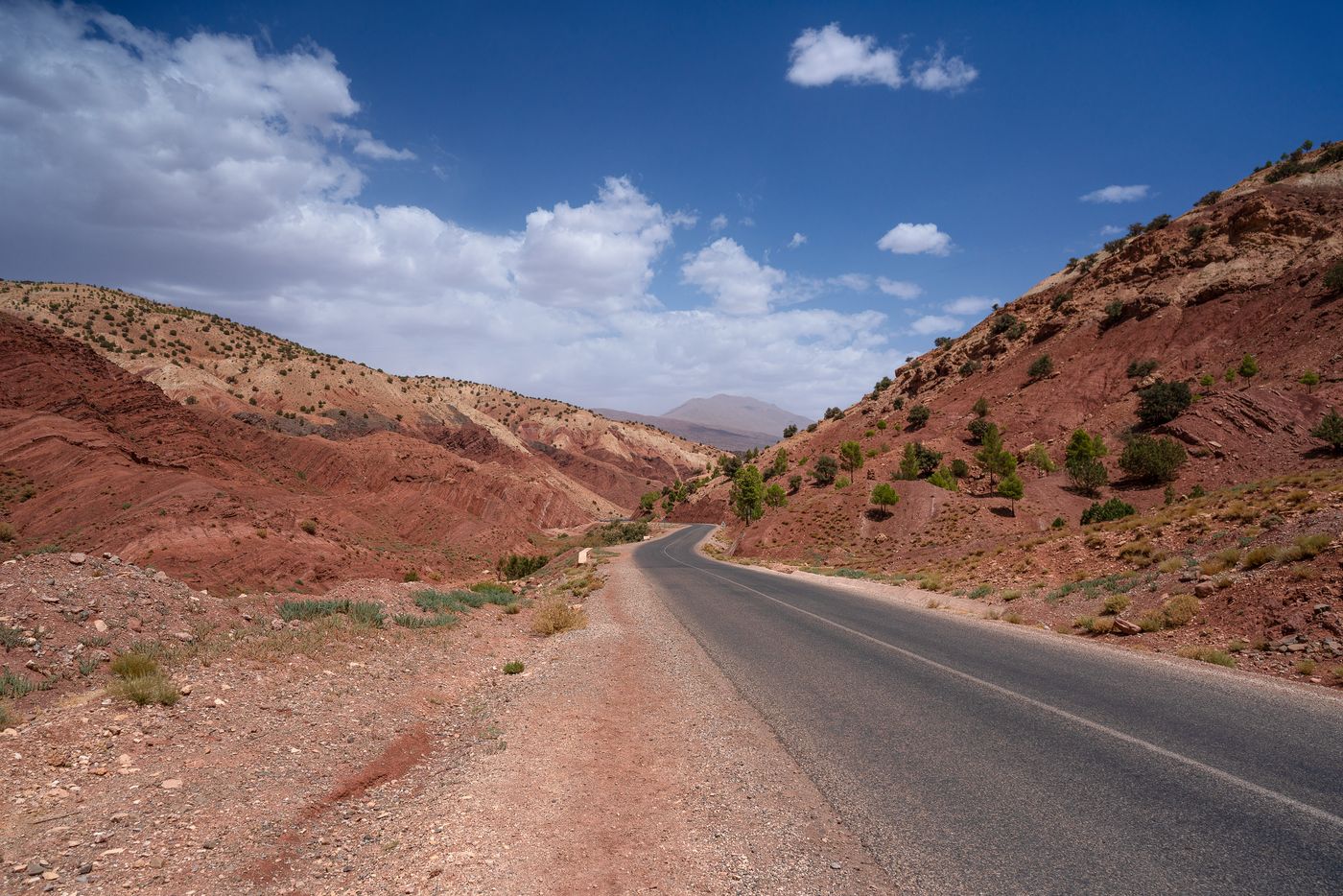
Heading from Marrakech over the Tizi n’Tichka pass, you can either stay on the main road or turn left into the Ounila Valley. This unassuming road follows the old caravan route between Marrakech and sub-Saharan Africa, passing the Telouet kasbah, green oases and mud-brick ksars all the way to Ait Ben Haddou. For me, it's one of the loveliest stretches in all of Morocco.
Ouarzazate and the Fint Oasis
Ouarzazate is the gateway to the desert and Morocco's film capital. On the edge of town stands the vast Noor solar power plant, with kasbahs scattered among the palm groves around it. And just a short way off, beyond a stony plain, lies the forgotten Berber oasis of Fint, where time has stood still. Mud-brick houses, a mosque, palms, and in the evening silence and the scent of tagine.
The Drâa and Ziz Valleys
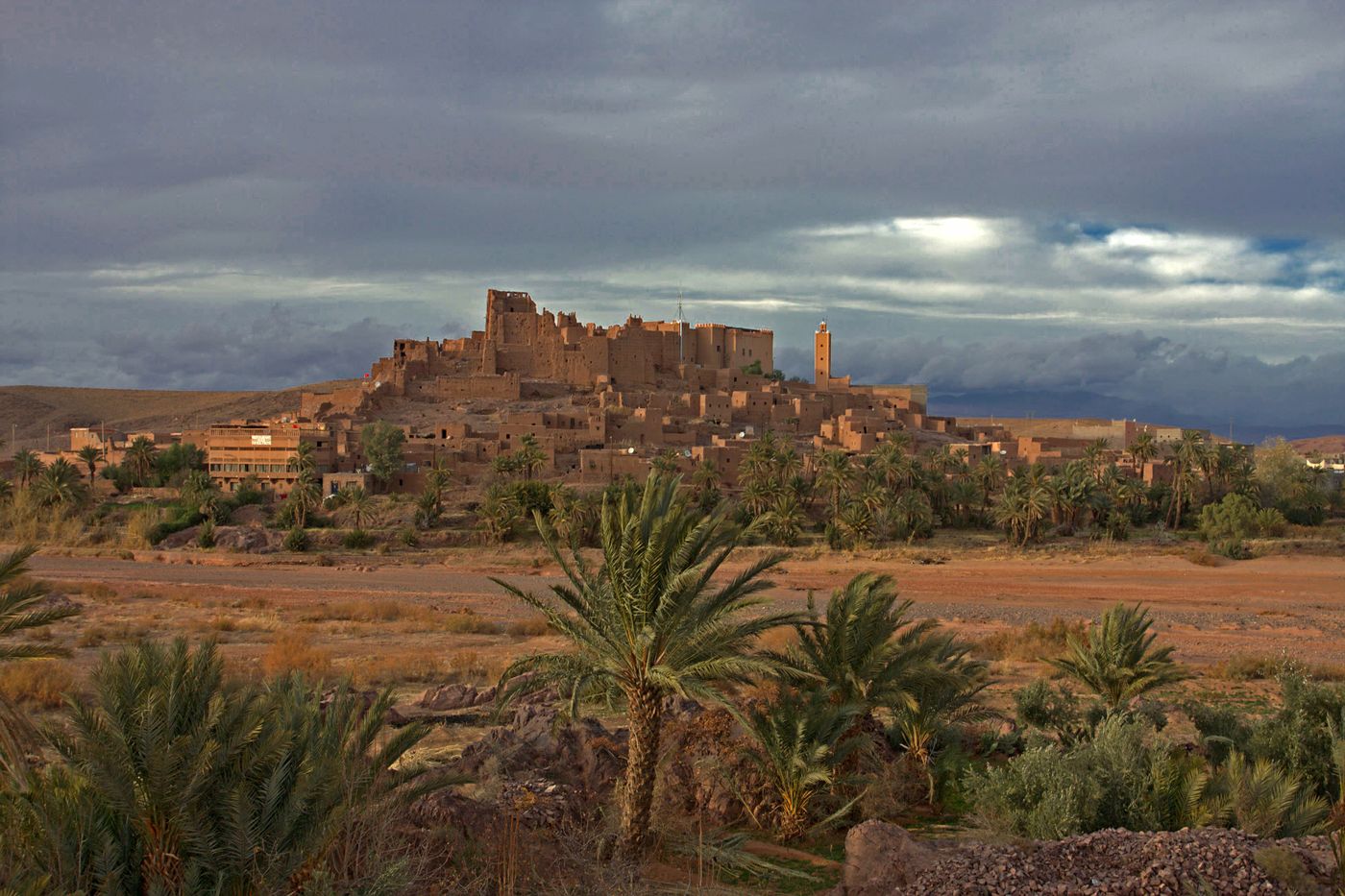
In southern Morocco, two rivers flow from the Atlas into the desert, and endless palm groves have grown up along both. The Drâa Valley is the country's longest oasis: from Agdz to Zagora stretch palms and hundreds of mud-brick kasbahs and ksars, and the small towns hold markets that draw people from all around. Further east, the Ziz River cuts a deep canyon through the Atlas, then spreads out into palm groves around Errachidia and Erfoud, all the way to the Sahara at Merzouga.
The Sahara: M’Hamid and Merzouga
The Sahara has two faces in Morocco. At the end of the Drâa Valley lies sleepy M’Hamid, the last outpost of civilisation before the endless sandy plains and the springboard to the dunes of Erg Chigaga. To the east is Merzouga, with the Erg Chebbi dunes, the best known in the country. Both are worth it, each in its own way.
Middle Atlas
The way north from the desert leads through the Middle Atlas, which few tourists visit. Gorges, red hills, high plateaus, cedar forests under snow in winter, and the Ouzoud waterfalls. The roads are empty, the villages small, and a foreigner here is a rare sight. It's precisely for journeys like this that hiring a car in Morocco pays off.
Fes, Moulay Idriss and Volubilis
The north of Morocco is different from the south: greener, older and more bound up with the country's history. In Fes, the tanneries still work just as they did hundreds of years ago; on the slopes of Mount Zerhoun lies the holy town of Moulay Idriss, long off-limits to non-Muslims; and just below it are the ruins of Roman Volubilis. Three places that fit neatly into two days, each showing Morocco from a different angle.
The Atlantic Coast
After the mountains and the desert, Morocco's Atlantic coast is a breath of fresh air. The wind blows, the air smells of fish and salt, and the towns have Portuguese ramparts, white houses and blue shutters. Azemmour is quiet and almost free of tourists, El Jadida hides an underground cistern straight out of a film, and Essaouira is a lively port full of blue boats and gulls.
The South: Taroudant and the Anti-Atlas
Southern Morocco between Agadir and the Anti-Atlas is a land of argan trees, granite rocks and mud-brick villages. I visited it on my first trip and it's still one of the places I'd love to return to. Taroudant is like a smaller, calmer Marrakech, and in the mountains around Tafraoute you'll find pink villages nestled against giant boulders.