How much time for Jordan
In a week you'll manage the essentials: Amman with Jerash, the Dead Sea, two days in Petra and a night in Wadi Rum. With two weeks you can cover the whole country: to the core you add the north with Umm Qais, the desert castles in the east, the old King's Highway with Karak Castle and a few days by the Red Sea in Aqaba. If you want more time lazing by the sea, you can easily spend three weeks here. The itinerary is indicative and has no slack built in. If you can, add a day or two.
Jordan is mainly about sights and desert, not about long drives. Distances are short and the roads are good. You won't lose time behind the wheel, but in Petra. It needs more time than most people plan for.
Language
Arabic; in tourist areas you'll get by in English
Capital
Amman
Currency
Jordanian dinar (JOD)
Payments
card in hotels and larger shops, cash for smaller purchases
Visas
required for Czechs; at the airport or online, free with the Jordan Pass
Climate
dry; best in spring (March to May) and autumn (October, November)
Sockets
230 V, various types (European C/F and British G), bring a universal adapter
Driving
on the right, roads in good condition
Mobile
Umniah, Orange and Zain; a local SIM with data is easy to get, often no signal in Wadi Rum
Main route (7 days)
From Amman north to Jerash, then down to the Dead Sea and south to Petra and Wadi Rum. You return via the fast desert highway, or fly out of Aqaba. Total: arrival 1 + 5 days in the regions + departure 1 = 7 days. No slack, so it takes a bit of discipline.
1. Amman and Jerash
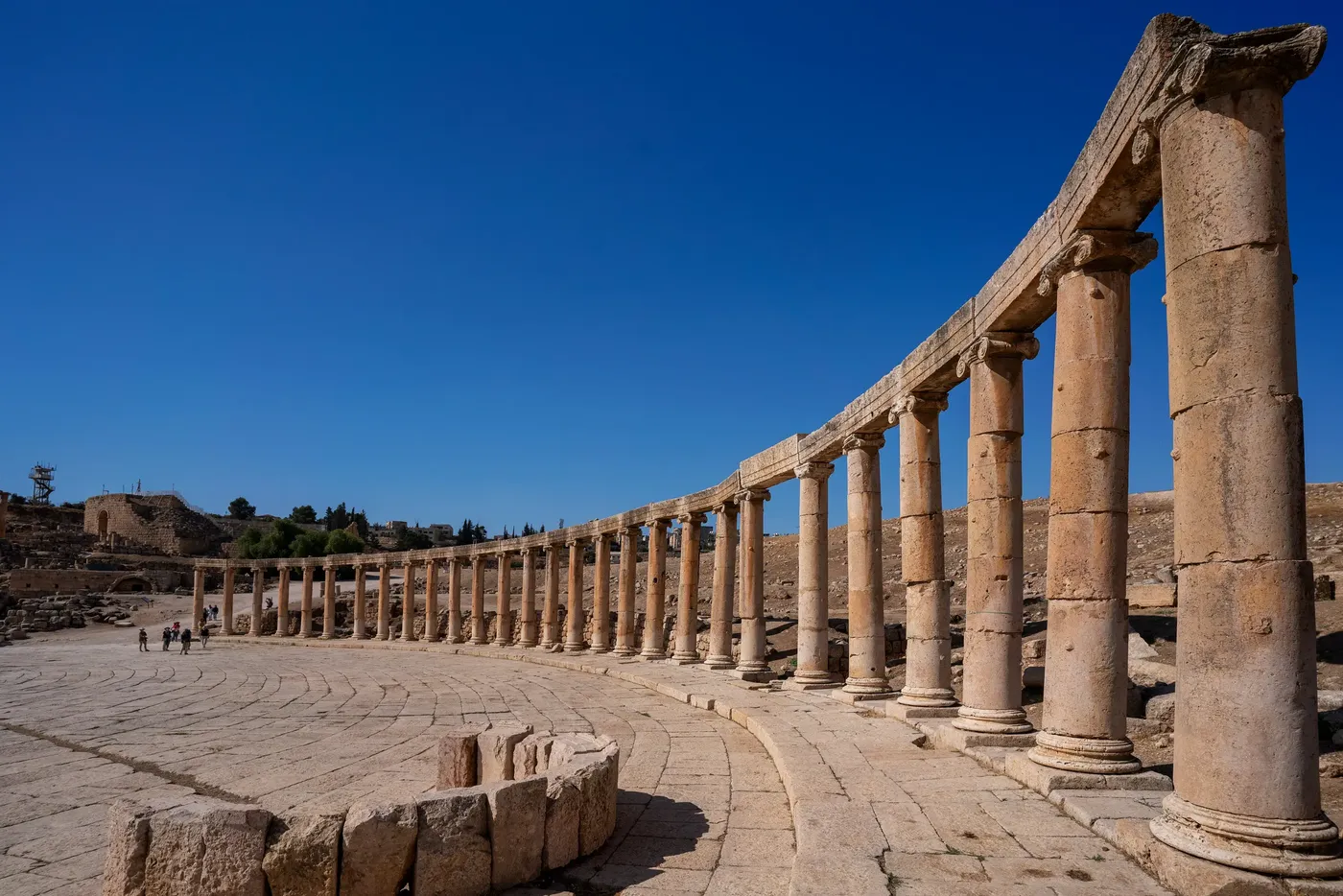
1 dayAmman is the starting point of almost every trip: the citadel above the city and the Roman theatre in the centre. Amman is worth a few hours: stroll around downtown and eat there, climb up to the citadel and look into the mosques. Just outside the city lies Jerash, ancient Gerasa. Together with Palmyra in Syria, it is the best-preserved Roman city anywhere. Only once you're there do you realise how huge, wealthy and solid the ancient cities were.
2. The Dead Sea
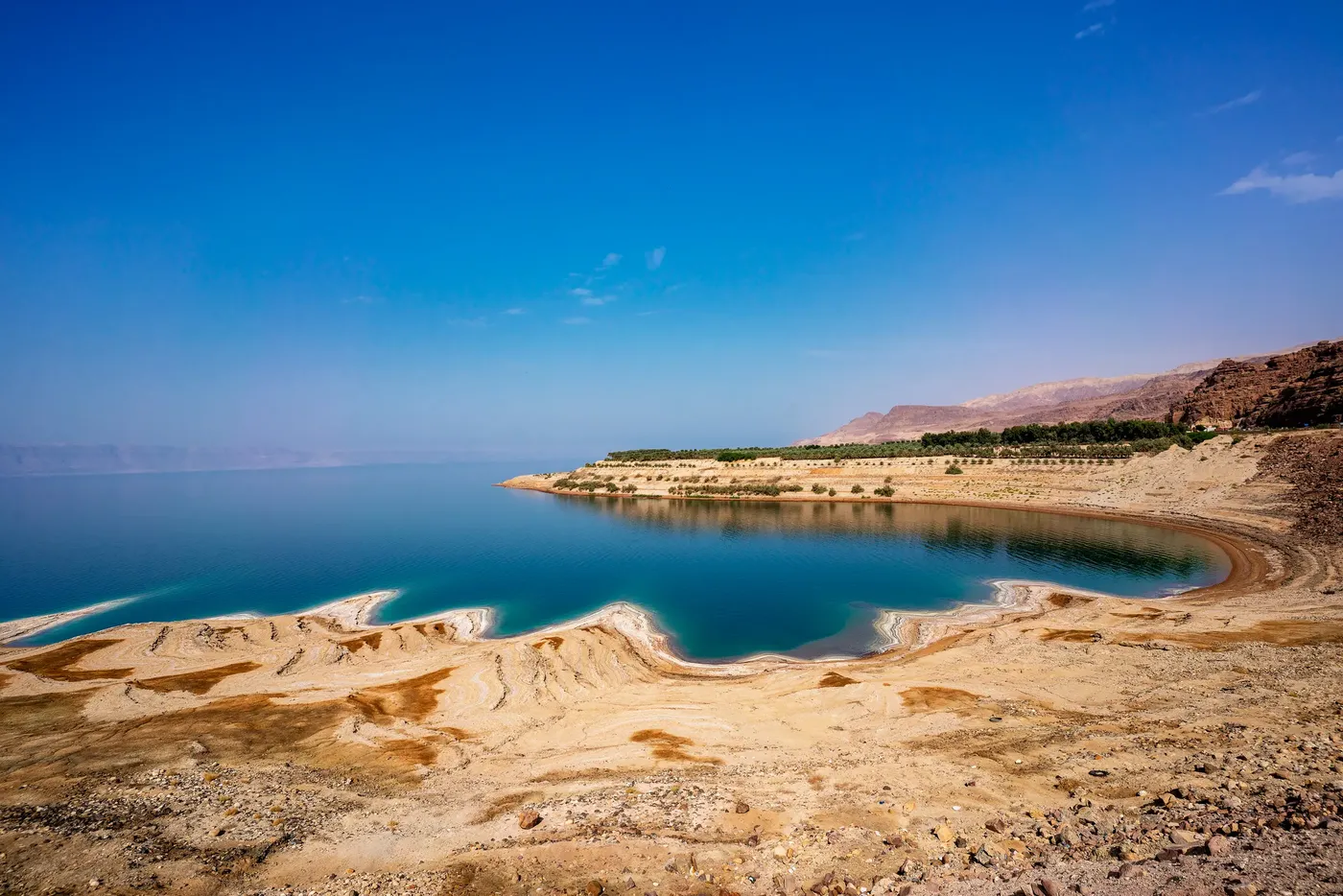
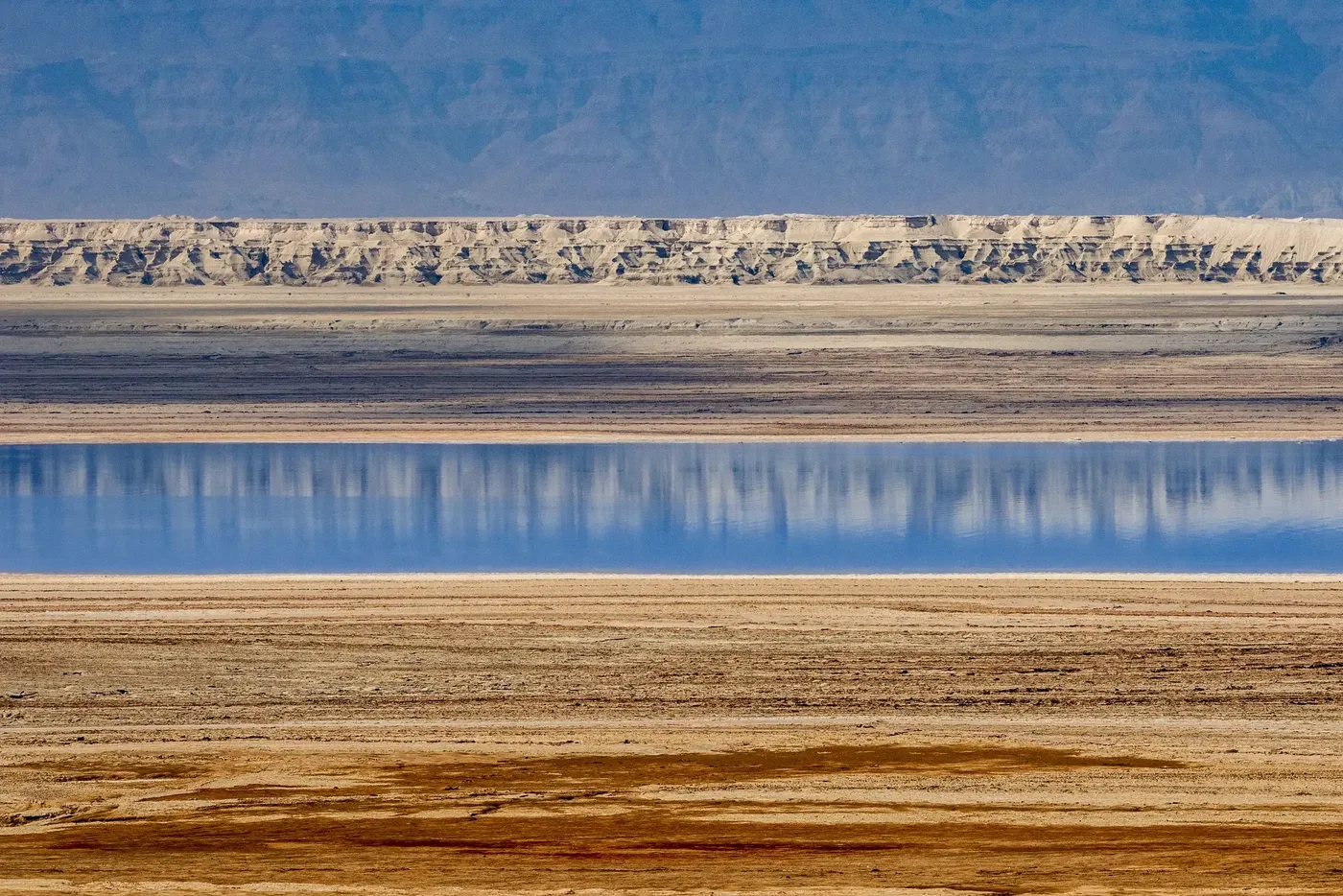
1 dayThe lowest and saltiest place on the planet. The sea into which the biblical Jordan flows and where Sodom and Gomorrah once stood. Swimming where you simply can't sink is an experience you won't repeat anywhere else. I've swum here both unofficially and at a resort, and either works. Bethany, the site of Christ's baptism, can easily be skipped.
3. Petra
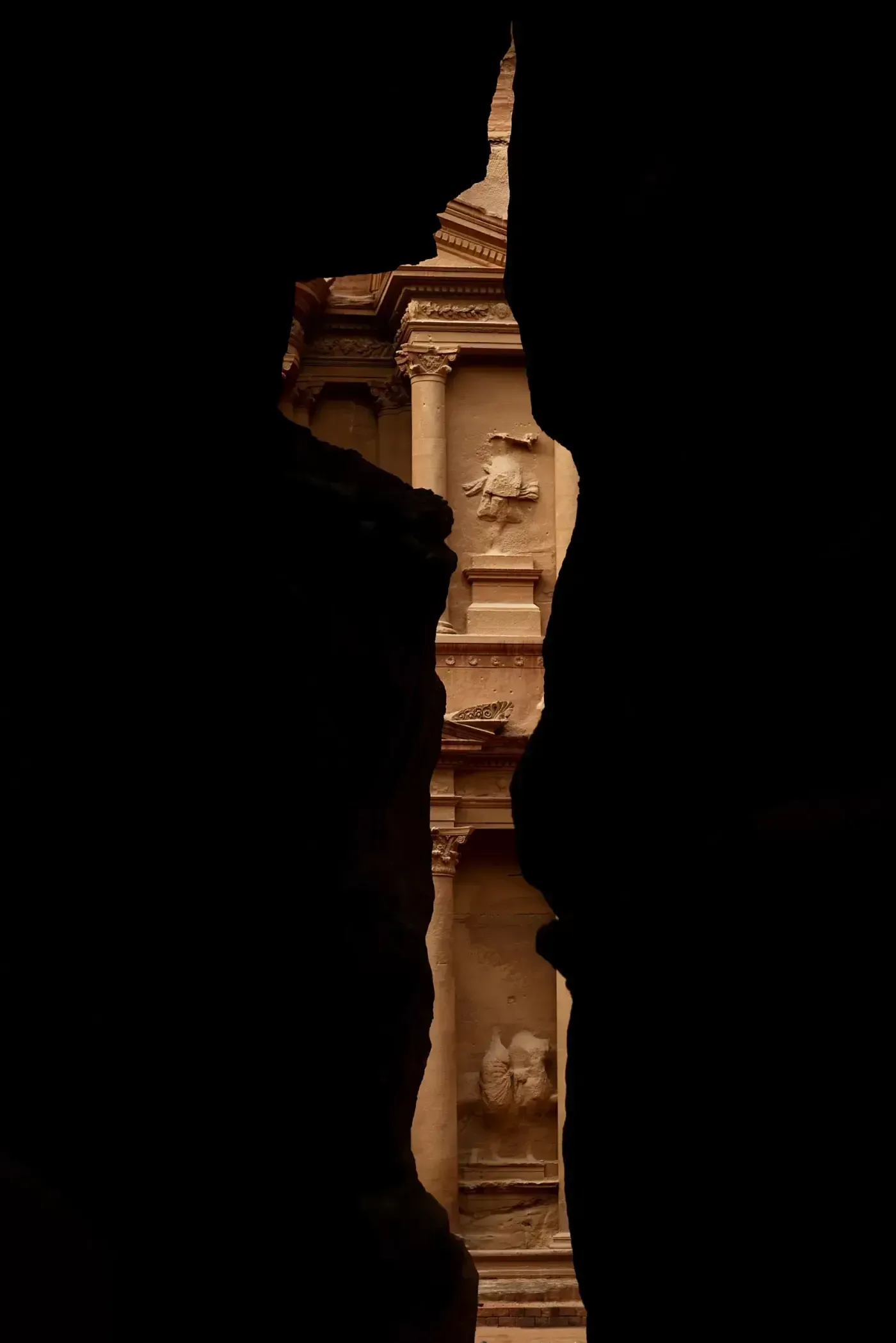
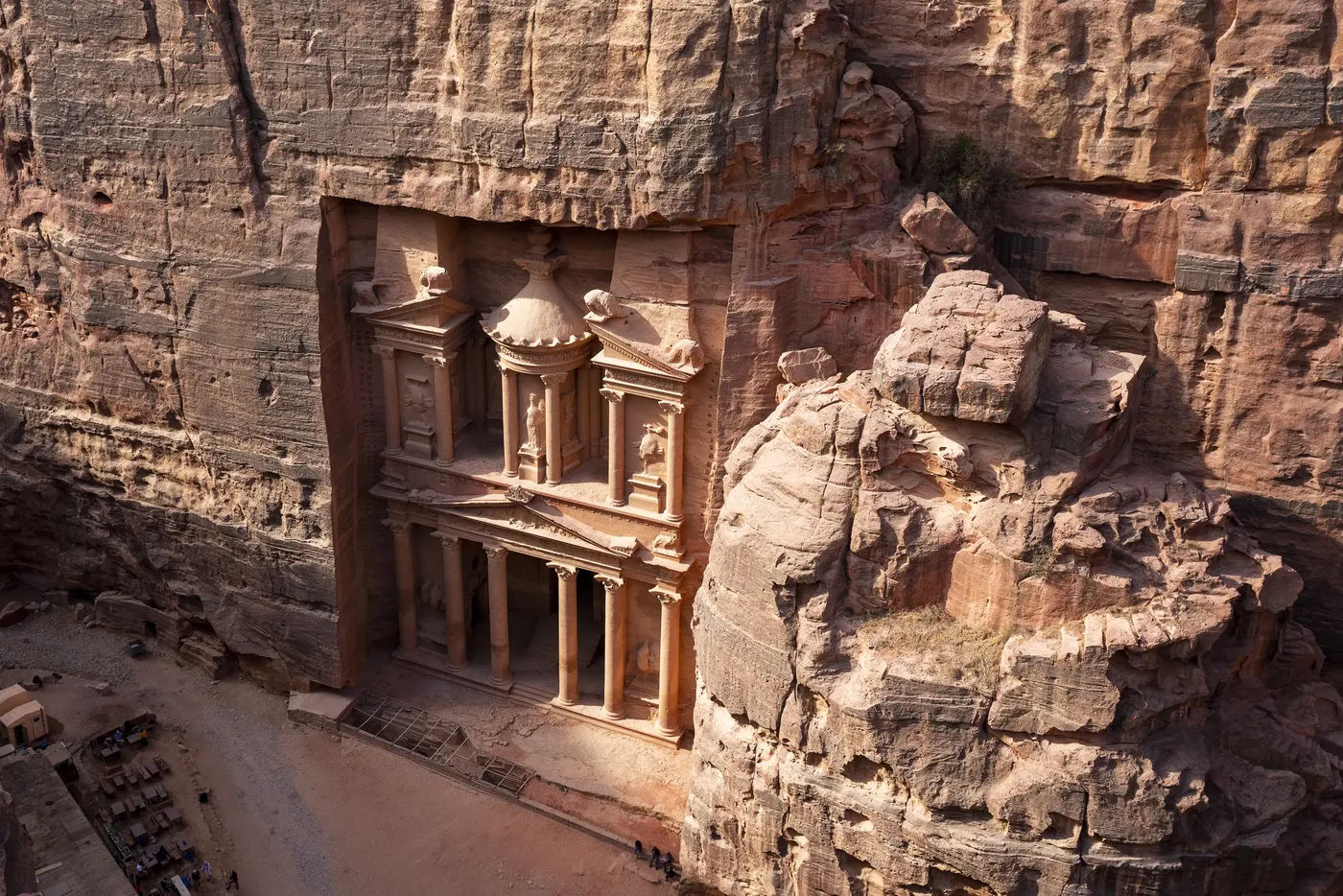
2 daysThere's simply no other place in the world like Petra. A city hidden in the mountains and almost forgotten, one of the New Seven Wonders of the World. And rightly so. This was my third visit, and its monumentality and mystery hit me all over again. Petra needs at least two days: one for the main route past the Treasury (yes, this is where Indiana Jones searched for the Holy Grail), the other for the viewpoints and the Monastery. Then in the evening, Petra by Night, when the gorge is lit by candles.
4. Wadi Rum
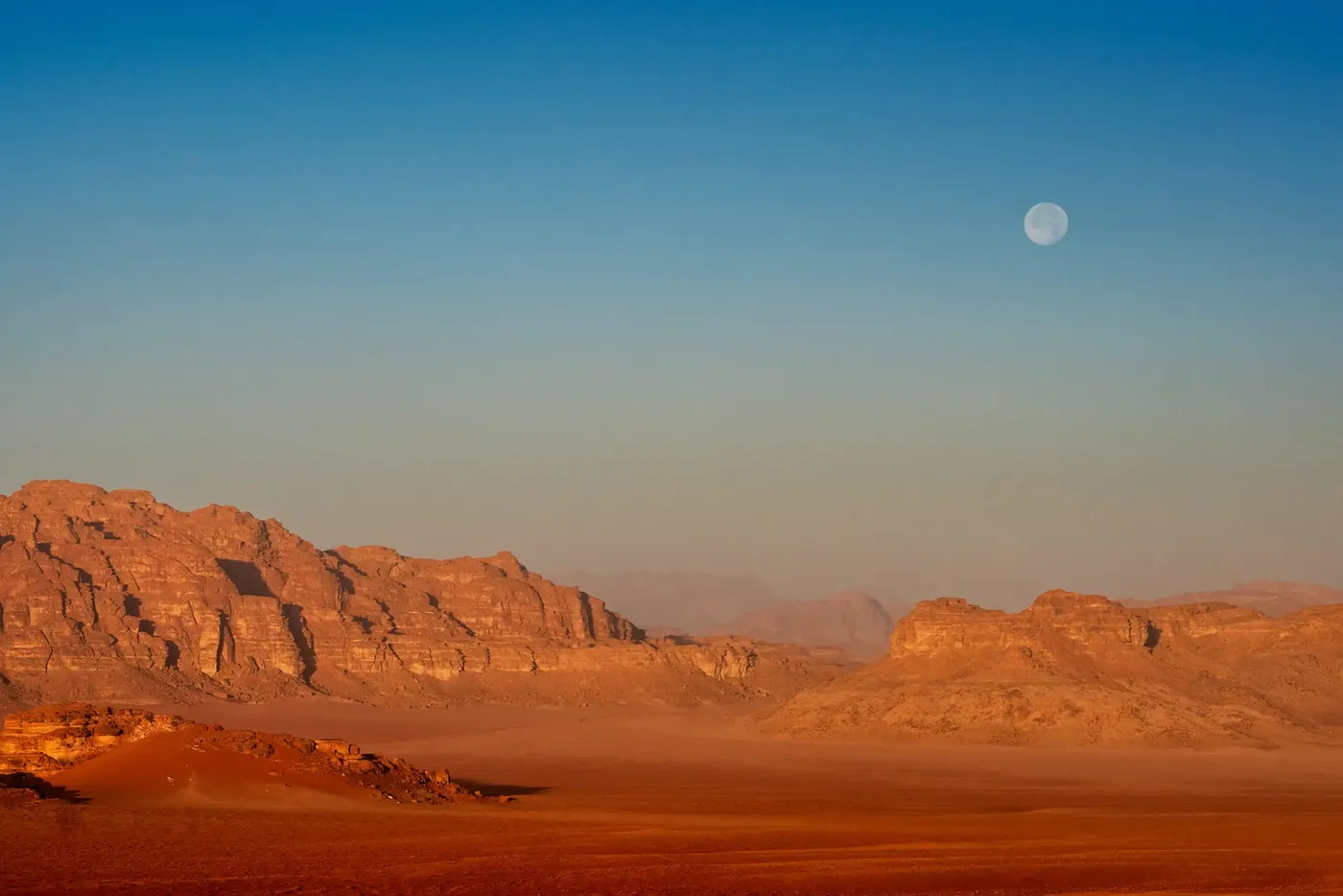
1 day (and a night in the desert)A stretch of scorched desert glowing orange and red. It's called the Valley of the Moon, and anyone who sees it will understand why. These are Bedouin tribal lands and also a favourite of filmmakers: Arrakis from Dune, Pasaana and Jedha from Star Wars. Here you sleep in a camp in the middle of the desert – that's the whole point. There's hardly any signal, which is actually a good thing.
My second trip was even shorter: four days just for Petra, Wadi Rum and the Dead Sea. It's doable, but it really is only a taster.
Extension by 7 days (14 in total)
The second week adds what the core has no time for: the north, the east, the old royal road and the sea. Total: 7 core days + north 1 + desert castles 1 + King's Highway 2 + Aqaba 3 = 14 days.
North: Umm Qais
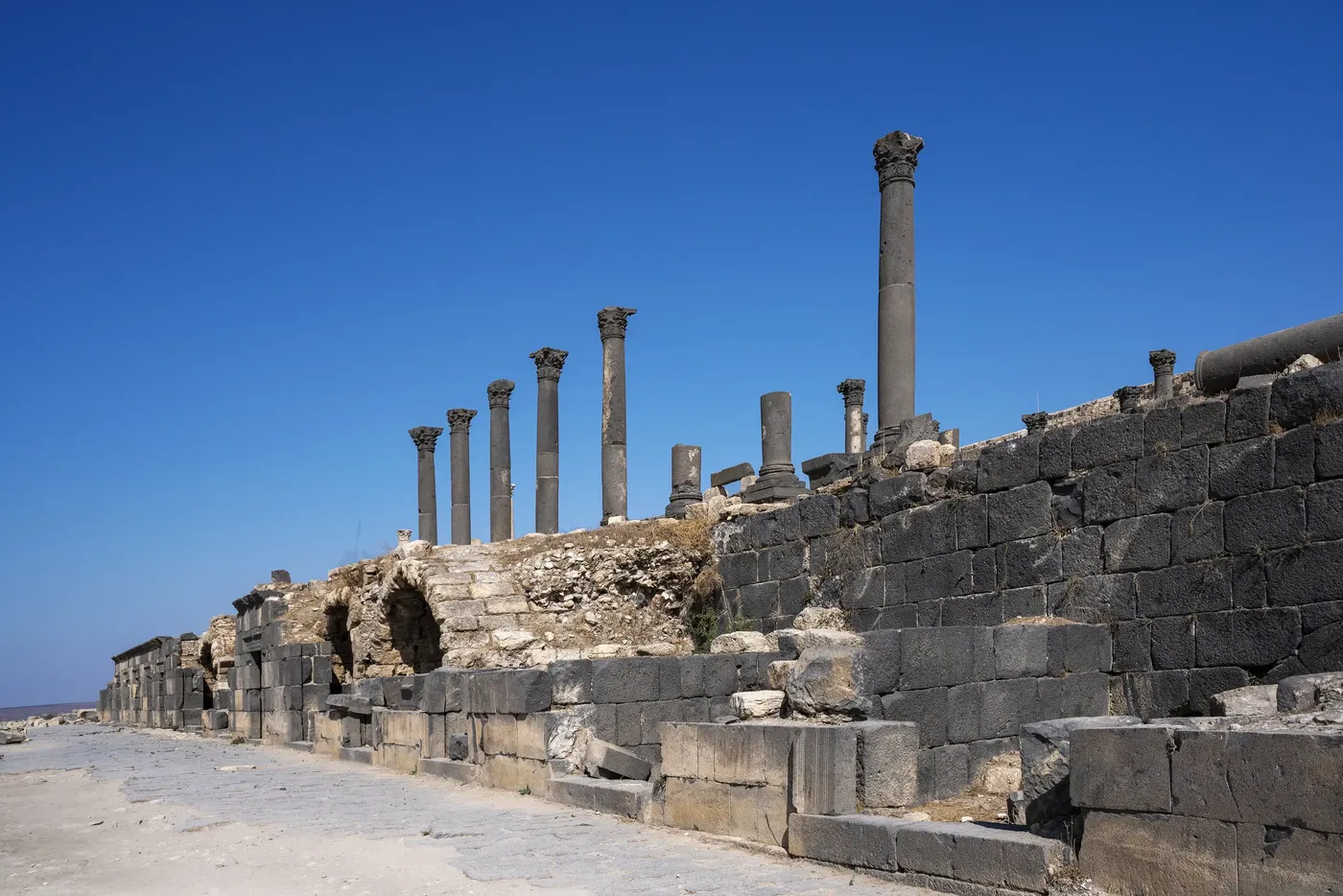
1 dayThe ruins of Gadara in the far north, another of the ancient world's amazing places. Plus views of the Golan Heights and the Sea of Galilee. In 2004 the war in Iraq could be felt a little even near the Syrian border. On the way lies Ajloun Castle, a nice roadside stop.
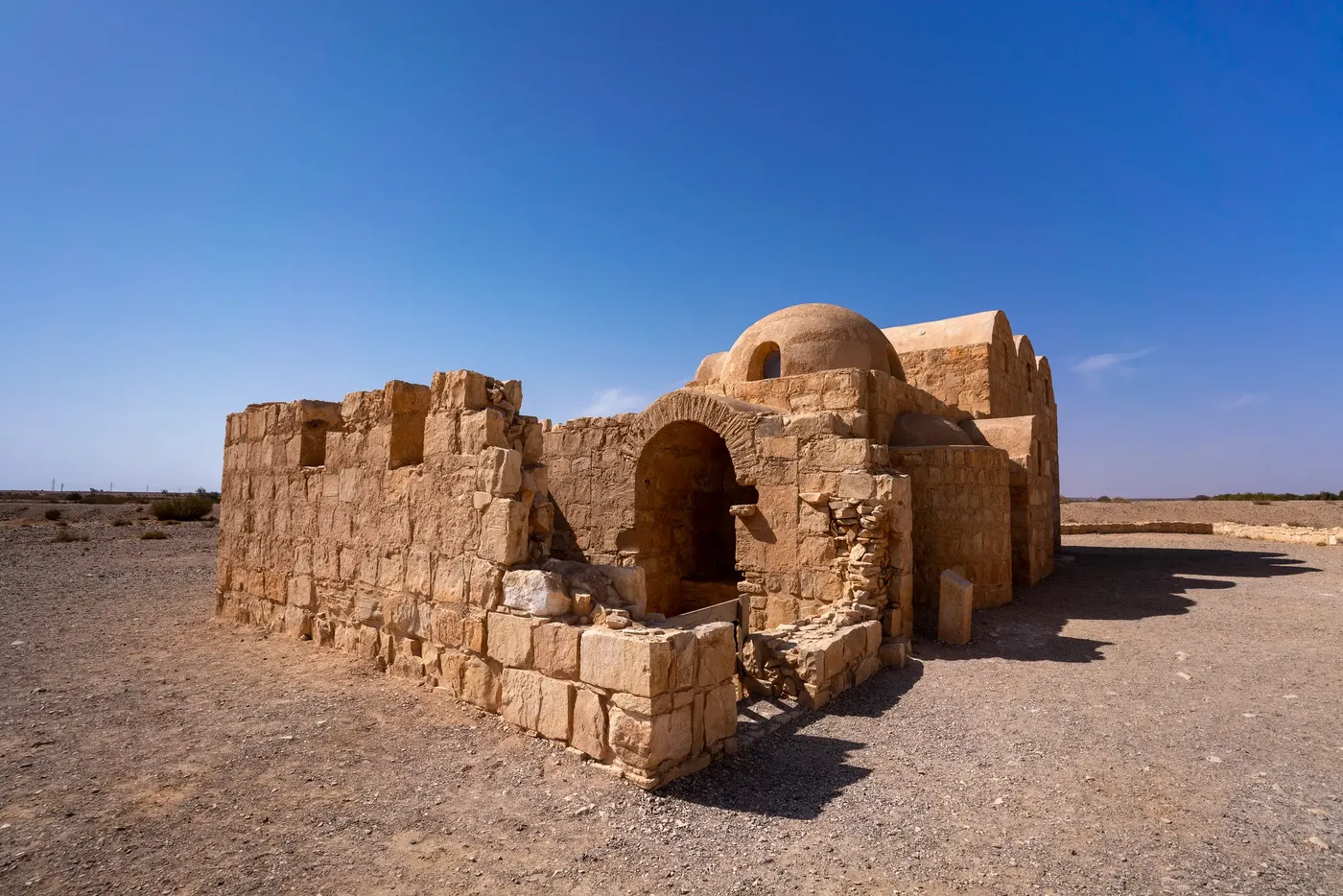
Desert castles in the east
1 dayQasr Hallabat, Qasr Kharana, Qasr Tuba and Qusair Amra. The desert castles aren't exactly among the most visited sites. Undeservedly so – for me they're a must-see. In 2004 the area near the Iraqi border was closed because of the war. I only made it there on my third trip, in 2021. It works well as a loop from Amman right at the start of the trip.
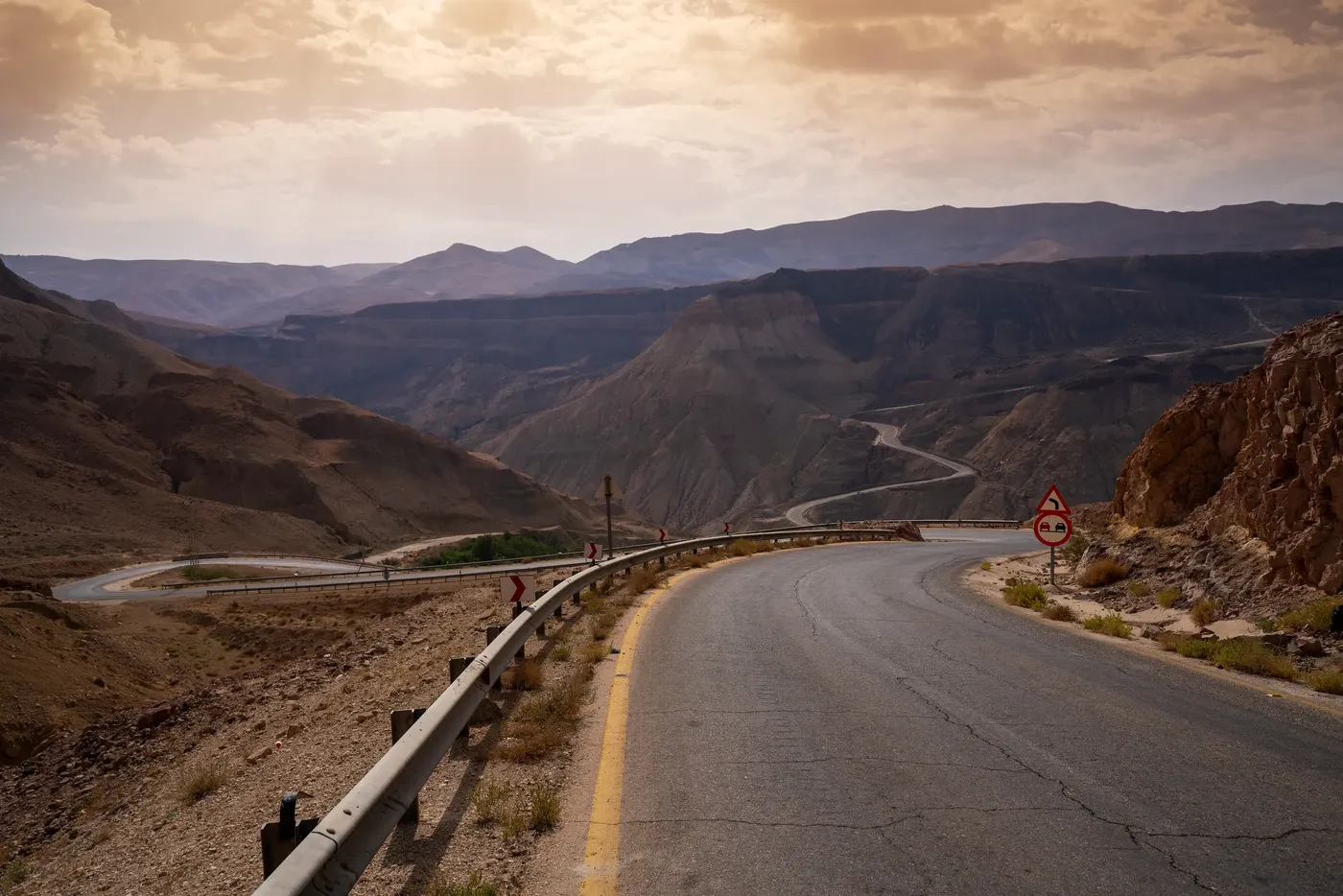
King's Highway and Karak Castle
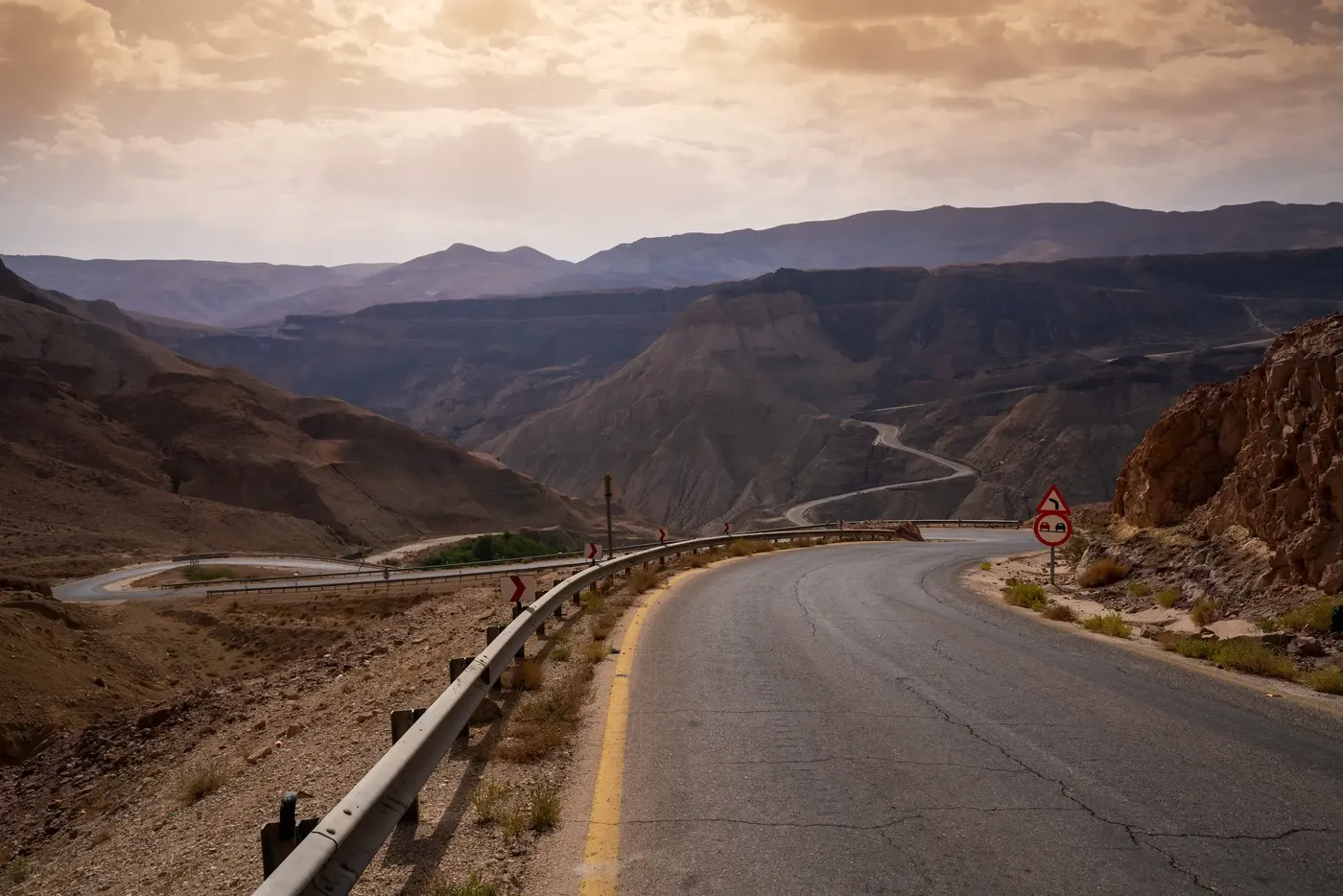
2 daysA road that has been travelled for three thousand years. It originally linked ancient Egypt with Mesopotamia; today it winds through mountains and canyons from Madaba to Petra. In the core route it's replaced by a faster road; here you have two days for it, so you can take it slowly, with stops. The highlight is Karak, Jordan's largest castle and one of the largest in the whole Middle East, a superb example of crusader military architecture. Be sure to stop in Madaba, a town where three religions live in relative harmony. Feel free to skip Mount Nebo and Shobak Castle; they're not top sights.
Aqaba and the Red Sea – 3 days
From Wadi Rum it's a short hop to the sea. Aqaba is a duty-free zone with swimming and snorkelling in the Red Sea, and above all a rest after the desert and the sights. The sea is warm from spring to autumn; in winter it's cooler for swimming. I snorkelled here, but to me Aqaba is mainly a town of resorts and tourists in swimwear. If that's your thing, go.
How to put the route together
The route starts in Amman. In summer Ryanair has flown here direct from Prague (most recently on its summer schedule until October 2026); otherwise you fly with one change, for example in Vienna, Istanbul or Frankfurt. For a week, you head south from Amman and return via the Desert Highway. The alternative is to fly into Aqaba and do the route in reverse.
With two weeks, the extensions slot in where they belong on the map: the desert castles and Umm Qais right at the start from Amman, the King's Highway instead of the fast road between the Dead Sea and Petra, and Aqaba at the end after Wadi Rum. You fly out either from Aqaba or back from Amman.
Amman → desert castles → Jerash and Umm Qais → Dead Sea → King's Highway and Karak → Petra → Wadi Rum → Aqaba
- Car: It's a road trip, and a car gives you the most freedom. Local transport is utterly unpredictable as to when and where you'll get, and for remoter places you'll end up in a taxi anyway. The alternative is a car with a driver.
- In daylight: Drive during the day. On the road along the Dead Sea, expect more frequent police checks.
- Wadi Rum: You don't drive into the desert in your own car. A Bedouin will take you to the camp, or you walk (on my second trip I walked two hours across the desert to the camp).
When to go
You can really go to Jordan all year round. Spring and autumn are ideal, with around 20–28 °C in Amman and the south walkable even in the daytime. In summer, temperatures in Petra and Wadi Rum climb towards 40 °C. But even summer isn't the worst; the heat is bearable, it just pays to start early in the morning and take a break over midday. Winter is good for the sights but not for swimming in the Red Sea. On the other hand, at least you won't perish in Wadi Rum. And in Amman and on the King's Highway it rains in winter, occasionally even snows. If you're going for two weeks with Aqaba, aim for spring or early autumn, when the sea is warm.
What would help me today
Sorting out Wadi Rum in advance. Accommodation prices on Booking are accurate everywhere except Wadi Rum. Often there's just a low price for a hut, but without transport there, meals or an excursion. Those only pop up later in the conversation. Today I'd get everything confirmed in advance.
Not looking for accommodation on the spot. It's hard to find on the spot. Better to choose online in advance, from dorms to resorts. And for a solo traveller, accommodation is one of the pricier items of the trip.
Having a local SIM from the start. With a Czech operator you'll pay through the nose. A local SIM with data is easy to get, and coverage is good almost everywhere. Except in Wadi Rum.
Going to Petra right at opening time. The gate opens at 6 a.m., and the first hours belong almost entirely to you. The Siq and the Treasury without crowds, still in the shade and the cool. By late morning it's a different place, full of people.
Allowing two days for Petra. On my second trip I stayed in Petra for two days and went to Petra by Night in the evening. One day is simply not enough for Petra.
Going outside the high season. In 2004 there was hardly anyone here, and many places had no barriers. By 2019 prices were up and there were lots of tourists. In 2021, after covid, it was empty again.
FAQs
How many days do I need for Jordan?
A week is enough for Amman with Jerash, the Dead Sea, Petra and Wadi Rum. With two weeks you can add the north with Umm Qais, the desert castles, the King's Highway with Karak and a few days by the Red Sea.
Do I need a car, or can I use local transport?
I recommend a car. The roads are good, you drive on the right and distances are short. Local transport is unpredictable, and for remoter places you'll end up in a taxi anyway. If you don't want to drive, you can hire a car with a driver. A Bedouin will take you into the desert in Wadi Rum.
What is the Jordan Pass and is it worth it?
A combination of visa and tickets to more than 40 sights, including Petra, Wadi Rum, Jerash, Karak and the desert castles. The three versions differ only in the number of days in Petra (1, 2 or 3). If you buy it before arrival and stay at least 4 days, you don't pay for the visa. For a tourist it's almost always worth it.
Do I need a visa? (verified November 2026)
Yes. Czech citizens get it at the airport in Amman or Aqaba, or apply online with the Jordanian Ministry of Interior. With a Jordan Pass bought in advance you don't pay for the visa, although according to the Czech Foreign Ministry this doesn't apply to the online visa. For stays longer than 30 days, police registration is required. Current conditions: Czech Foreign Ministry – Jordan, visas.
Is Jordan safe?
Yes. Jordan is a stable country, albeit in a turbulent region. In three trips I never had a problem here, not even in 2004 during the Iraq war. But the situation in the region changes, so before you go, read the current Czech Foreign Ministry advice, register in the DROZD system and check that your travel insurance covers Jordan.
When is the best time for Petra and Wadi Rum?
Ideally spring and autumn, but even summer isn't the worst; the heat is bearable. In winter, nights in the desert are cold. Go to Petra right at opening time at 6 a.m., before it fills up.
What to skip in Jordan?
Aqaba. Even though it's in my extension, I'd skip it with a clear conscience. If you're not going mainly for the sea, you won't miss much, and you're better off giving the spare days to Petra, Wadi Rum or the King's Highway. But don't cut Petra and Wadi Rum short.