How much time for Dominica
In a week you'll fit in the island's main sights: Scotts Head, Boiling Lake, Trafalgar, Batibou Bay, plus two segments of the Waitukubuli, number 1 in the south and number 10 in the north. Those up for more can add two days and the tough segments 8 and 9. In two weeks you'll walk the entire Waitukubuli from Scotts Head to Cabrits. But without a single spare day. If you want time for rain and for Boiling Lake, allow 16 to 17 days. The itinerary is a guide and has no slack built in. If you can, add a day or two.
Dominica is small but slow. The roads twist over the mountains, and on the trek it's not distance that counts but mud. Fourteen kilometres on the flat is a breeze; fourteen kilometres on segment 8 is a whole day and a good chunk of the night. Above all: factor in the weather. After one morning shower the path turns into a slide and the streams into rivers.
Language
English; among themselves locals speak Creole (Kwéyòl)
Capital
Roseau
Currency
Eastern Caribbean dollar (EC$), pegged to the USD; US dollars are accepted almost everywhere, but at a worse rate
Payments
card in larger shops, hotels and restaurants in Roseau; cash elsewhere. ATMs mainly in Roseau
Visas
not required for Czechs (up to 180 days)
Climate
tropical, driest from February to April; in the mountains it rains almost constantly
Sockets
types D and G (British), 230 V
Mobile
Digicel or Flow, SIM in Roseau with your passport; often no signal on remote segments
Driving
on the left; you need a temporary local permit alongside your licence
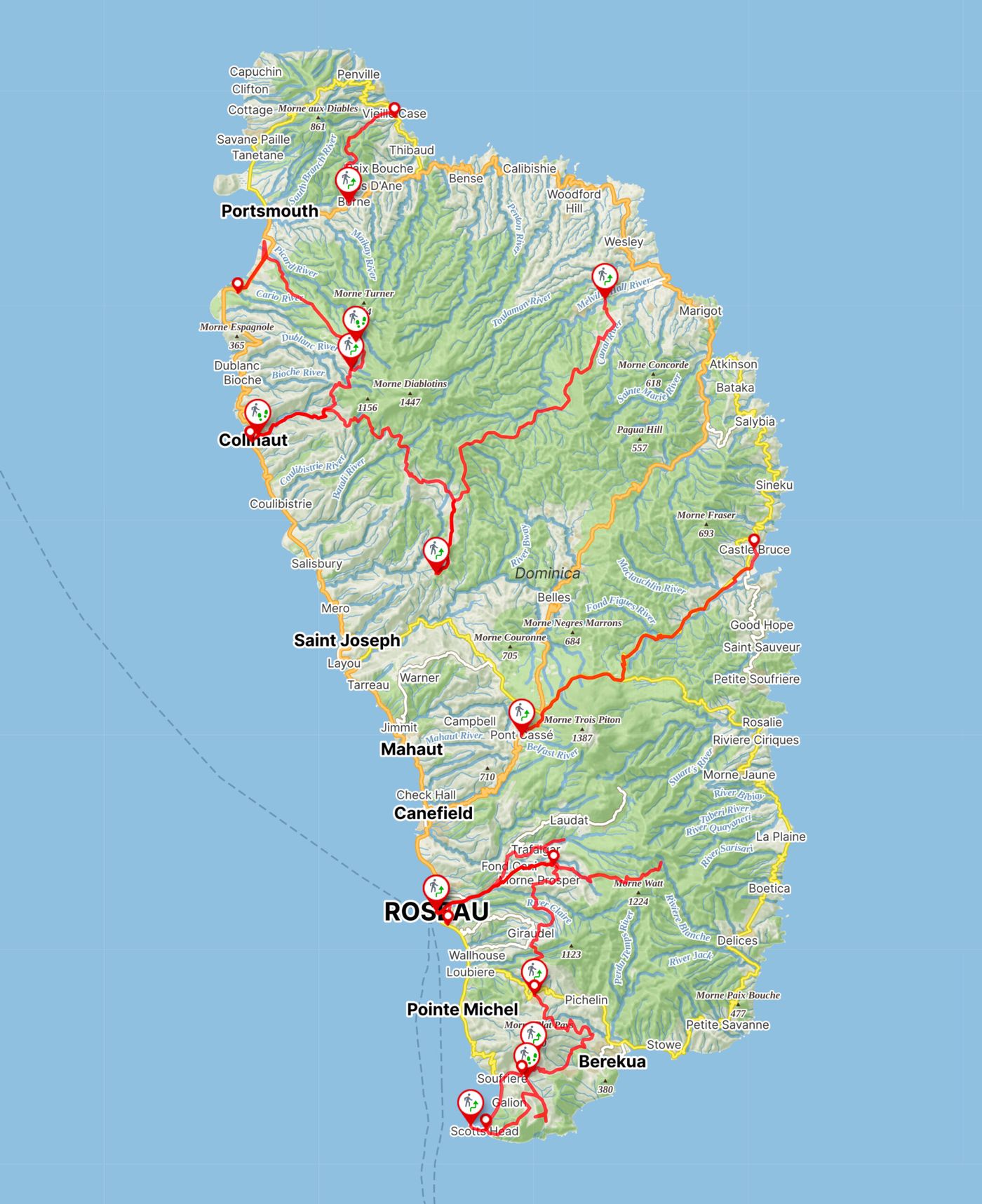
Route map
The route
Option A: Dominica in a week with segments 1 and 10 – 7 days
For the first few days Roseau is your base: from here you head into the volcanic heart of the island to Boiling Lake and Trafalgar, and south to segment 1. Then from Roseau east, north along the Atlantic coast and back down the west. Two of the days are on the Waitukubuli: segment 1 in the south is short but demanding, segment 10 in the north easy and lovely. Total: 1 + 2 + 1 + 1 + 1 + 1 = 7 days.
1. Roseau
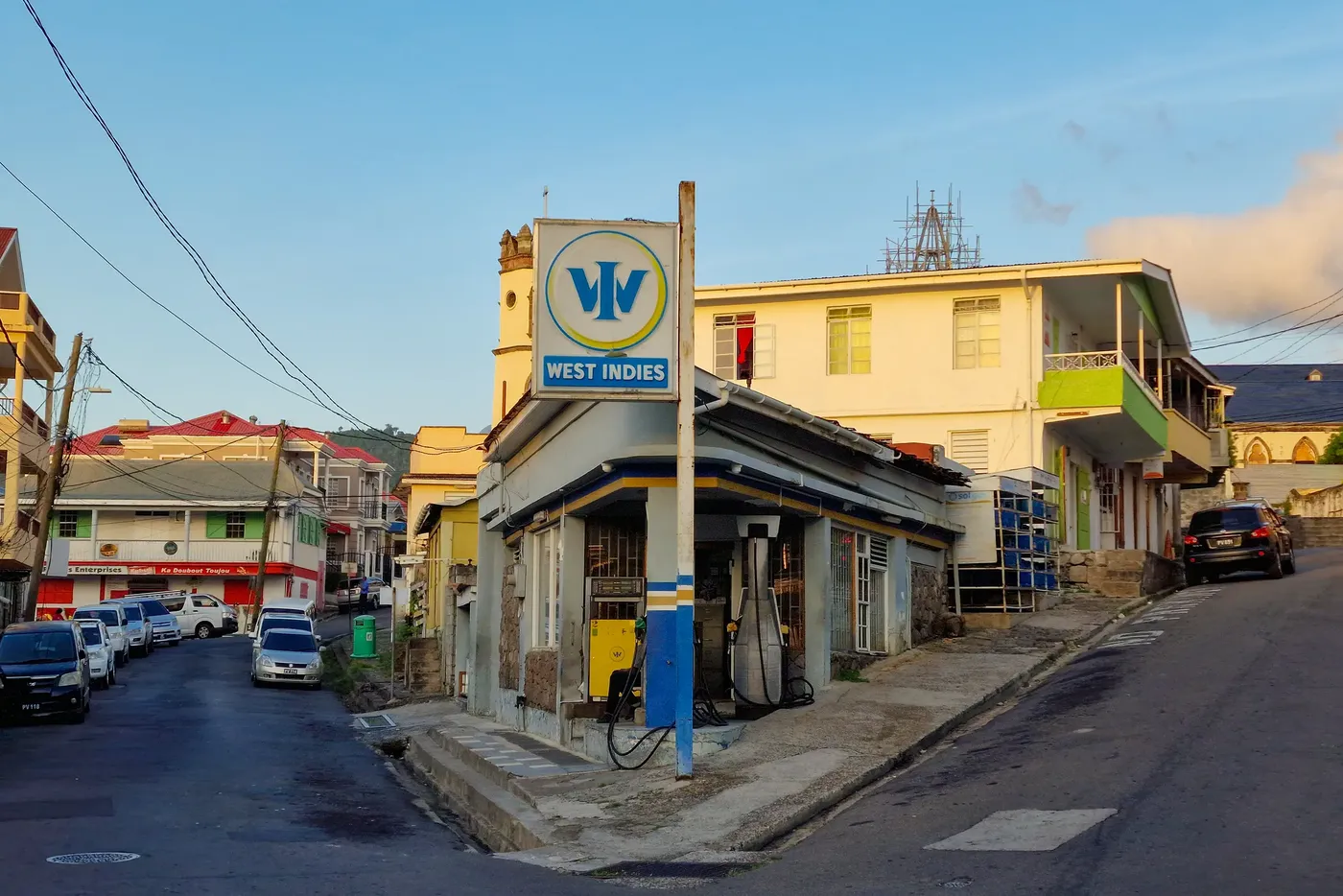
1 dayArrive by ferry. Half a day is enough for Roseau and for sorting out the essentials: SIM, Trail Pass, cash and shopping. There aren't many ATMs outside Roseau. And register – the trail management explicitly asks you to. You'll also sleep here for the first few nights.
2. Morne Trois Pitons: Boiling Lake and Trafalgar
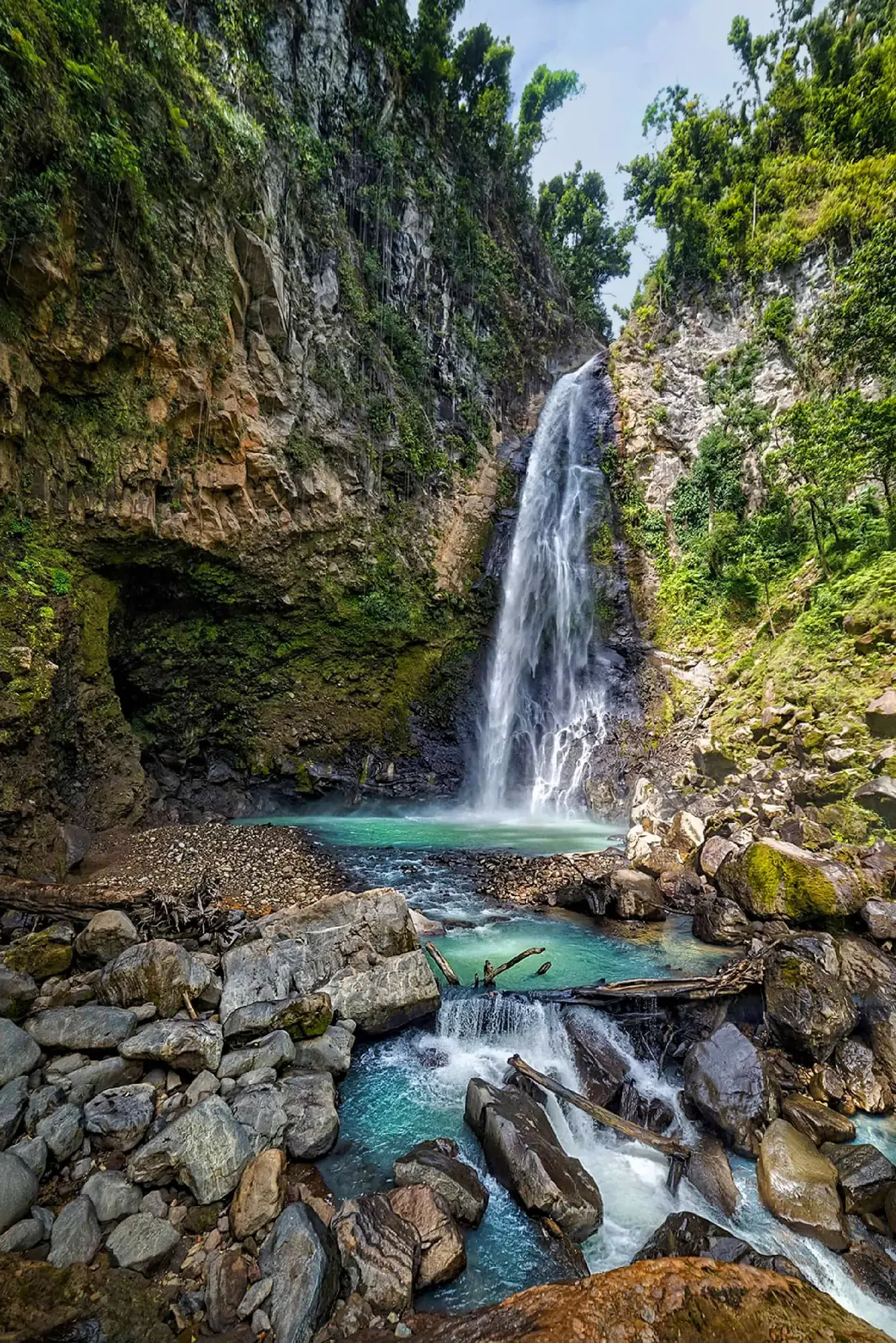
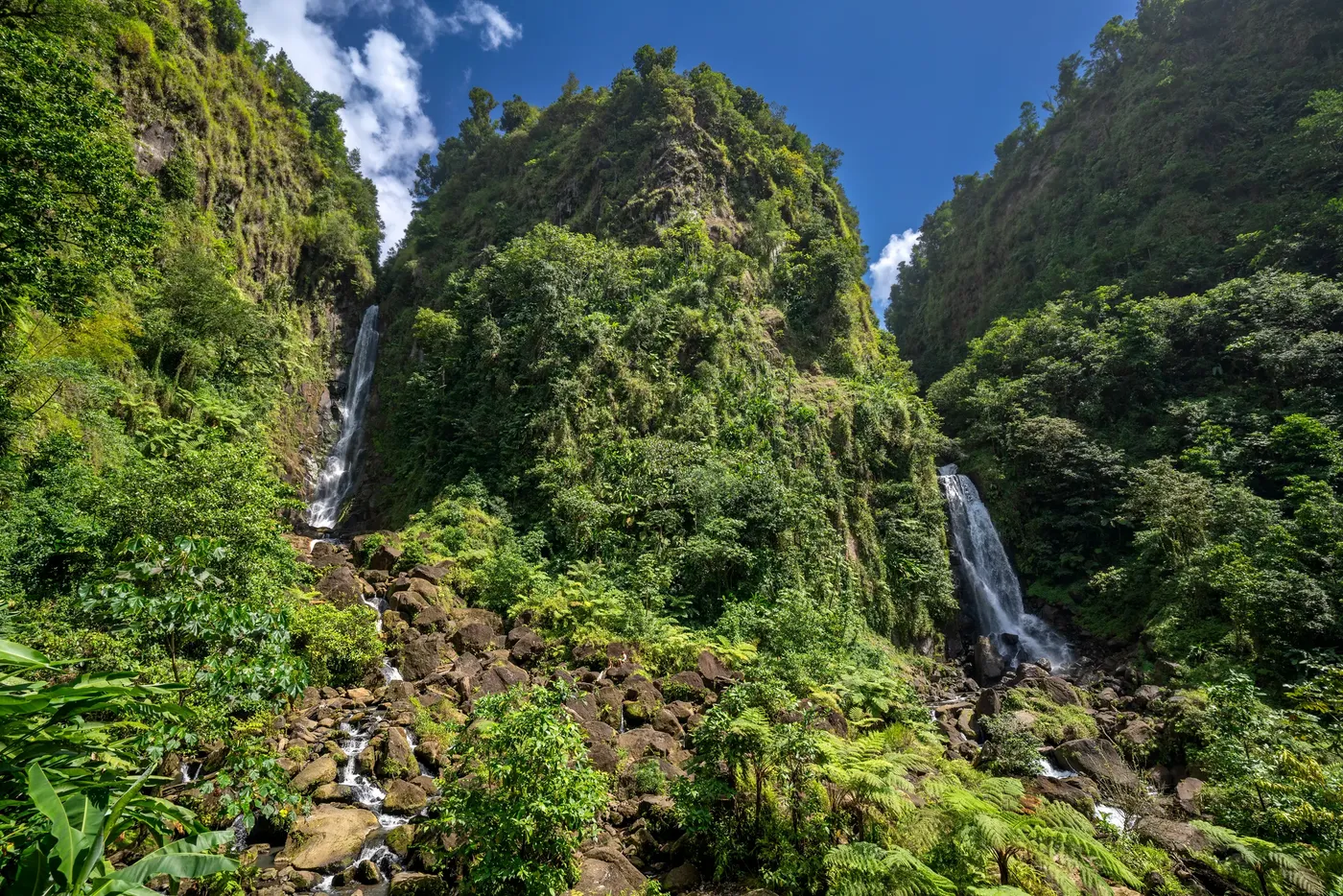
2 daysOne day for Boiling Lake, the second-largest boiling lake in the world. A full-day hike from Laudat through the Valley of Desolation, where everything hisses, reeks of sulphur and mud bubbles away. I did it and it's well worth it. The next day Trafalgar Falls: two waterfalls, the 'mother' (40 m) and the 'father' (85 m), with pools beneath and hot springs on the sides. All around, ferns and bromeliads. After either, a soak in the hot springs at Wotten Waven or a swim through Titou Gorge goes down nicely. You sleep in Roseau – the mountains are only a short hop away.
3. South: segment 1
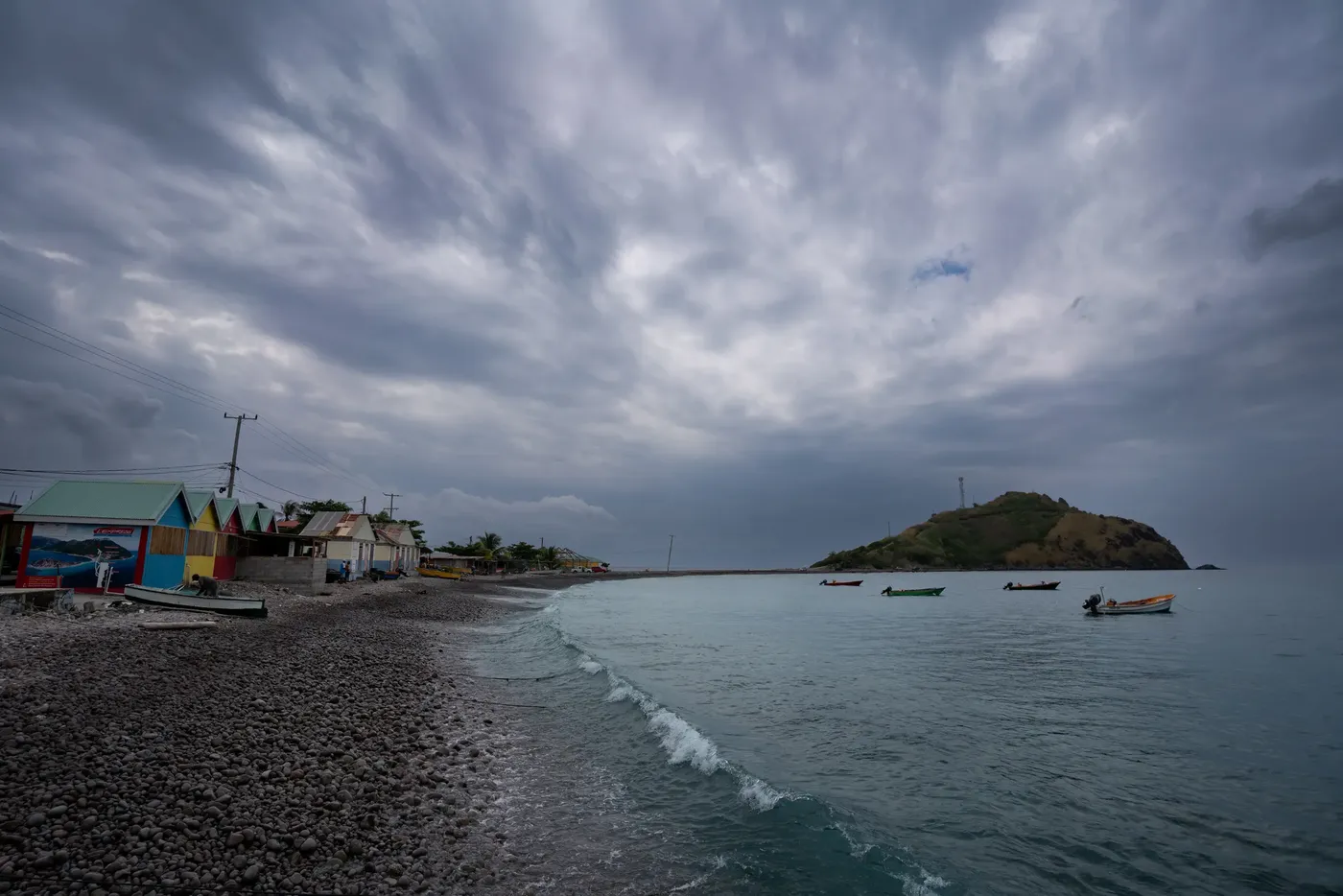
1 daySegment 1: Scotts Head → Soufrière, 6.6 km, roughly 4 hours. From Scotts Head, with the Caribbean lapping on one side and the Atlantic on the other, up above the marine reserve to the Morne Crabier plateau and down to old coffee plantations and the sulphur springs at Soufrière. I found it on the harder side, but still manageable. The trail management, though, now rates it as very difficult: in the Too Loo Loo valley you climb on a rope and go through a gorge. It's short, so you'll have time to snorkel at Champagne Reef, where bubbles rise from volcanic vents on the seabed. It's really beautiful.
4. The east and Batibou Bay
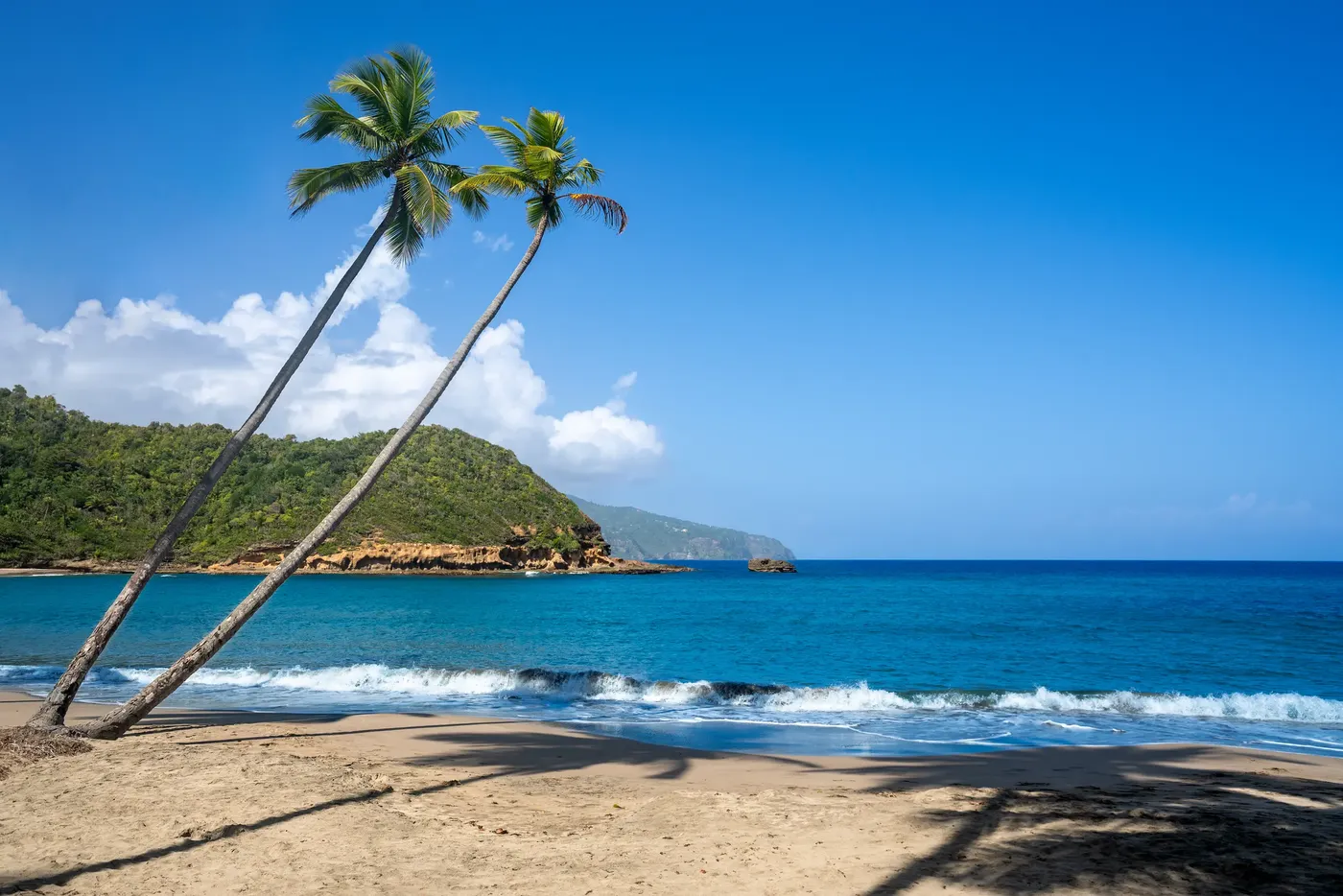
1 dayFrom Roseau over the mountains to the Atlantic side and north along it. On the way, Emerald Pool, a pool beneath a waterfall in the rainforest: amazing water and a great way to cool off en route. Then the Kalinago Territory, home to descendants of the island's original inhabitants. A wild coast, completely different from the calm Caribbean side. In the evening, Batibou Bay, for me Dominica's most beautiful beach: white sand, palms and a coral reef. I slept there in a hammock strung between two palms, and the moon shone so brightly that the palms cast shadows.
5. North: segment 10
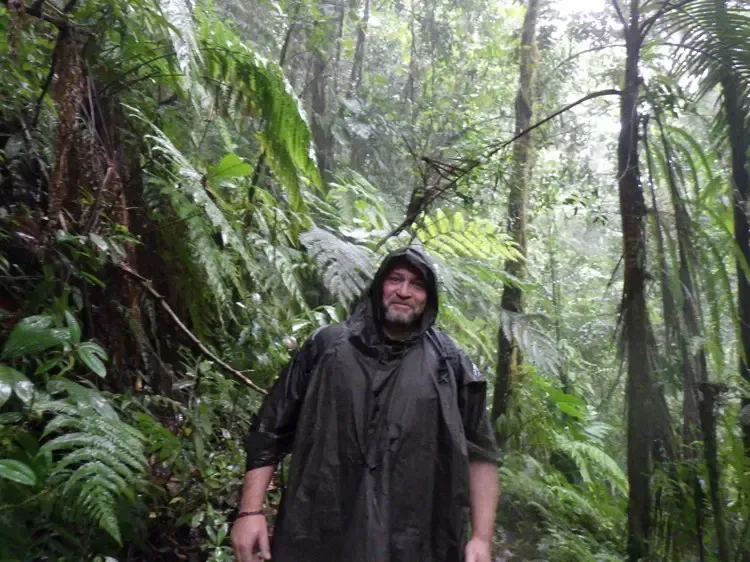
1 daySegment 10: Colihaut Heights → Syndicate, roughly 7 km and 3 hours, easy. Through old farms and along tracks between plantations, with views of the northern coast and of Morne Diablotin, the island's highest mountain. Around Syndicate you have the best chance of spotting sisserou and jaco parrots. Segment 10 was pretty relaxed and yet it's one of the loveliest stretches of the trek. In the afternoon there's time for Portsmouth and the fort at Cabrits.
6. Back to Roseau
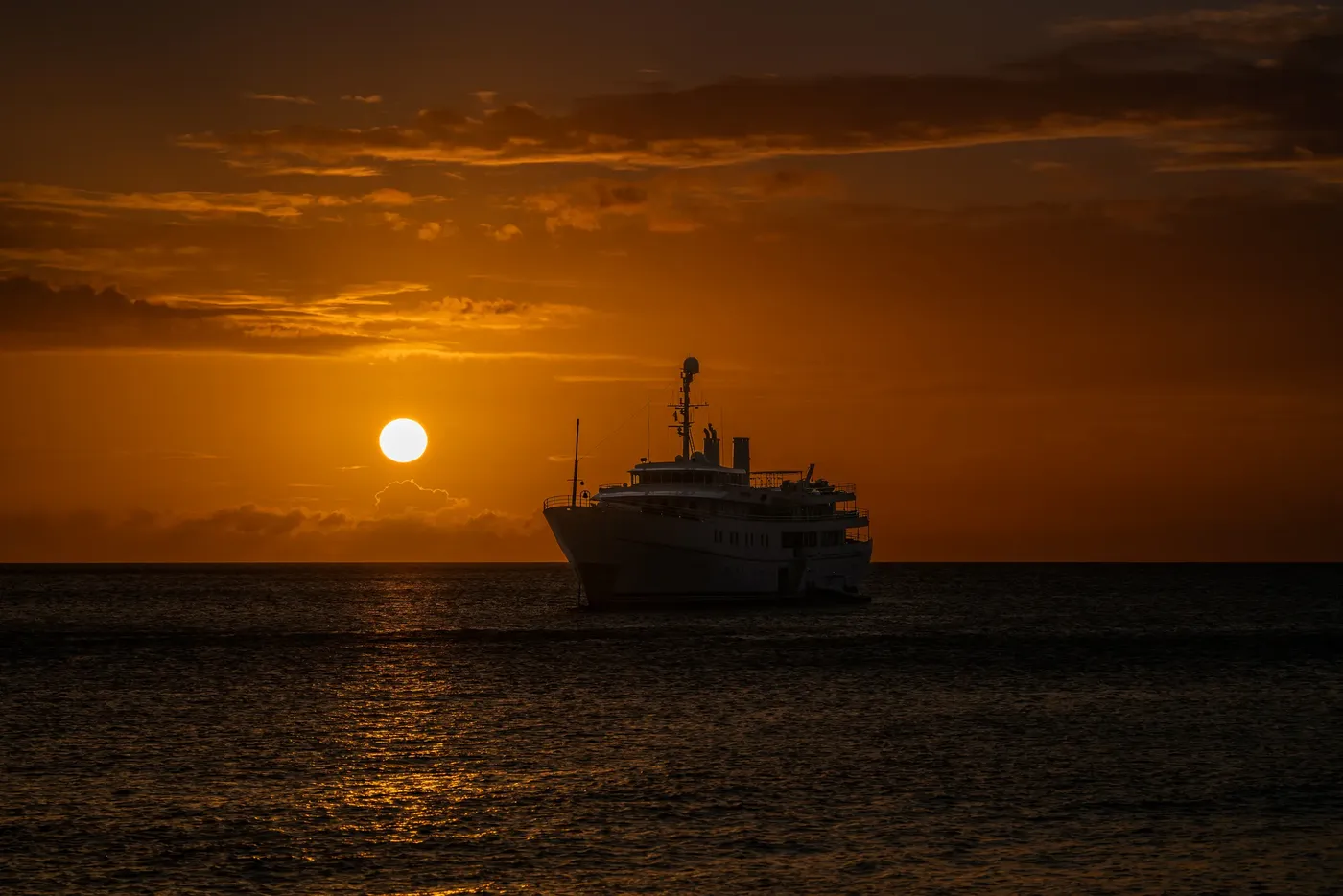
1 dayBack south along the west coast to the ferry. A transfer day with no big plans, so you can squeeze in whatever the rain took from you earlier. On the way is the Indian River near Portsmouth, a boat trip through the mangroves. I did it, but it's pretty touristy and didn't do much for me.
Option B: the whole Waitukubuli in two weeks – 14 days
184 km and 14 segments from south to north, from Scotts Head to Cabrits. One day of preparation in Roseau, then 13 days of walking. To fit it into two weeks, the last two segments are done in one day. Total: 1 + 4 + 3 + 3 + 3 = 14 days.
I'll say it straight: this version has no slack. One segment a day, back to back, even the toughest ones. A single day of downpour and the plan slips. If you want a day to sit out the rain and a detour to Boiling Lake, allow 16 to 17 days. I'd put the spare time mainly before the northern mountains, between segments 7 and 8.
1. Roseau: arrival and preparation
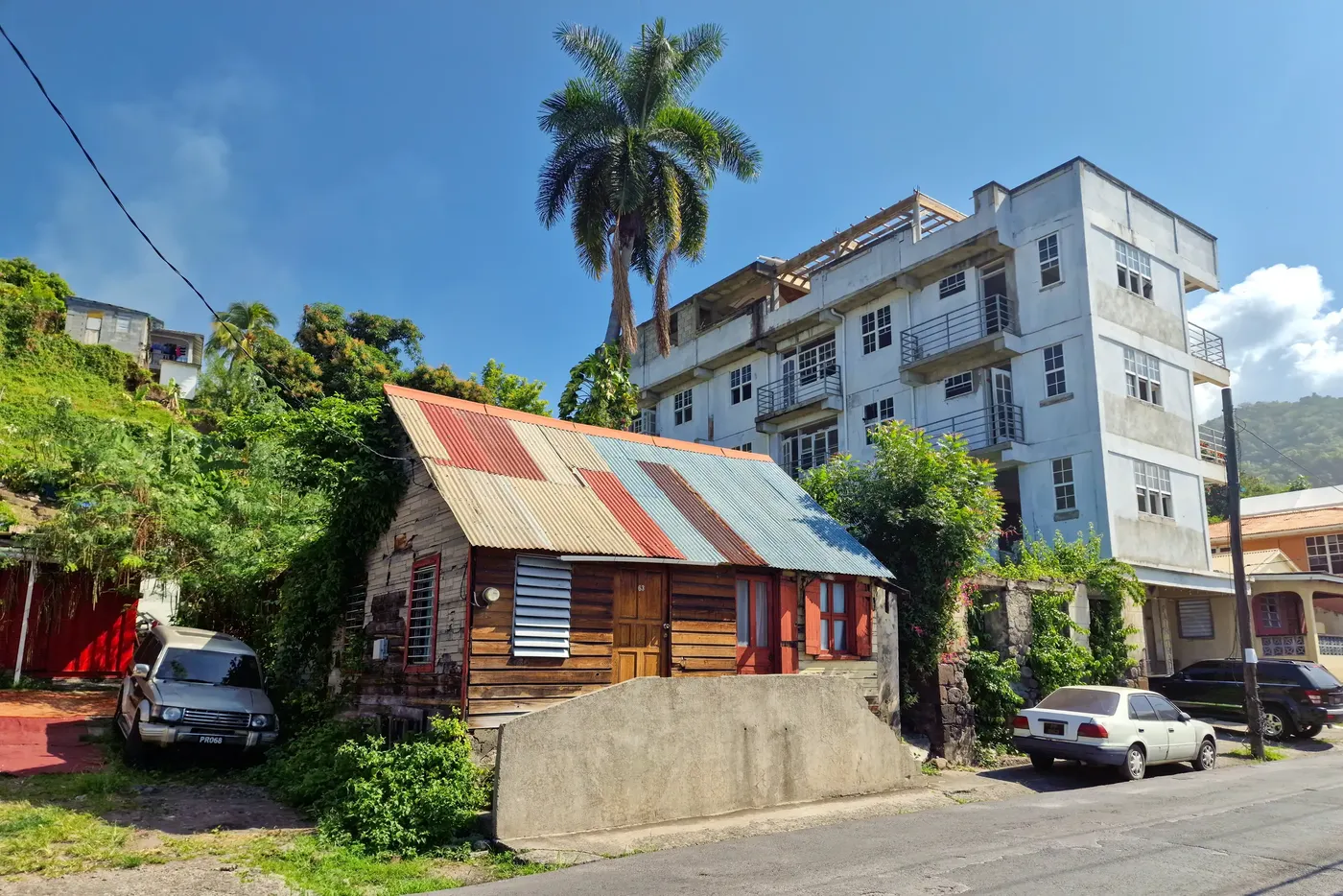
1 dayThe ferry docks right in Roseau. Here you can buy a SIM, a Trail Pass (the 15-day one covers the whole trek), maps and food for the first few days, and change money. There aren't many ATMs outside Roseau, so withdraw cash for the entire trek. Register and check the status of the segments on the trail website. Sections close after landslides – most recently part of segment 2.
2. South: segments 1–4
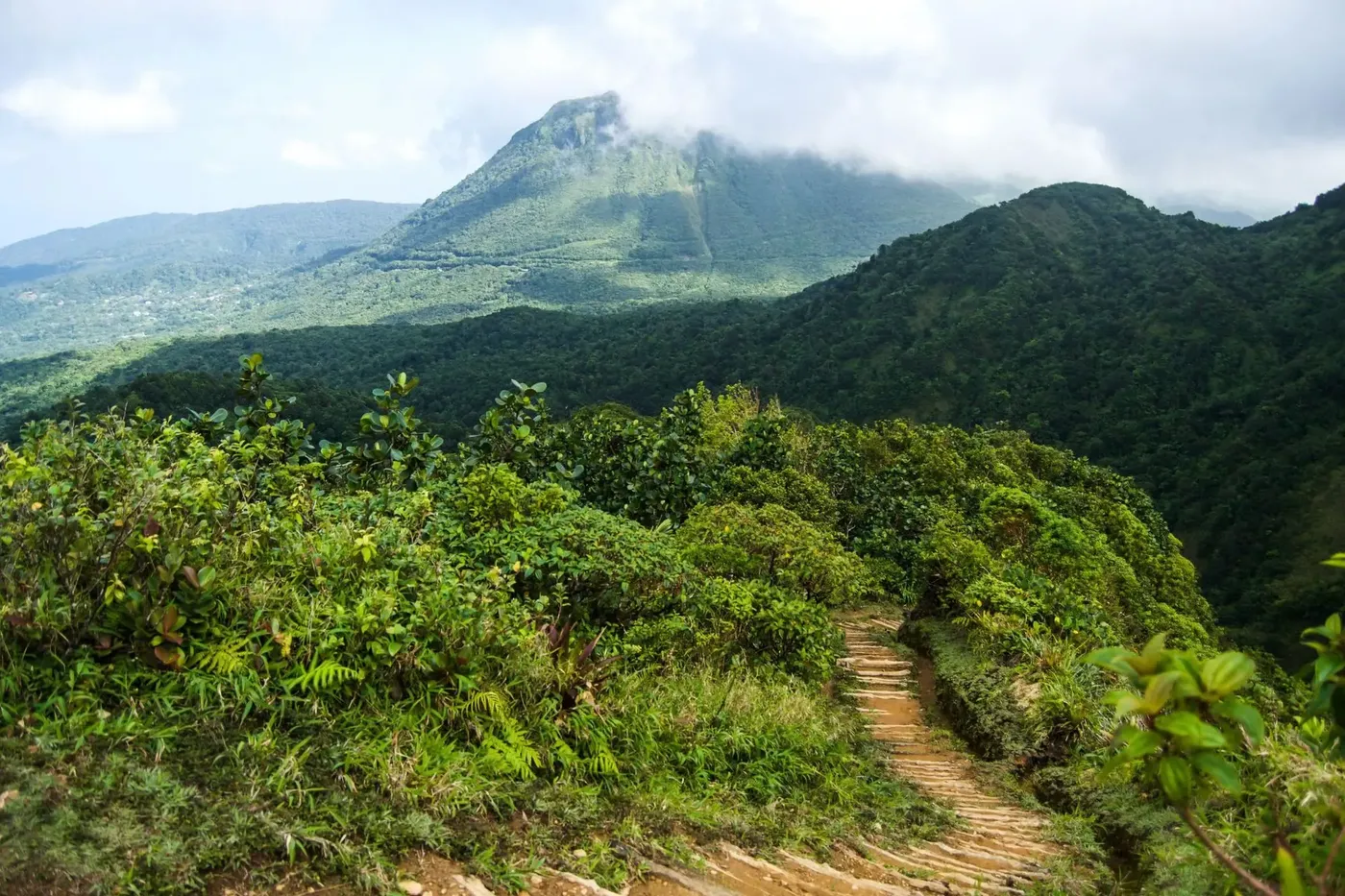
4 daysFrom Scotts Head, where the Caribbean Sea meets the Atlantic, up to the Morne Crabier plateau and down to Soufrière with its sulphur springs. Segment 1 is short but officially very difficult (a rope and a gorge in the Too Loo Loo valley). Then across farms and old slave paths to Bellevue Chopin, past Giraudel to Wotten Waven with its hot springs, and on through the heart of Morne Trois Pitons National Park to Pont Cassé in the middle of the island. The official detour past Boiling Lake (3B) is no longer maintained. If you want to see the lake, you need an extra day and do it as an out-and-back from Laudat.
3. Centre and east: segments 5–7
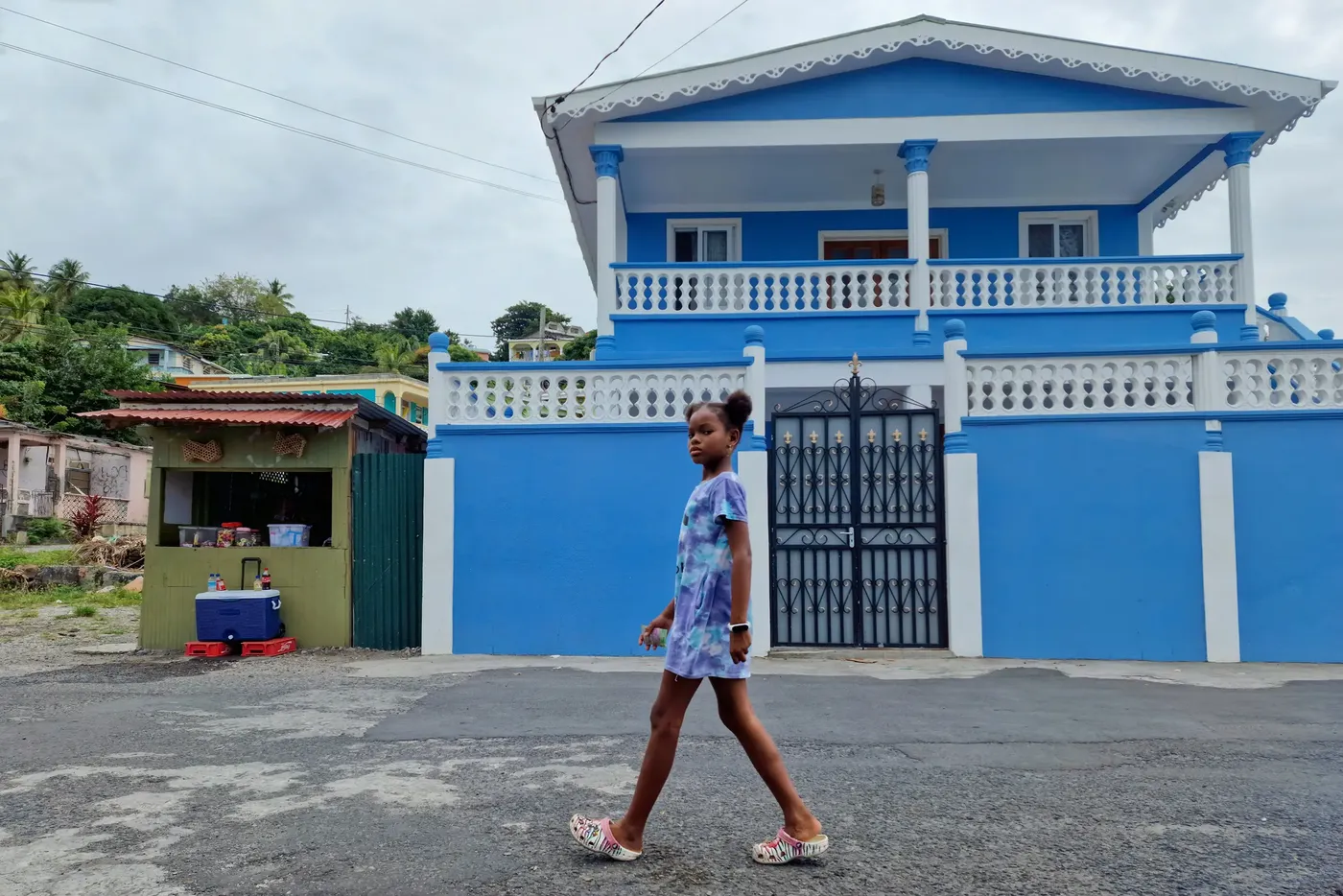
3 daysDown from the mountains to the Atlantic. Along the old Kalinago stone trail past Emerald Pool to Castle Bruce, then through the Kalinago Territory, home to the last descendants of the Caribbean's original inhabitants, and across banana plantations to the heights above Marigot. Segment 5 is the longest of the whole trek, but also one of the easiest. These three days are for building up strength for what's to come.
4. Northern mountains: segments 8–10
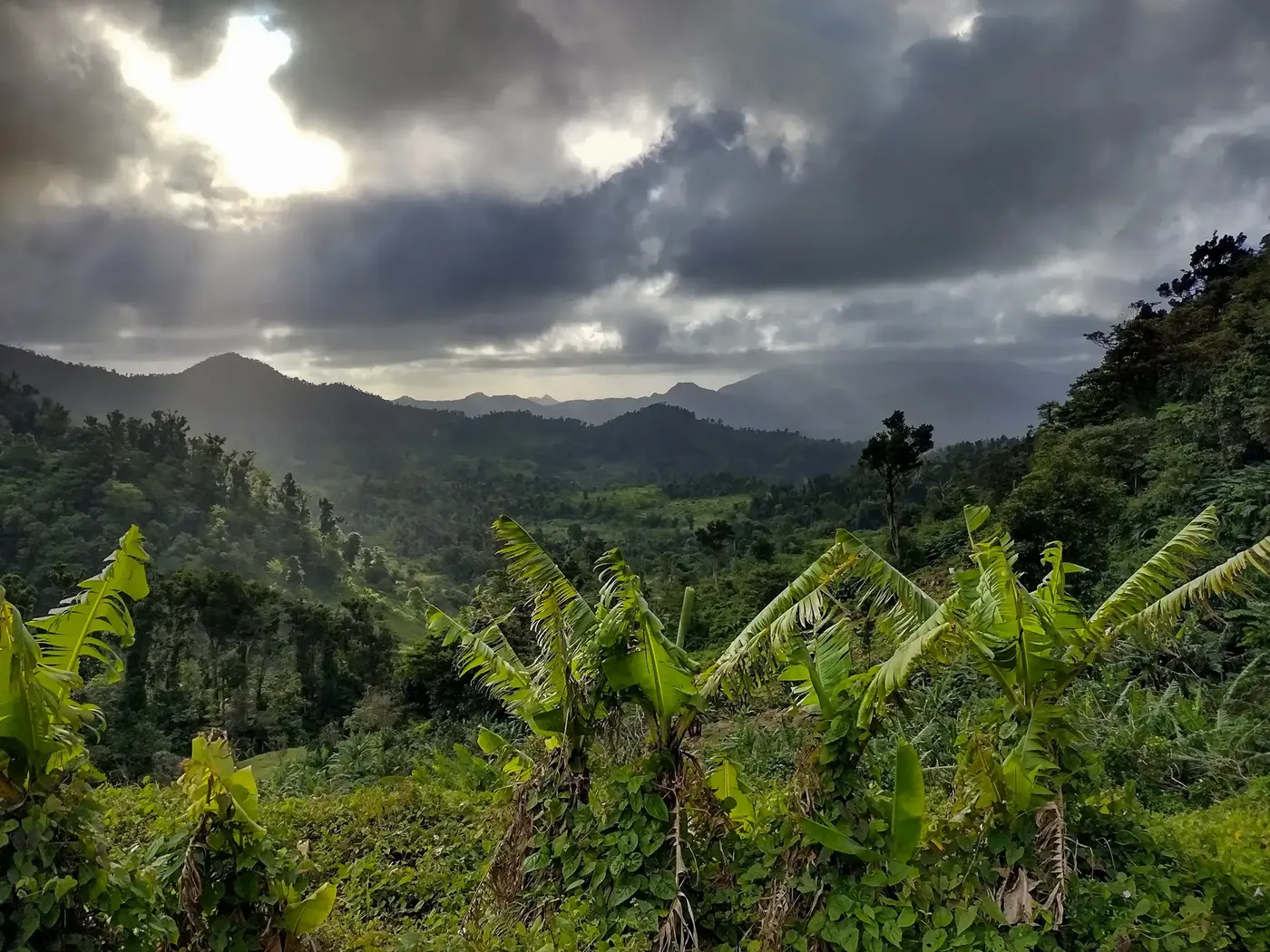
3 daysThis is where it gets serious. Segment 8 (First Camp → Petite Macoucherie, 14 km, roughly 9 hours) cuts across the island through the Northern Forest Reserve, rivers and Mosquito Mountain, the highest point of the trek. For me, without doubt the hardest stretch. I walked it after morning rain and the path became a muddy wrestling match, the rivers serious obstacles. Hell on earth. And yet it was the high point of the whole trip. Segment 9 (Petite Macoucherie → Colihaut Heights, 12.8 km, roughly 8 hours) is just as muddy and slippery, through rainforest beneath Morne Diablotin and past Lake Kachibona. Both are officially very difficult. On both you're completely alone, with no villages and often no signal, carrying your food and water on your back. Segment 10 to Syndicate is then the reward: easy, short and lovely.
5. North: segments 11–14 and Batibou Bay
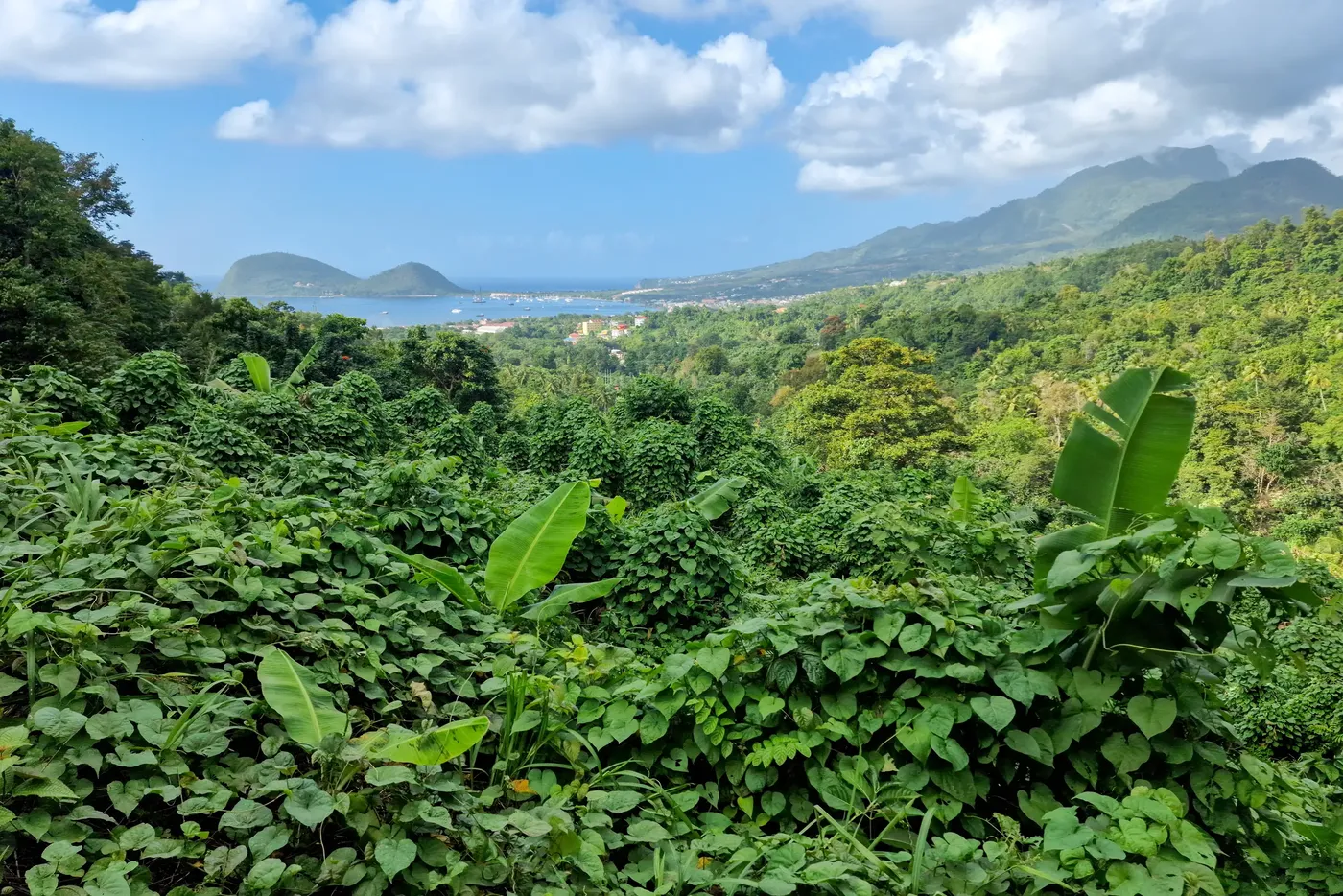
3 daysSegment 11 crosses Morne Diablotin National Park, with a suspension bridge over the Picard River and the island's only old railway embankment. Officially it's among the hardest and longest. Segment 12 heads into the remote countryside around Vieille Case and Penville. I found 11 and 12 on the harder side, but still more or less manageable. Segments 13 and 14 are the driest and shortest, which is why in this version you do them in one day: along the northern coast with views of Guadeloupe, all the way to Fort Shirley at Cabrits. Batibou Bay, for me Dominica's most beautiful beach, lies just off the route, between Calibishie and the end of segment 12. You can tack it onto the end of 12 or the start of 13; you just have to get there by bus, taxi or hitchhiking and spend the night by the beach. In the morning you carry on. If you have an extra day, split 13 and 14 and spend a whole day at Batibou.
Extensions (if you have more time)
For the one-week version: segments 8 and 9 for the fit
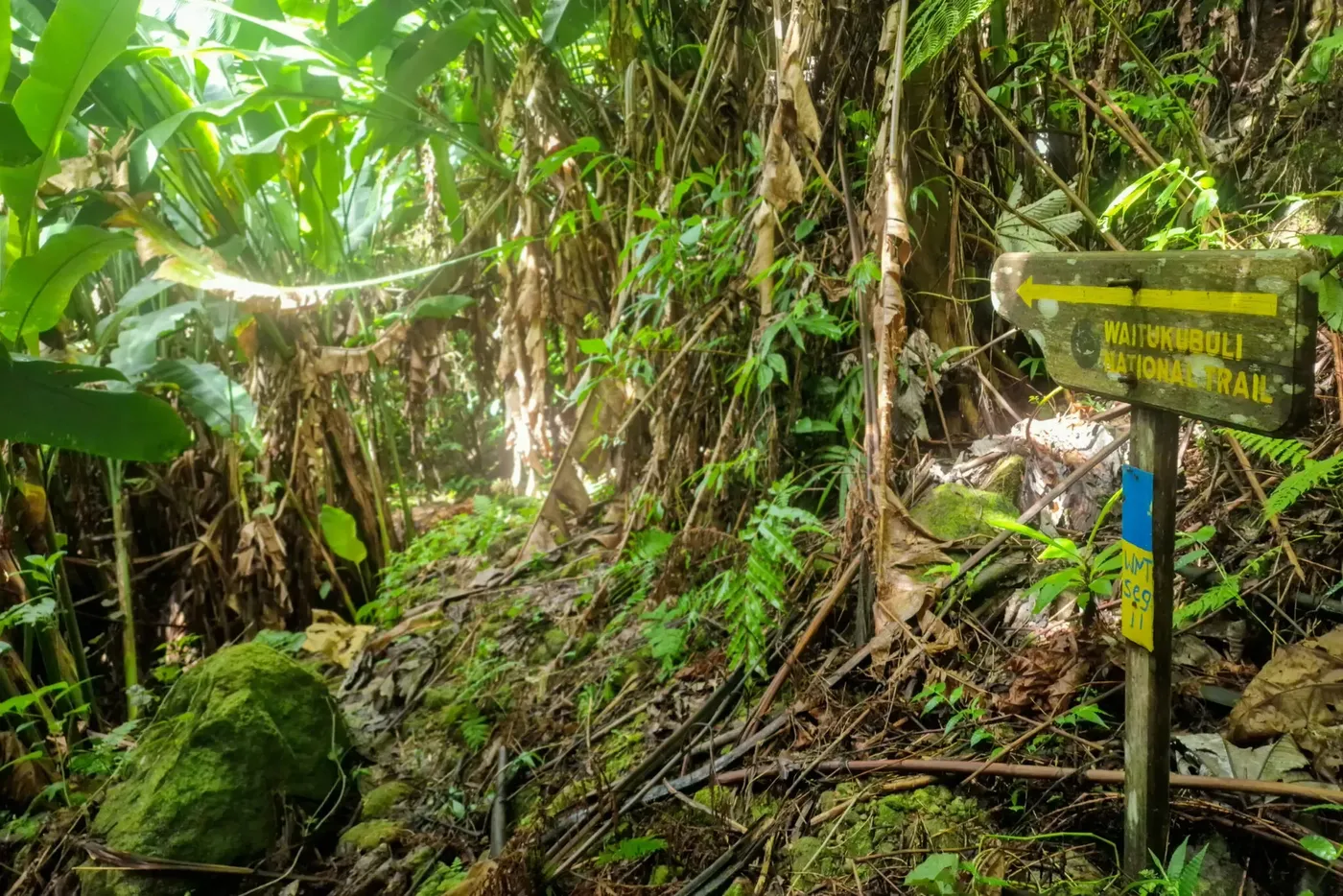
+2 daysIf you want to experience the Waitukubuli at full strength, slot segments 8 and 9 in between the day in the east and segment 10. Segment 8 starts at First Camp above Marigot, where the day in the east brings you, and segment 9 ends at Colihaut Heights, where segment 10 begins. So the three segments follow on beautifully. Just bear in mind these are the two hardest days of the whole trek, and you carry food, water and a hammock with you. The week stretches to nine days.
Guadeloupe and Martinique – 4 + 3 days
I sailed to Dominica from Guadeloupe and carried on to Martinique. Three islands, three completely different worlds: France at a Caribbean pace, with wild Dominica in between. The ferry calls at all of them, so you can simply fly into one French island and out of the other. I'd give Guadeloupe four days; three is enough for Martinique. But it's a matter of preference.
More: Guadeloupe & Martinique: France at a Caribbean pace
How to piece the route together
The ferry docks in Roseau in the south-west, so both options start in the south. The one-week version uses Roseau as a base for the first few days, with trips into the mountains and to the south, then heads north via the east coast and back down the west. The full trek runs south to north, from Scotts Head to Cabrits, and from Cabrits you return to Roseau by road.
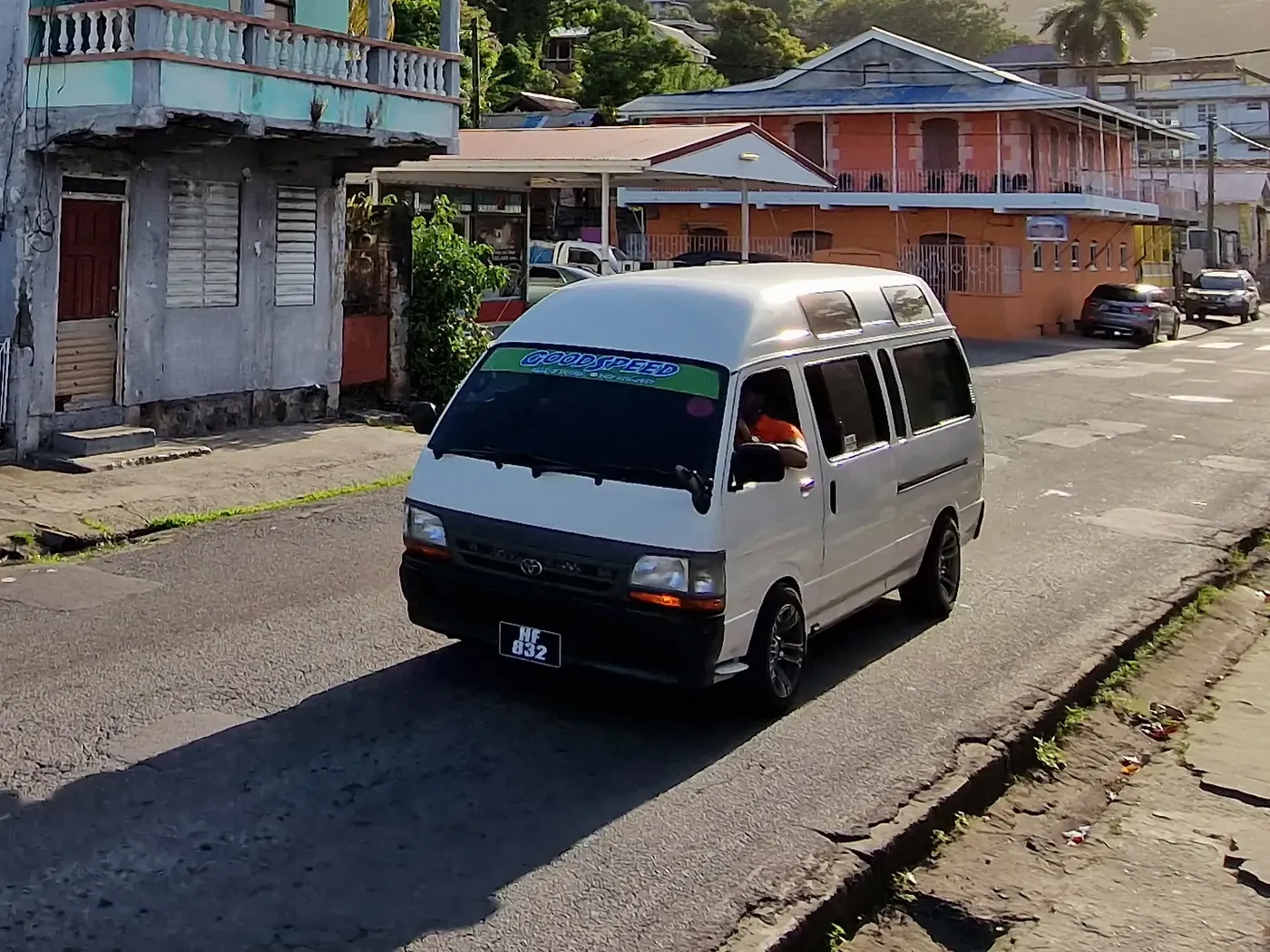
- Transport: public transport works well, minibuses run along the main roads and hitchhiking is even better. So you can reach the segment trailheads without a car. Another option is to 'hitch' a ride with fishermen.
- Trek: before you go, register, buy a Trail Pass (a day pass for the one-week version, the 15-day one for the whole trek) and check the status of the segments on the trail website.
- Without a guide: it's doable – I went alone. But then you need decent offline maps (mapy.cz served me well), a power bank and the strength to haul water, food and clothes. The safer and pricier option is a guide. The park management recommends one for Boiling Lake too.
- Hammock with a mosquito net: your best friend on the remote segments. You can sleep in it almost anywhere, even on the beach.
When to go
Best in the dry season from January to April – I was there in January. On Dominica, though, 'dry' just means less wet: inland and in the mountains, where the trek runs, several times more rain falls each year than in Roseau on the west coast, and a shower can come at any moment. June to November is hurricane season. Hurricane Maria devastated the island in 2017, and the after-effects are still visible on the trek today: missing bridges, shelters and signs. I wouldn't do the trek in that season.
What would help me today
Plan around the weather more than the distances. I walked segment 8 after morning rain, and the trail turned into a muddy slog and the rivers into obstacles. The same segment in the dry is a completely different story. These days I'd leave a spare day between the hard segments so I could sit out the rain.
Have a hammock with a mosquito net from day one. Without one, a night on the remote stretches would be brutal – mosquitoes and other insects won't let you sleep. It also saves you the extra kilometres you'd otherwise walk to reach accommodation.
Withdraw cash in Roseau. There are a few ATMs in Roseau, but across the rest of the island they're thin on the ground. On the trek and in the villages, you pay in cash.
Devote the whole trip to Dominica alone. Either just for the trek, or spend more days there and enjoy the island as a whole. Dominica deserves more than a few days squeezed between two French islands.
FAQs
How many days do I need for Dominica?
A week for the island's main sights and two Waitukubuli segments (1 and 10). Nine days with the tough segments 8 and 9. You can walk the whole Waitukubuli in two weeks, but with no slack. With time in reserve for the weather and a detour to Boiling Lake, allow 16 to 17 days.
How demanding is the Waitukubuli and do I have to walk all of it?
The full trail is 184 km over 14 segments, and most people take 12 to 14 days. You don't have to do it all – every segment starts and ends at a road or village, so you can pick just a few. The hardest are 8 and 9 in the north (8 and 9 hours, mud, rivers, ropes), and segment 1 is also officially rated very difficult. Easier ones include 5 and 10. A lot depends on the weather. You need a Trail Pass and registration for the trek.
Which segments should I choose if I don't have time for the whole trek?
Segment 1 in the south and 10 in the north. Segment 1 is short with sea views; 10 is easy and pretty and can be combined with Batibou Bay. If you want to experience how tough the Waitukubuli can be, add 8 and 9.
How do I get to Dominica?
There are no direct flights from Europe. The best option is to fly to Guadeloupe or Martinique and then take the ferry to Roseau. You can also fly in via other Caribbean islands or Miami to Douglas–Charles Airport in the north-east. A new international airport is under construction.
Do I need a car in Dominica?
No. Minibuses run along the main roads, hitchhiking works even better, and you won't need a car for the trek anyway. If you do want one, they drive on the left and you'll need a temporary local permit alongside your licence.
When is the best time to visit Dominica?
January to April, when it's driest. June to November is hurricane season and the wettest period – I wouldn't do the trek then.
Do I need a visa?
No. Czech citizens can visit Dominica visa-free for tourism for up to 180 days. Your passport must be valid for at least six months and you'll need an onward ticket off the island on arrival. (checked in November 2026)
More: Czech Ministry of Foreign Affairs: Dominica – visas and entry requirements
What would I skip?
Half a day in Roseau is enough, plus sorting out the trek permit – don't give it more time. And maybe the Indian River: I went along it, but it's touristy and didn't really do much for me.