A few general points before we even start.
For the trail you need to register with the Forestry, Wildlife & Parks Division and pay for a Trail Pass (10 USD for a day or 40 USD for fifteen days). And off we go.
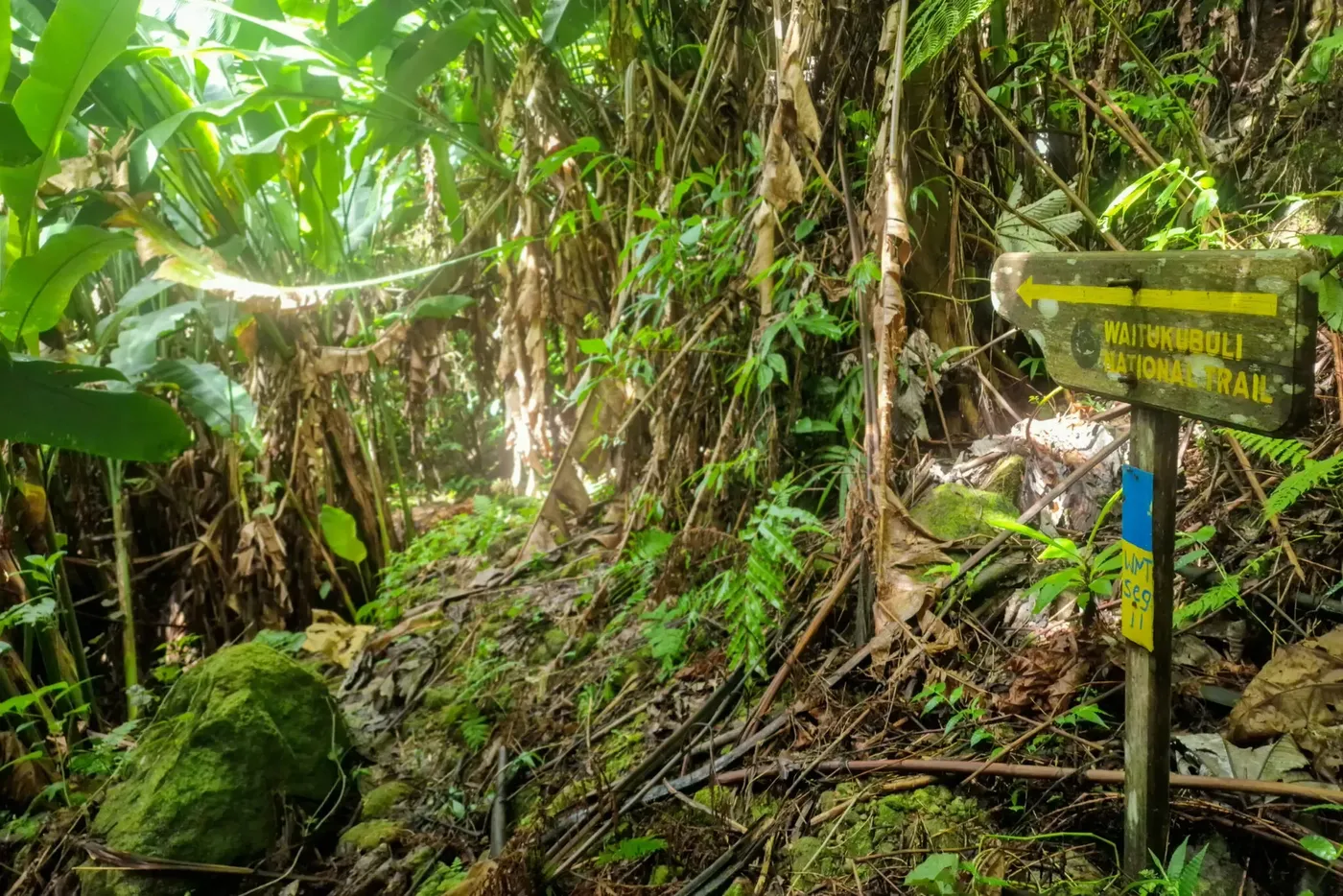
So what is Waitukubuli actually about? What makes it special and what awaits you on it? Well, picture an overgrown path through a sauna – sorry, a jungle. For almost the whole way it's a sort of "green tunnel" climbing up and down alongside roaring rivers, with the occasional stunning view and plenty of chances to spot wildlife. And almost the entire time you're in remote mountains with only patchy contact with civilisation. So it's definitely no Sunday stroll.
So how do you tackle it – what are the options for doing it?
There are two options: either with a guide, which is pricier but the safer choice, or on your own, which is what I went for. But then you really have to think about a lot of things. For instance, if you go alone you need decent maps*, a power bank to charge your phone and the strength to carry water, food and clothes on your back. And speaking of food, the jungle is fairly generous. You'll come across wild fruit, so you can at least find a little something to eat. The water is drinkable higher up, but the closer you get to people, the less that holds true.
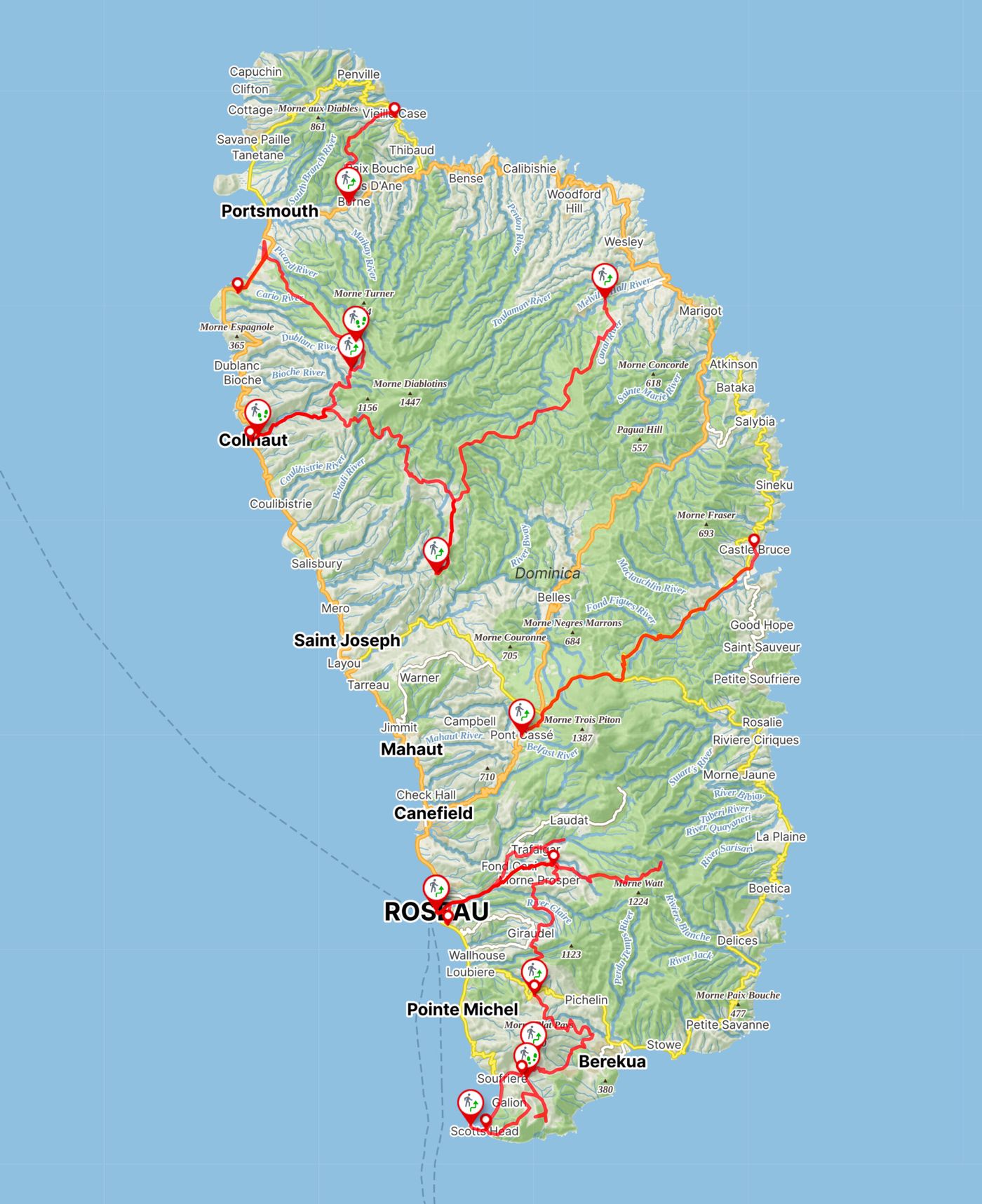
To be honest, I didn't walk the entire Waitukubuli, but I did manage most of the segments. And what were they like? Well, segment eight and part of nine were brutal. Muddy, slippery and with endless climbs and descents. Eight was especially tough after morning rain, which turned the path into a mud-wrestling match and the rivers into serious obstacles. Ten, on the other hand, was pretty relaxed. One, eleven and twelve were harder, but still more or less manageable. The rest were actually easy-going. But a lot depends on the weather. The weather has a huge influence, in fact, as does the condition of particular spots such as fields of razor grass or the shelters. Shelters are a topic in their own right. They're important for spending the night when it rains, as they spare you walking extra kilometres to find accommodation. When it's dry, a hammock with a mosquito net is all you need.
The toughest stretch? Without a doubt, the hardest was eight. Long, muddy sections full of technical passages. And those climbs and descents – they were something else. Hell on earth. In fact, across the whole trail some parts are often so terribly steep that you'd never get up without grabbing roots or ropes. And muddy? That's an understatement. In places it's so slippery that every step down is a little battle with gravity. And if you do manage to stay on your feet, it's usually thanks to some miracle.
And then there are the remote sections. There you have to be completely self-sufficient. Put it this way: a hammock with a mosquito net becomes your best friend for the night. Without it, it would be an absolute nightmare, because the mosquitoes and other insects won't let you sleep.
But even though it was incredibly hard, it was the absolute highlight of the whole trip and probably the best trail I've ever walked. After all, Waitukubuli isn't just about pushing yourself physically, but about living it and enjoying it. And surviving it 🙂
So if you fancy a proper challenge and a bit of adventure, Waitukubuli is a good choice. Just don't forget to go prepared.
*I used mapy.cz and was happy with them