WHEN TO GO
The best time is August to November, when it rains the least. There's often a short dry spell in February and March too – but it may never turn up. The rainy season lasts almost half the year, but you can still travel then – just more slowly and more damply.
HOW LONG?
A week is the absolute minimum, but 10 to 21 days is what really makes sense. Everything is far away and slow, and without a car you're practically going nowhere. The more time you give it, the further Guiana lets you in.
DAILY BUDGET
It's pricier than you'd expect – typically 30% more than mainland France. Markets, fruit and rum are cheap, but the car, food and accommodation will hurt. You can get by with a hammock and carbets, but it's not budget travel.
VISAS
Getting in is simple – after all, it's France and the EU. The entry rules are slightly different, though – ideally bring a valid passport, as an ID card may not always be enough. And watch out! Yellow fever vaccination is compulsory.
HOW TO GET TO FRENCH GUIANA
The easiest route is from Paris – a direct flight to Cayenne. Tickets aren't the cheapest, but it works reliably. You can cross the land border from Suriname and Brazil, but that takes patience.
GETTING AROUND GUIANA
You can't do it without a car – there's practically no public transport and hitchhiking doesn't really work. An SUV is the best choice, because off the main roads the tarmac ends fast. A car means freedom – and in Guiana you need it.
Getting in is simple – after all, it's France and the EU. The entry rules are slightly different, though – ideally bring a valid passport, as an ID card may not always be enough. And watch out! Yellow fever vaccination is compulsory.
How to Get to French Guiana
Most people fly to French Guiana from Paris – a direct flight with Air France or Air Caraïbes takes roughly 8–9 hours. Planes land at Cayenne – Félix Eboué Airport, about 15 km from the capital. Tickets aren't exactly cheap and it pays to watch for deals – a return fare usually runs between CZK 18,000 and 28,000. But you can find one for around CZK 10,000.
From neighbouring countries (Suriname, Brazil) you can also reach Guiana overland or by boat – via the border crossings at Saint-Laurent-du-Maroni (Suriname) or on the Oyapock River (Brazil), but you'll need to factor in visas and slower logistics.
When to Go?
In photos Guiana looks like a tropical paradise, but the reality is… wetter. The weather in French Guiana is ruled by the jungle and the Atlantic.
- Rainy season: December to July (wettest April–June)
- Short dry season: February–March (but it may not turn up – it certainly didn't for me)
- Longer dry season: August to November – the best time to travel
Even in the "dry" season, expect showers. Don't bother with an umbrella, it won't help anyway. Better a waterproof backpack and switching to "chill" mode.
Getting Around Guiana
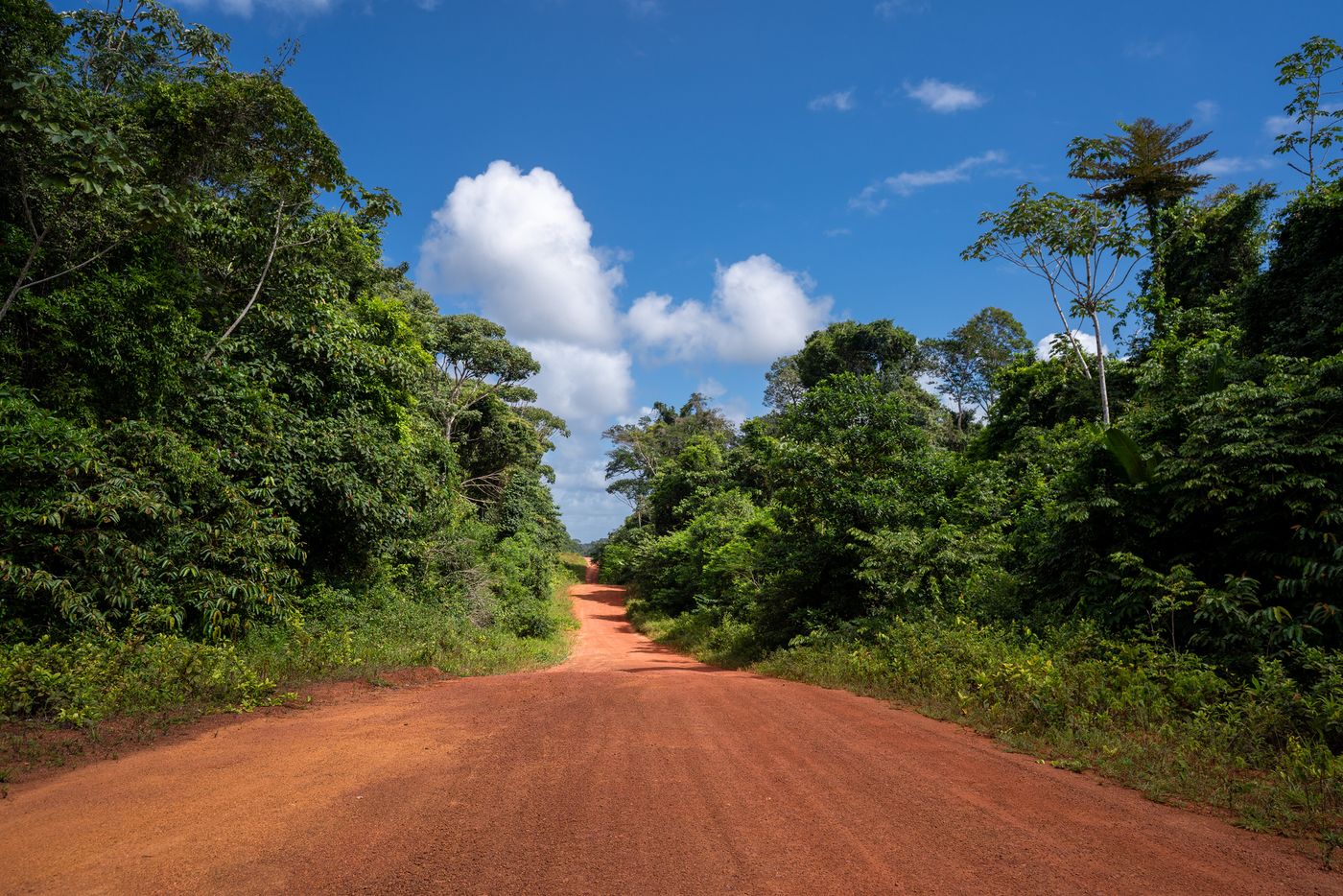
A car is essential. Without one you won't get very far in Guiana. Public transport basically doesn't exist, hitchhiking isn't common and some areas are only accessible by boat or plane. The roads between the main towns are in surprisingly good shape, but once you leave the tarmac, the mud, fords and rainforest begin.
We recommend a car with higher clearance – especially if you want to explore less accessible places like Cacao, Petit-Saut or reach the rivers. Then again, even a little Kia managed it with me.
You'll find rental companies in Cayenne and Saint-Laurent, but prices aren't exactly low. It's still worth it – mobility = freedom.
And one more thing – what about the jungle?
The jungle isn't dangerous if you respect it. Bring repellent and a mosquito net, and accept that you'll be damp, muddy and sweaty the whole time. It's not a risky environment, but it demands preparation, calm and humility. And above all – nothing in it hurries, so don't you either.
And What About Prices
French Guiana is more expensive than you'd expect. It may seem like a forgotten corner of the world, but it's still overseas France – and the prices show it. In fact they're 20–30% higher than in mainland France.
- Accommodation in carbets: €10–25 a night
- In cheap hotels: €60 and up
Car hire: from €50–70 a day – a 4×4 is worth it, but you can manage without. After all, I was driven around by a little Kia 😀
Food: market lunch for €10–15, restaurants from €20 up
Entry fees and activities: most nature is free, but boats, island trips or guided tours cost more (e.g. the boat to the Îles du Salut is €45)
Flights from Europe: CZK 14,000–28,000, but from the Czech Republic via PRG–Paris, Paris–Cayenne you can find tickets in season for about CZK 10k in total
Rum, fruit, markets: the cheaper and more pleasant chapter of the budget
The cheapest way to travel is with a hammock and your own gear, but it still won't be a budget holiday.
And finally, a few tips on accommodation, food and other highlights
- Promaritimeguyane. fr
- Centre Amérindien Kalawachi
- Le Parakwa
- Kali’na Tapala+
- Chez Oumar
- Couleurs îsles
- Cayenne – Au Naturel Juice (Marché Central de Cayenne)
- Cayenne – Dragon du sud (Marché Central de Cayenne)
- Iracoubo – Cafe la pause
- Saint-Laurent-du-Maroni – La Maison de Café
- Marché fruits et légumes Cacao