How much time for South India
In 14 days you can cover the whole route: from Bengaluru to Mysore with Srirangapatna and Somanathapura, into the Nagarahole jungle and the Kodagu hills, to the temples of Belur and Halebidu, and via Chitradurga to Hampi. The journeys are split so that every day has something to see besides the road. There's no slack in it. If you only have 10 days, skip Kodagu and the stops along the way and keep Mysore, Nagarahole and Hampi. If you have more time, you can carry on to the coast at Gokarna and Goa or south to Kerala, but that's another trip altogether.
I had fourteen days in Karnataka and managed about half of what I wanted. India is vast, and even a single state is bigger than it seems. Mysore and Hampi are hundreds of kilometres apart, and the journey on Indian roads can easily take a whole day. That's why there are only four areas here. Try to fit in more and you'll mostly see the bus window.
Language
Kannada; you can get by in English (the further from the cities, the harder)
Gateway
Bengaluru (international airport)
Currency
Indian rupee (INR)
Payments
India runs on cash. Cash machines are everywhere, but they're often empty or won't take foreign cards.
Visas
required for Czechs; the easiest option is an e-Visa online
Climate
go south during our winter, ideally November to February
Sockets
230 V, 50 Hz, types C, D and M; slim plugs usually fit, but an adapter is handy
Mobile
SIM cards at the airport for cash only; Airtel has the best coverage in the south
Main route
The areas follow on in the order you can travel them from Bengaluru: first south to Mysore, then west into the jungle and mountains of the Western Ghats, and finally north to Hampi. Add a day for arrival and a day for departure to the total.
Route map
Where the route goes
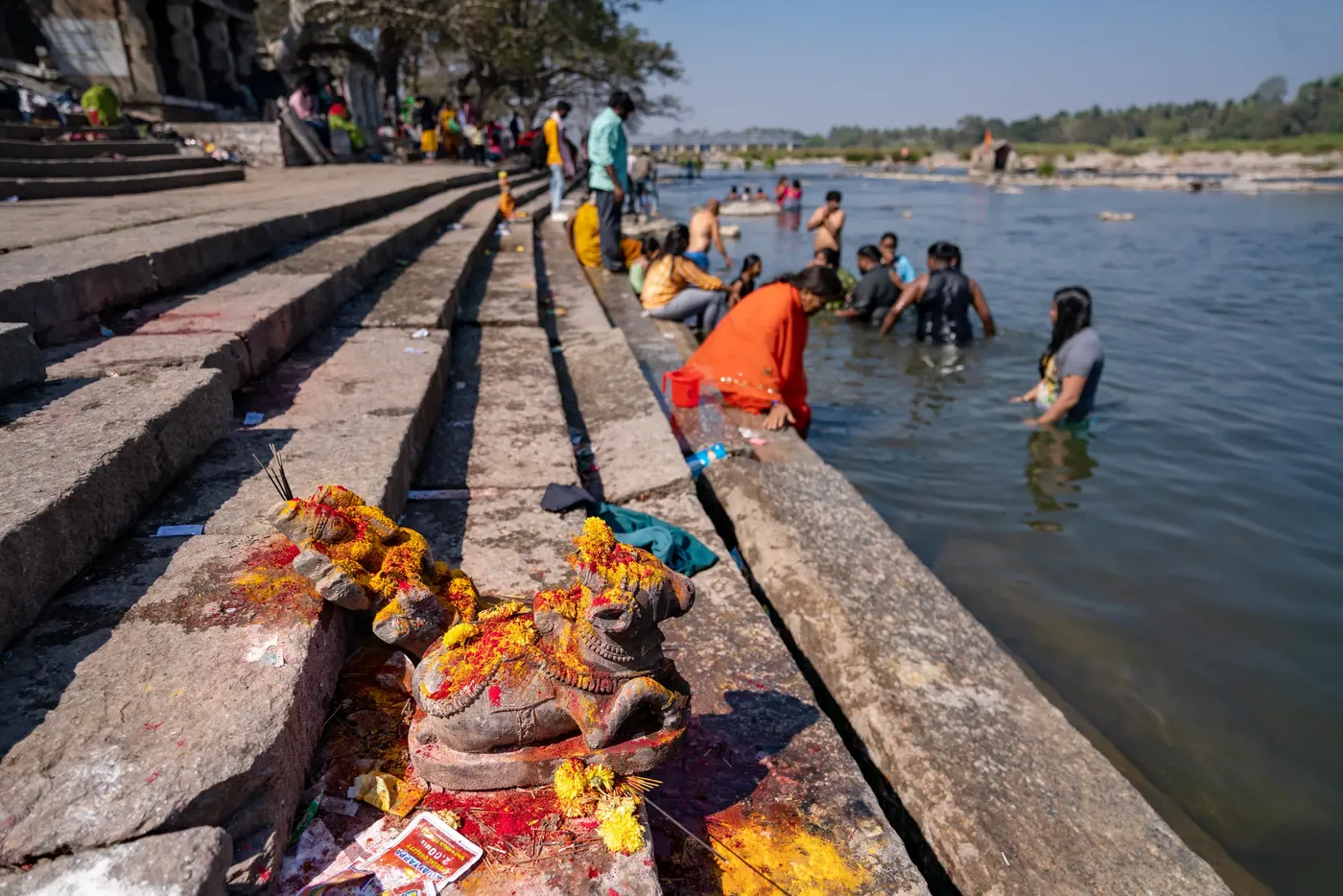
1. From Bengaluru via Shivanasamudra to Mysore
1 dayFor me, Bengaluru is just a transport hub; I only know it from the airport. Head straight south. On the way to Mysore it's worth a small detour to the Shivanasamudra falls, where the Kaveri river plunges into two wide gorges. They're at their most powerful after the monsoon.
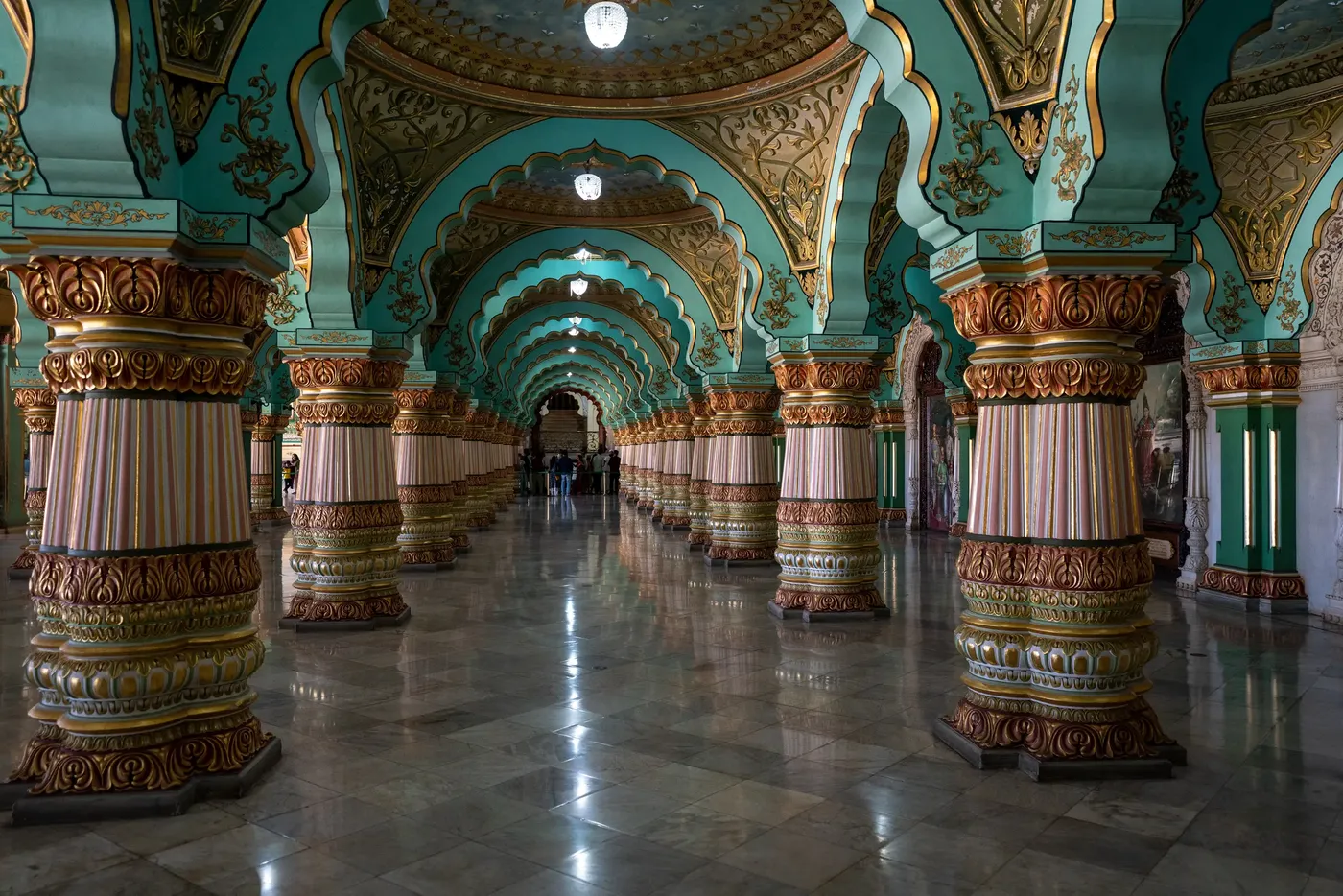
2. Mysore, Srirangapatna and Nanjangud
3 daysA city of maharajas, a living palace, markets and a place where incense and silk have been made for centuries. Not far away lies Srirangapatna on the sacred Kaveri river, where Tipu Sultan, the Tiger of Mysore, made his last stand against the British. Today, though, people come mainly for the vast Ranganathaswamy temple to Vishnu. And in the other direction is Nanjangud, a Shiva temple more than a thousand years old that still draws crowds of pilgrims. And do make the trip to Somanathapura, to a Hoysala temple that's well worth it.
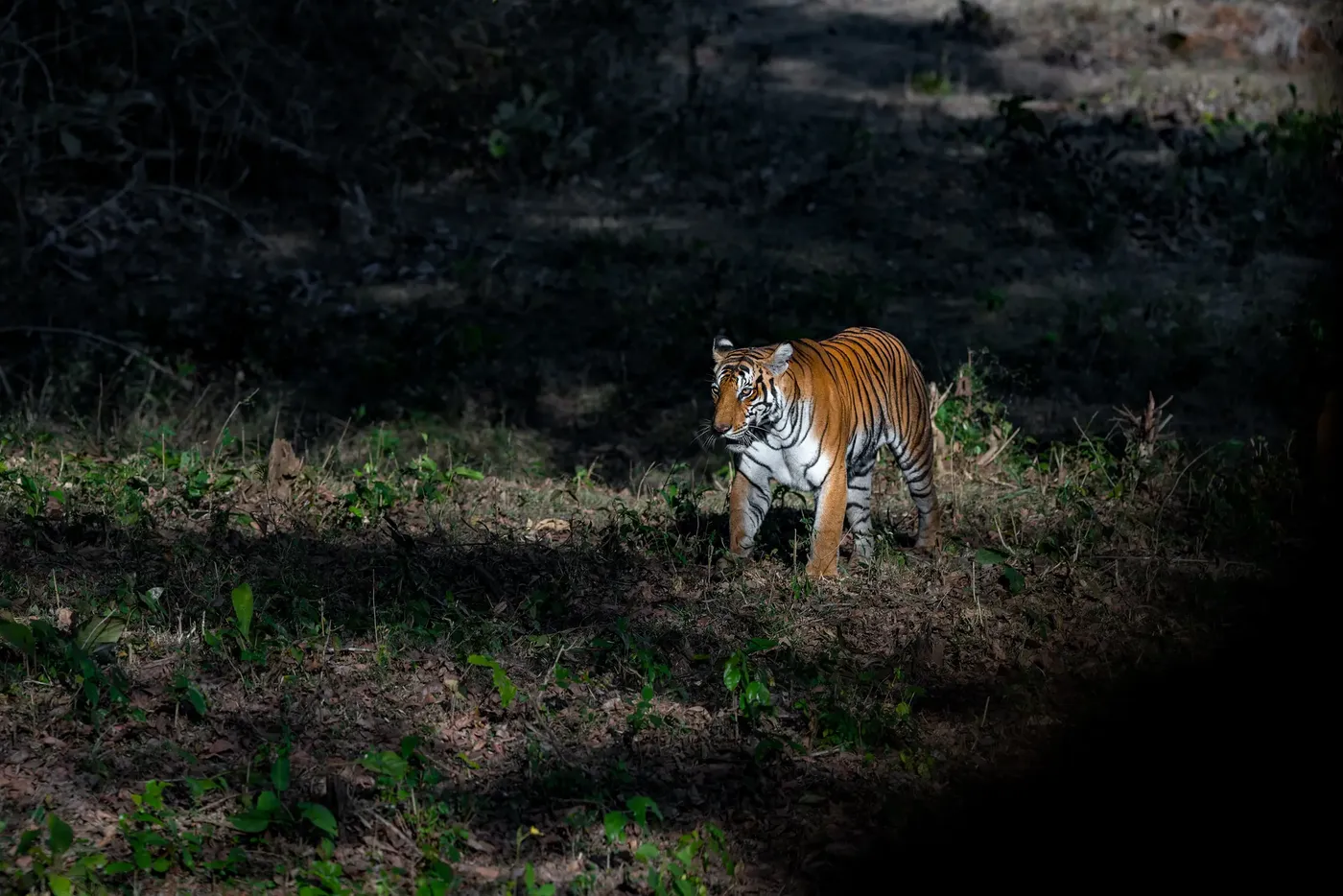
3. Western Ghats: Nagarahole and Kodagu
3 daysOnce the hunting ground of maharajas, now a tiger reserve in the heart of the Western Ghats. Deep forests, rivers and stories straight out of The Jungle Book. That feeling when the bushes part and suddenly you're looking a tiger in the eye – I'll never forget it. Right next door lies Kodagu (Coorg), green hills with coffee plantations and cooler air. Both are close to Mysore, so you can reach the mountains without a long journey.
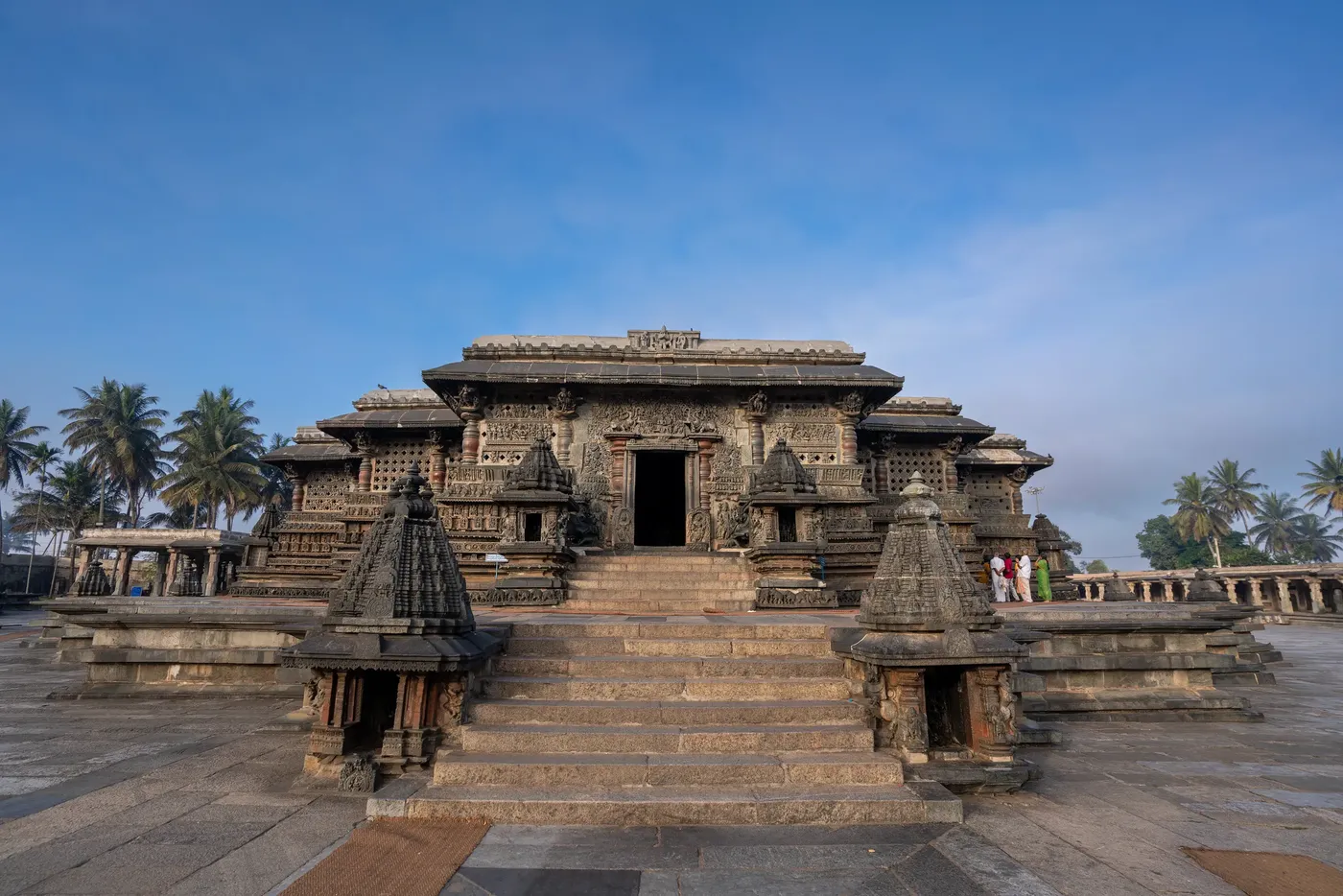
4. Belur and Halebidu
2 daysOn your way down from the hills, stop at the church in Shettihalli, a Gothic ruin on the shore of a reservoir that is half flooded in the rainy season. And close by, in Doddagaddavalli, at one of the oldest Hoysala temples, which hardly anyone visits.
Then Belur and Halebidu, 12th-century Hoysala temples a short distance apart. Stone reliefs so delicate they look carved in wood rather than chiselled from stone. The Kama Sutra in stone – need I say more. They deserve two days, one for each temple, and go in the morning before the coaches arrive.
5. Chitradurga and the road to Hampi – 1 day
The longest journey of the whole trip, and yet not a wasted day. Along the way lie the ancient Sri Kalleshvara temple and Chitradurga fort, seven rings of stone walls on granite hills. Then Hampi by evening.
6. Hampi
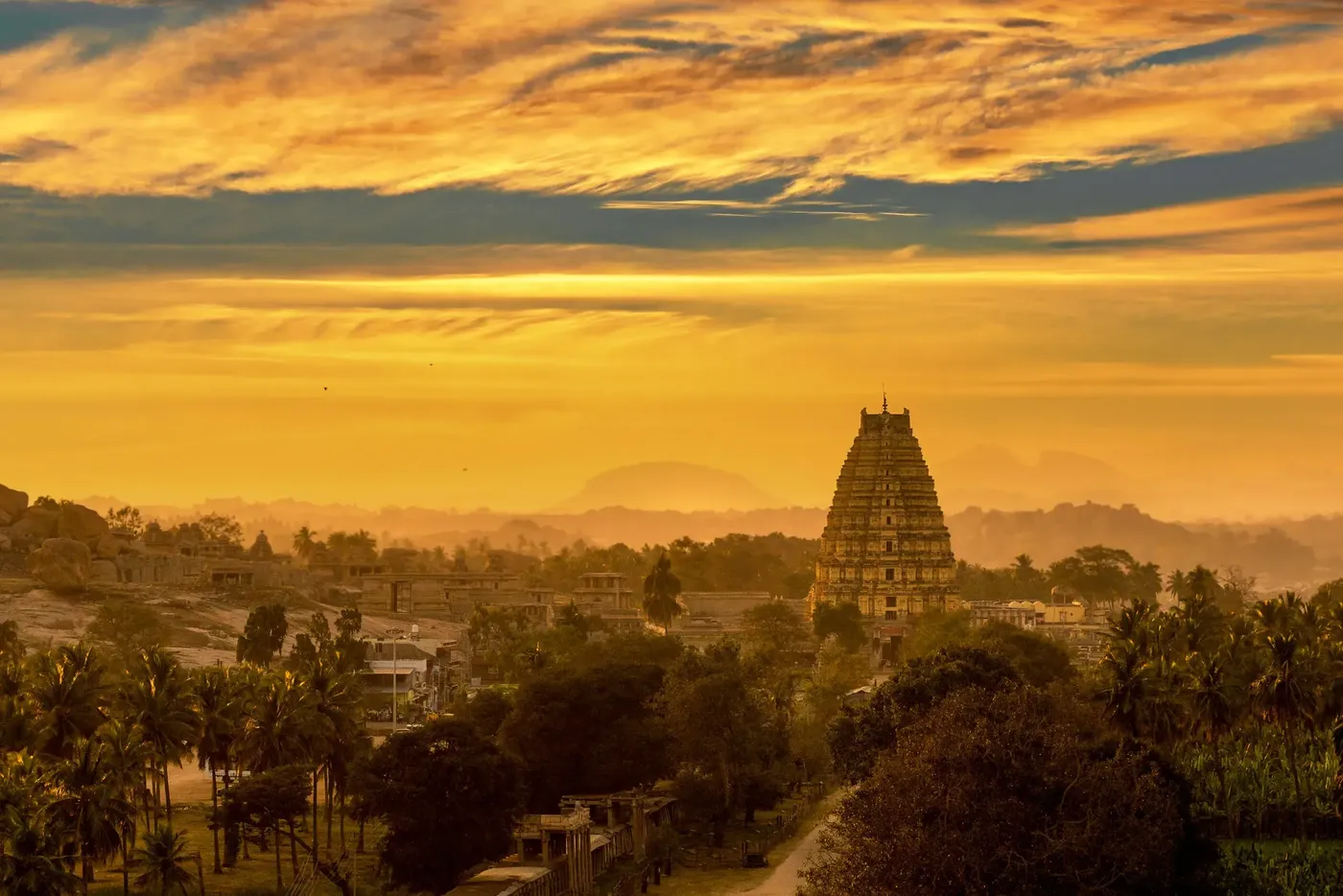
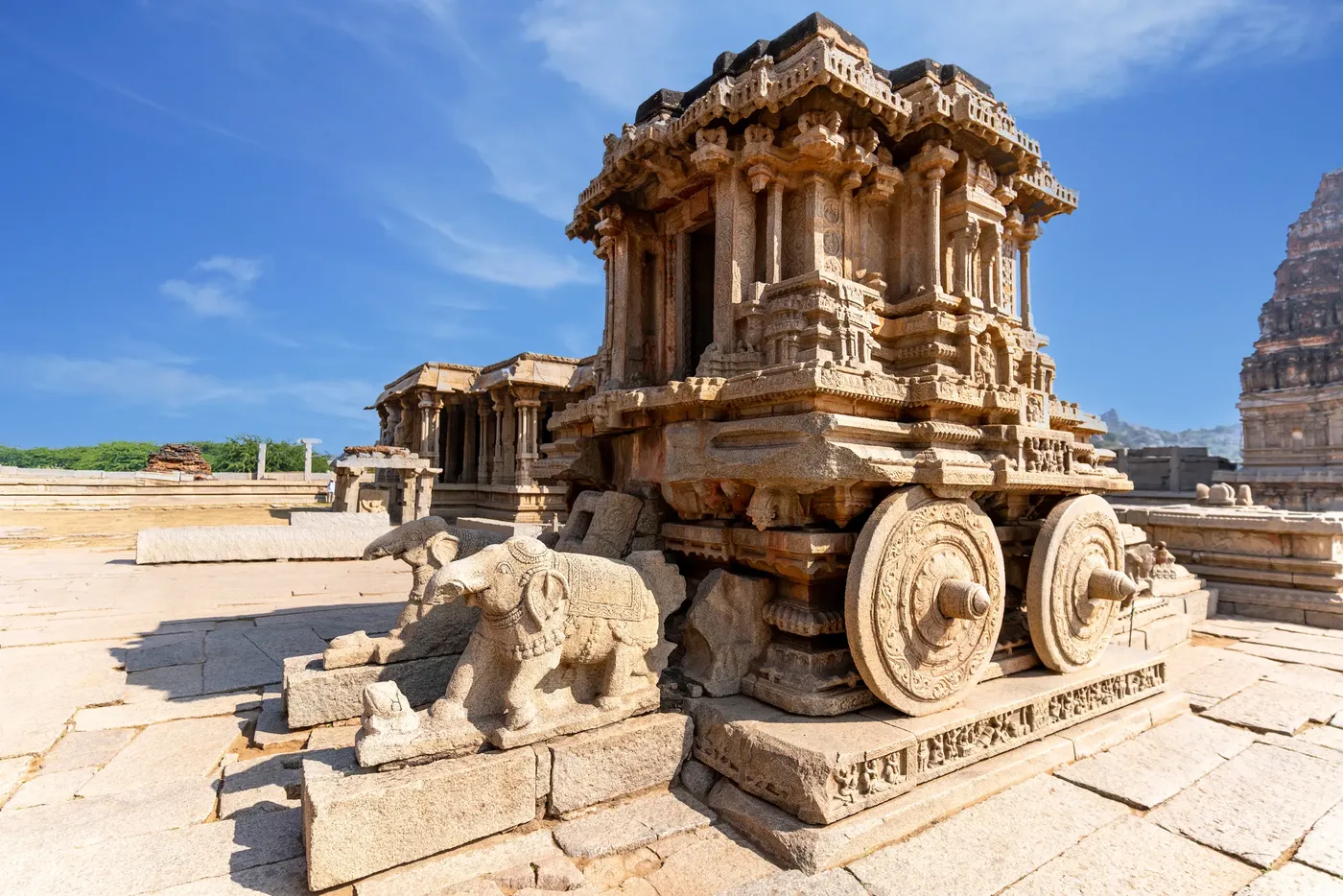
2 daysThe ruins of Vijayanagara, in the 14th century one of the largest and richest cities in the world. Gold and diamonds were traded here, and then almost overnight the city fell to ruin. What remains are temples, bazaars, rock reliefs and boulders by the Tungabhadra river. Hampi is one of the few places where I've felt my own insignificance in the flow of time. The site is enormous, but two days are enough.
How to put the route together
You can also do the loop in reverse: first from Bengaluru to Hampi and then south. The longest leg is always between the Western Ghats and Hampi. A night in Belur or Halebidu splits it in two, with plenty to see on each.
- Train: the most comfortable for longer journeys. Overnight I recommend 3AC or 2AC, by day AC Chair Car. Forget privacy and personal space – that's part of the deal.
- Bus: sometimes the only option. Cheap, packed and often in a dire state. Don't be surprised if the gearbox gets changed mid-journey.
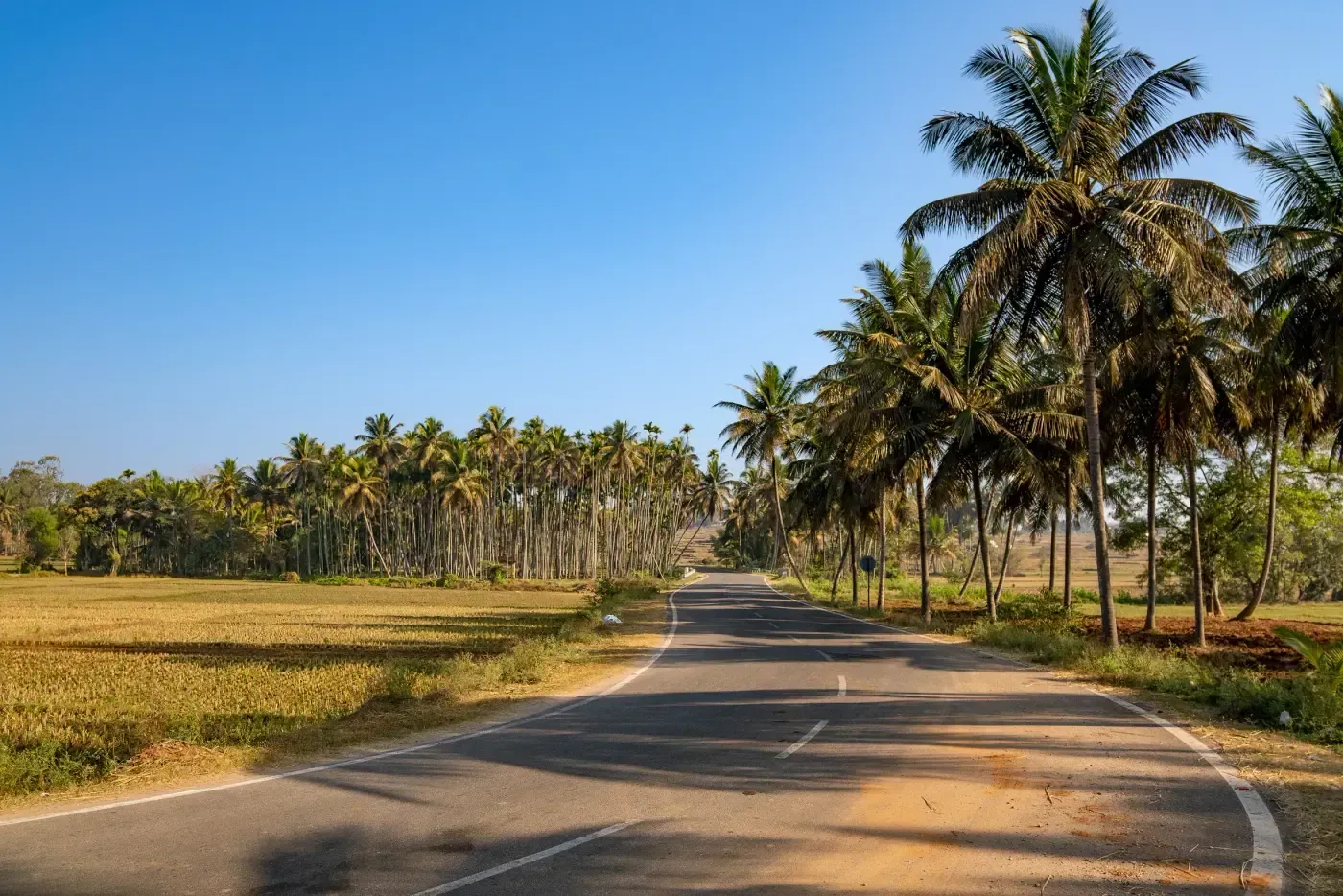
- Car: the most freedom, especially in the Western Ghats. But you need nerves of steel. I've driven on five continents and nowhere was like India. I drove here too, and for me it only heightens the experience.
- Slack: the route has none. Delays and cancellations are common in India, so if you can, add a day.
More: India: quirks and the reality of getting around
When to go
South India is best during our winter. I was here in January. From November to February it's dry and temperatures are bearable, around 27–31 °C in Bengaluru. March to May brings the heat, worst inland around Hampi, where April can top 40 °C. June to September is the south-west monsoon. In the Kodagu hills almost a metre of rain falls in a month; the landscape is green, but travel slows down. In Bengaluru the wettest months are September and October.
What would have helped me
More time. In fourteen days in Karnataka I managed about half of what I wanted. Today I'd rather drop one area than chase them all. That's why this route is tighter than mine was.
Booking trains earlier. Train seats go fast and prices rise as departure approaches. Leave it to the last minute and you'll end up on a bus.
Getting cash straight after landing. India runs on cash; cash machines are often empty or won't take foreign cards. SBI machines were reliable. And SIM cards at the airport are sold for cash only, so cash machine first.
Not expecting the north. The south is really a different country. In the north, to many people I was mainly a wallet. The south was completely different on a human level: kind people who gave me their time freely and gladly. If India scares you, start in the south.
FAQs
How many days do I need for South India?
For the route from Bengaluru via Mysore, Nagarahole and Kodagu, Belur and Halebidu to Hampi, allow 14 days including arrival, departure and travel. There's no slack in that. In 10 days you can fit in Mysore, Nagarahole and Hampi.
How do you get around South India?
For longer journeys by train (3AC or 2AC overnight, AC Chair Car by day) or by night bus. Trains need booking in advance; seats go fast. A car gives the most freedom and the driving itself is an experience, but it takes nerves of steel.
When is the best time to visit South India?
November to February. It's dry and temperatures are pleasant. From March it's hot inland around Hampi, and June to September is monsoon season.
How many days for Hampi?
Two days are enough. The ruins are enormous, but in two days you'll see the main sights.
Do I need a visa for India?
Yes. The easiest option is the electronic tourist visa (e-Visa), applied for online on the official Indian portal no earlier than 120 and no later than 4 days before travel. Your passport must be valid for at least 6 months and have two blank pages. Print out the approval. Requirements change, so check them on the Czech Ministry of Foreign Affairs website before you go (verified November 2026).
More: https://mzv.gov.cz/jnp/cz/encyklopedie_statu/asie/indie/cestovani/visa.html
Can I combine the south with northern India?
Yes, that's what I did: the first part of the trip was Delhi, Jaipur, Agra and Varanasi, the second Karnataka. It's doable in just under a month, but each part only gets a little time. It's worth flying between north and south.
More: India: Two Worlds, or the Different Realities of North and South
Is South India good for a first trip to India?
I'd say yes. The south is really a different country: calmer, and the people are friendlier than in the north, where a tourist is mainly a wallet.